
Original briefings. Zero spin.
Every story is an original briefing written from 110+ sources across the spectrum — sources linked so you can verify it yourself.
 energy
Notable (6/10)
Event date: August 19, 2026
energy
Notable (6/10)
Event date: August 19, 2026
China, the Philippines and Canada Chase the Same Prize: Hydrogen Sitting Underground for Free
Hydrogen doesn't have to be manufactured. It's sitting underground in some places, already formed, already pure, and just waiting for someone to figure out how to get it out cheaply. That's the bet a handful of companies and governments are now making real money on.
A new study out of China found hydrogen seepage in the Sichuan Basin with purity levels between 97.33 and 98.24 percent, according to OilPrice.com. Researchers called it a national record and said it's "one of the few discoveries globally exceeding 98.00% purity." That's close to lab-grade hydrogen coming out of the ground on its own.
Meanwhile in the Philippines, a startup called Koloma is betting the country sits on the largest natural hydrogen seeps on the planet. Koloma CEO Pete Johnson told Forbes, as cited by OilPrice.com, "We have reason to believe that these seeps are connected to very large accumulations." For a country that has historically imported most of its energy, that's a big claim with big stakes attached.
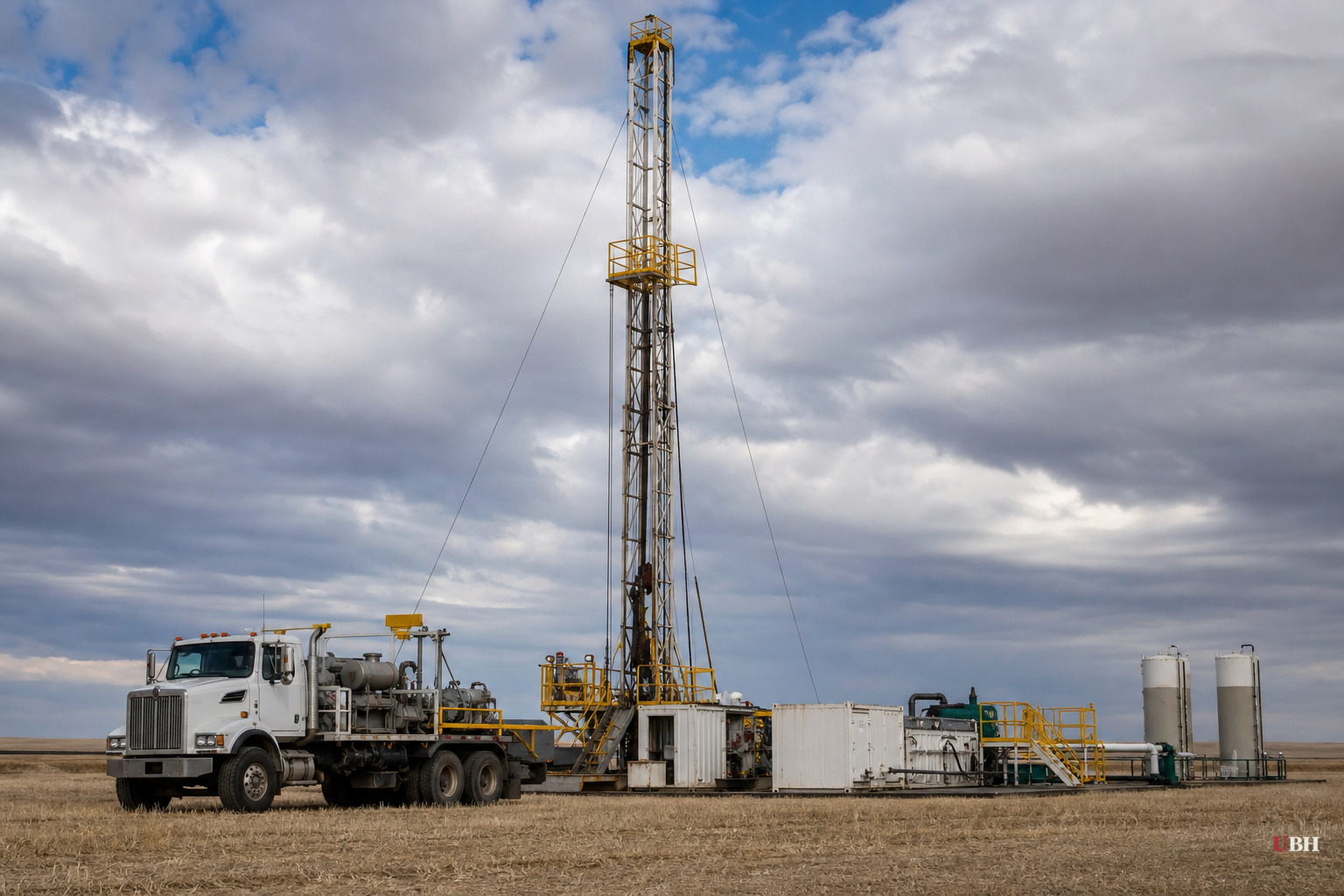
And in Saskatchewan, a Regina-based company called Max Power Mining isn't just theorizing. It's drilling. The company began work on its third well at a formation called the Lawson Complex in July, according to CBC News, and says it found 800 metres of "continuous natural hydrogen readings" in that well. Max Power president Chad Levesque told CBC the company wants to build "the world's first large-scale commercial natural hydrogen system."
Most hydrogen used today is made from natural gas or other fossil fuels, which defeats the purpose if the goal is cutting emissions. Levesque told CBC, "we're still using energy [intensive] processes to produce that molecule." Natural hydrogen skips that step entirely. If you can just drill for it like natural gas, you get a fuel that burns to nothing but water vapor without the manufacturing carbon footprint.
The scale, if it's real, is hard to overstate. OilPrice.com cited modeling estimating underground natural hydrogen reserves at roughly 5.6 million megatons worldwide, and noted a claim from Interesting Engineering that extracting just 2 percent of that would yield twice the energy in all proven natural gas reserves combined. Those are estimates, not measured reserves, and nobody has proven the gas can be extracted at that kind of scale yet. That's exactly what Max Power's Saskatchewan wells and the exploration work in the Philippines and China are trying to establish.
Nobody has commercially produced natural hydrogen at scale anywhere on Earth. A high-purity reading in one well, or seepage measurements at the surface, tells you the gas exists. It doesn't tell you whether it exists in a big enough, connected enough underground reservoir to actually pump out profitably for decades, the way an oil or gas field does.
That's a fair concern from geologists who've watched hyped subsurface resource plays fizzle before. Natural gas and oil reservoirs took over a century of drilling, mapping, and dry holes to understand. Natural hydrogen exploration is maybe a decade old as a serious commercial pursuit. Koloma's Johnson is making a confident public claim about the Philippines based on seep data and inference about connected accumulations, not proven production numbers. Max Power's 800 metres of readings is a real result from an actual well, which is more concrete, but it's one well, not a producing field.
If natural hydrogen turns out to be extractable at scale, the countries sitting on the biggest deposits get leverage overnight. The Philippines has been a net energy importer for its entire modern history. China controls most of the world's manufactured hydrogen supply chain already through its dominance in electrolyzers and rare earths. Canada, sitting on its own version in Saskatchewan, would add another energy export on top of oil, gas, and uranium it already sells to the world.
None of this changes anything for consumers this year or next. There's no natural hydrogen powering a single factory or truck fleet commercially anywhere right now. Max Power's third well is a data point, not a pipeline. When a company tries to build actual production infrastructure and sell hydrogen at a price that beats manufactured hydrogen or diesel, it will set a milestone. Nobody's done that yet. Whoever does it first won't just have a new energy source. They'll have a first-mover advantage over every government and energy major that's currently sitting on the sidelines watching wells like Max Power's in Saskatchewan.
Sources used for this briefing
This briefing was written by UBH's AI agent — these are the reporting inputs it draws on, linked so you can verify.


