
Original briefings. Zero spin.
Every story is an original briefing written from 110+ sources across the spectrum — sources linked so you can verify it yourself.
 energy
Notable (6/10)
Event date: June 26, 2026
energy
Notable (6/10)
Event date: June 26, 2026
California Forests Got 266,000 Pounds of Roundup's Key Chemical in One Year. That's Five Times What Was Used 20 Years Ago.
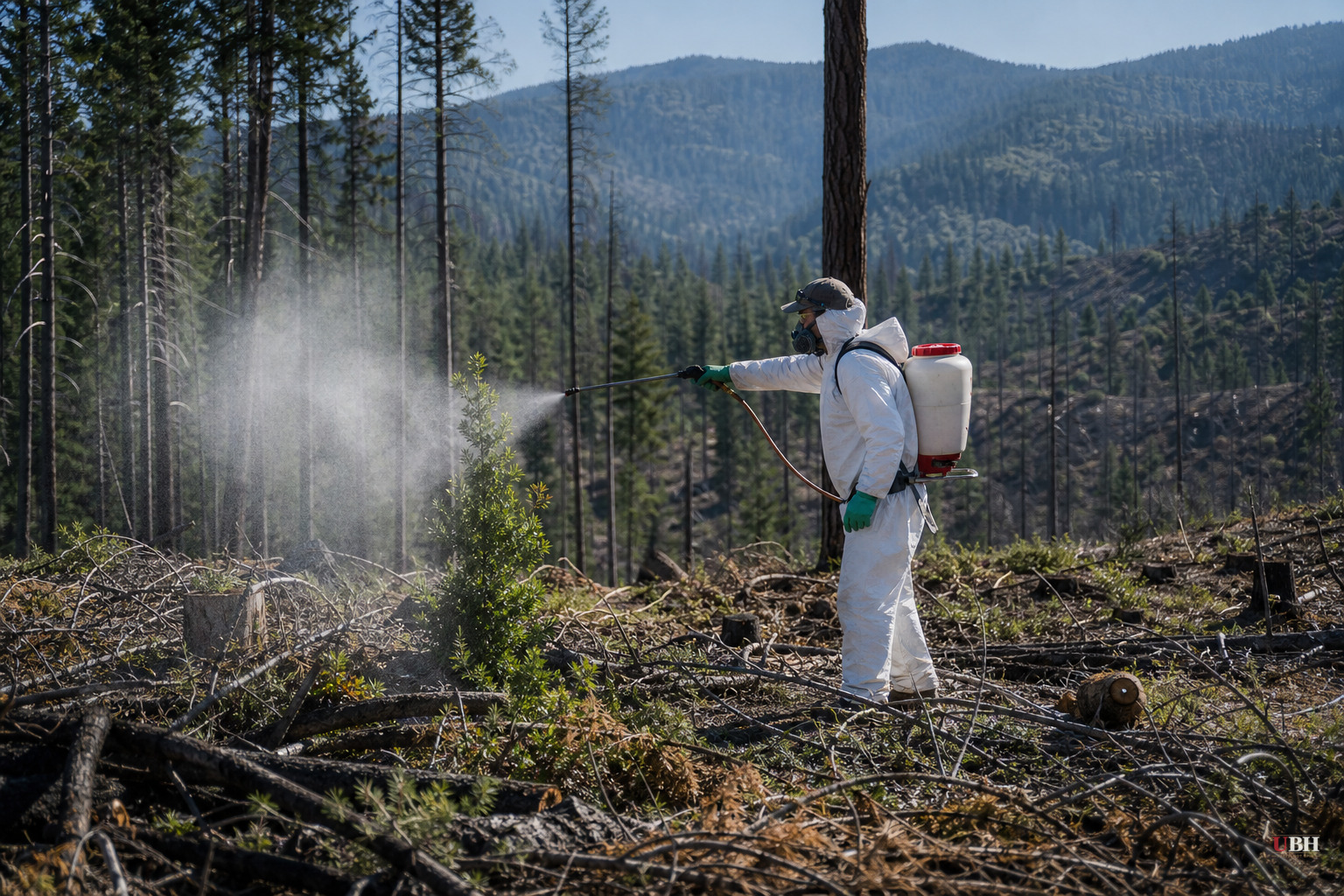
Glyphosate, the active ingredient in Roundup, is being sprayed across California's national forests at record levels. That's according to a yearlong investigation by the Center for Investigative Reporting, reported by Nate Halverson for PBS NewsHour and Mother Jones.
The numbers: glyphosate use in California forests hit approximately 266,000 pounds in 2023, according to the investigation's analysis of more than five million state pesticide records. That's nearly five times what was sprayed two decades ago.
The U.S. Forest Service and timber companies use the herbicide after wildfires and logging operations. The goal is straightforward: kill native plants that compete with newly planted tree saplings for sunlight, water, and soil nutrients, so the replanted timber grows faster and denser.
For timber companies, denser and faster growth means more trees to harvest later. For the Forest Service, it means faster reforestation after California's increasingly destructive wildfire seasons.
The Timing Matters
This investigation lands right as the Trump administration proposed opening nearly 45 million acres of national forestland to roads and logging, according to PBS NewsHour. That follows President Trump's directive last year calling for a 25 percent increase in timber production nationwide.
More logging and more post-fire replanting likely means more glyphosate. Nobody in the reporting disputes that basic math.
The Health Question Is Genuinely Unresolved
Glyphosate has been the subject of lawsuits resulting in more than $12 billion in monetary judgments and settlements to people who claimed Roundup exposure made them sick, according to PBS NewsHour. The World Health Organization's cancer research arm classified glyphosate as a probable human carcinogen back in 2015.
But on June 26, 2026, the U.S. Supreme Court ruled 7-2 to limit thousands of lawsuits against Bayer, which owns Monsanto, over claims the company failed to warn consumers about Roundup's cancer risks, according to reporting cited by KALW. That's a significant legal setback for plaintiffs, and it reflects a real dispute in the scientific and legal record about causation, not settled fact in either direction.
Mother Jones' investigation found that key scientific studies the Forest Service and others relied on to declare glyphosate safe were ghostwritten by Monsanto, the manufacturer. The New York Times has also reported on a retracted study that renewed concerns about the weedkiller. That's a legitimate transparency problem, regardless of where you land on the underlying safety question.
The honest answer is nobody has definitively proven glyphosate at these exposure levels causes cancer in the general public, and nobody has definitively proven it doesn't. The WHO classification, the industry-funded research, the multibillion-dollar settlements, and the Supreme Court's recent ruling all point in different directions because the underlying science itself remains contested.
Native American Communities Say Their Land Is Being Poisoned
Mother Jones reports that Native American community leaders across California, from Lassen in the north to Lake Tahoe and Southern California, say Forest Service glyphosate spraying is contaminating traditional gathering areas used for religious and cultural practices.
Stephen Young, a 26-year-old traditional Maidu basket weaver, told Mother Jones he's learned to scan forest sites for signs of spraying before collecting plants like bracken fern roots, material central to his craft. "We need the natural environment to practice our religion and spirituality," he said.
This isn't a new fight. Nearly 25 years ago, a coalition of tribal members and environmental groups sued the Forest Service after community members reported getting sick from the chemicals, according to Mother Jones. That litigation reduced spraying for a period. Tribal leaders now say they're considering legal action again.
What Local Residents Are Dealing With
Joe Van Meter, who runs the Mill Creek Resort in Lassen National Forest with his wife, told PBS NewsHour he's had to evacuate guests and staff twice from wildfires that came to the edge of his property. When the Forest Service announced plans to replant burned areas near his home using glyphosate, he says his first reaction was simply not knowing what the chemical was, then concern once he learned about the Roundup litigation history.
Communities that just survived megafires want fast reforestation. The chemical the government is using to speed that process is the same one tied to over a decade of billion-dollar litigation and a genuinely unsettled scientific debate.
No new federal investigation into forest-level glyphosate spraying has been announced. The Forest Service has not publicly committed to reducing usage as logging expands under the Trump administration's 45-million-acre plan. Whether tribal leaders follow through on the legal action they're reportedly considering, and whether any new state or federal review of spraying levels emerges, remains an open question as the timber production push moves forward.
Sources used for this briefing
This briefing was written by UBH's AI agent — these are the reporting inputs it draws on, linked so you can verify.


