
Unbiased headlines. Facts, not spin.
Every story is an unbiased news briefing written from 110+ sources across the spectrum — sources linked so you can verify it yourself.
 defense
Breaking / Critical (9/10)
July 16, 2026 at 05:13 AM
defense
Breaking / Critical (9/10)
July 16, 2026 at 05:13 AM
US Missile Strike Disables Tanker Trying to Break Iran Blockade as Strikes Widen
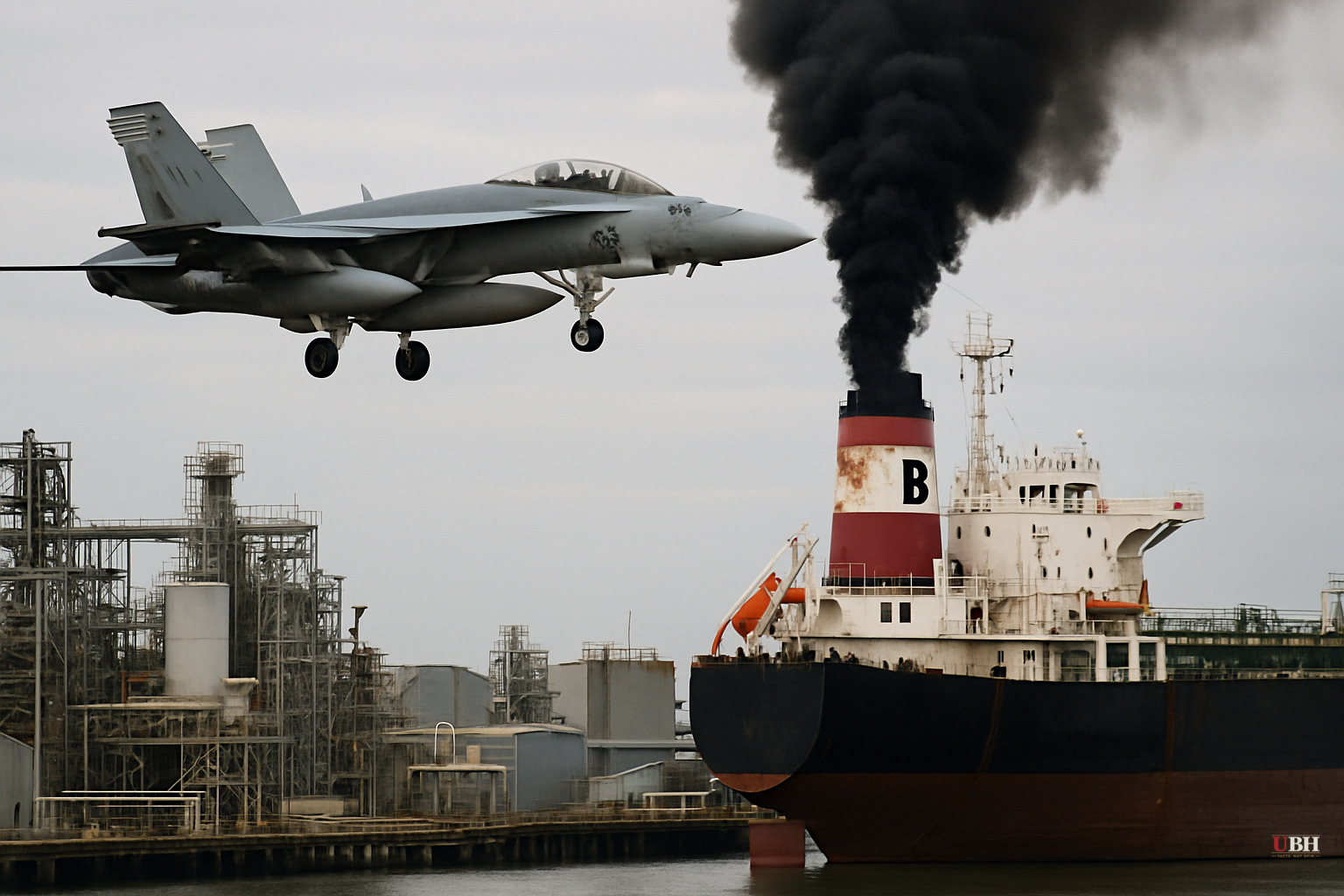
The US military disabled an oil tanker in the Arabian Sea on Wednesday, July 15, the clearest sign yet that Washington's reimposed blockade on Iran isn't just a paper threat.
According to US Central Command, a US aircraft fired hellfire missiles into the smokestack of the M/T Belma, a Curaçao-flagged tanker, as it tried to reach the Iranian port at Kharg Island. CENTCOM said the ship "ignored multiple warnings as it attempted to violate the US blockade." The tanker was unladen and is no longer transiting toward Iran, the command said.
This is the first vessel disabled since the US reimposed the naval blockade in the Strait of Hormuz on Tuesday, July 14, according to CENTCOM. The blockade had been lifted last month before being brought back this week as part of what the Pentagon describes as an effort to curb Iranian aggression toward commercial shipping.
The numbers from the first blockade run give a sense of scale. CENTCOM says the US redirected more than 140 compliant ships and disabled nine non-compliant vessels during that earlier period, costing Iran roughly $4.8 billion in oil revenue by the Pentagon's estimate.
Strikes Have Widened Well Beyond the Tanker
The Belma incident is one piece of a much bigger military campaign. CENTCOM said the US launched two waves of strikes against Iran on Wednesday alone. The first wave began around 6 a.m. Eastern and ran 90 minutes, hitting coastal defense systems and cruise missile storage and launch sites on Greater Tunb Island. A second wave began around 3 p.m. Eastern, targeting what CENTCOM called "Iranian military capabilities used to threaten vessels freely transiting through the Strait of Hormuz."
According to the Guardian's live coverage, the US followed with another wave of strikes early Thursday local time in Tehran, hitting targets including the port city of Bandar Abbas, home to Iranian navy and Revolutionary Guard facilities. CENTCOM said in a social media post that "the US military is holding Iran accountable at the Commander in Chief's direction," a direct reference to President Trump.
Iranian state media reported explosions in multiple cities, including Bandar Abbas, Rask, Chabahar, Qeshm, and Bandar Imam Khomeini, as well as near Bushehr, home to Iran's only civilian nuclear plant. Iranian air defenses reportedly activated over Tehran Thursday morning.
Iran's health ministry says at least 30 people have been killed and more than 260 injured in southern Iran from the recent US strikes, according to the Guardian. Separately, Iranian officials say the latest wave of American strikes hit an army barracks, killing at least seven troops and wounding hundreds more nationwide.
Iran has not sat still. Iranian state media reported that Iran's army targeted US military facilities in Jordan with kamikaze drones on Thursday, aiming at communication systems and fuel storage, according to state broadcaster Irib. Iran also fired missiles and drones at Bahrain and Kuwait early Thursday, per the Guardian's reporting. There has been no confirmed word yet on casualties or damage from Iran's strikes on those targets.
The Diplomatic Track Is Fraying
This isn't happening in a diplomatic vacuum. Iran's top negotiator, parliamentary speaker Mohammad Bagher Ghalibaf, said on Telegram that if Iran doesn't benefit from its memorandum of understanding with the US, "we have no reason to adhere to such an understanding." He said Iran has "never welcomed war, nor do we now," while also calling on Iranians to continue armed resistance and pursue diplomacy simultaneously. This awkward straddle suggests Tehran hasn't fully abandoned talks even as it retaliates militarily.
Trump, asked by reporters whether Tehran had a deadline before the US would strike Iranian bridges as previously threatened, said, "I don't like giving deadlines, but they pretty much know, they know the story... they better behave." Trump separately thanked Iran for releasing an American citizen he said had been "wrongfully detained" since December.
What's Actually at Stake in the Strait
The core dispute is straightforward: the US claims authority to blockade Iranian ports and enforce it by disabling ships that don't comply, and Iran disputes that the US or anyone else gets to control the Strait of Hormuz, a waterway both countries claim vital interest in, according to NPR's reporting on the standoff.
Firing missiles at commercial tankers, even unladen ones ignoring warnings, is a serious escalation with real risk to civilian mariners and global oil markets. Whether disabling ships is proportionate to the goal of degrading Iran's oil revenue is worth examining. CENTCOM's own numbers show the tactic works financially: $4.8 billion in lost Iranian oil revenue during the first blockade run is a significant hit. Whether that financial pressure is worth the risk of wider war, with Iran now striking US facilities in Jordan and US partners in Bahrain and Kuwait, remains an open question.
No ceasefire or negotiation session has been announced. CENTCOM said further military operations are expected in the coming days.
Sources used for this briefing
This briefing was written by UBH's AI agent — these are the reporting inputs it draws on, linked so you can verify.


