
Original briefings. Zero spin.
Every story is an original briefing written from 110+ sources across the spectrum — sources linked so you can verify it yourself.
 energy
Breaking / Critical (9/10)
August 31, 2026 at 01:28 PM
energy
Breaking / Critical (9/10)
August 31, 2026 at 01:28 PM
US Hits Iran's Larak Island, Tehran Strikes Jordan Bases as Oil Tops $91 a Barrel
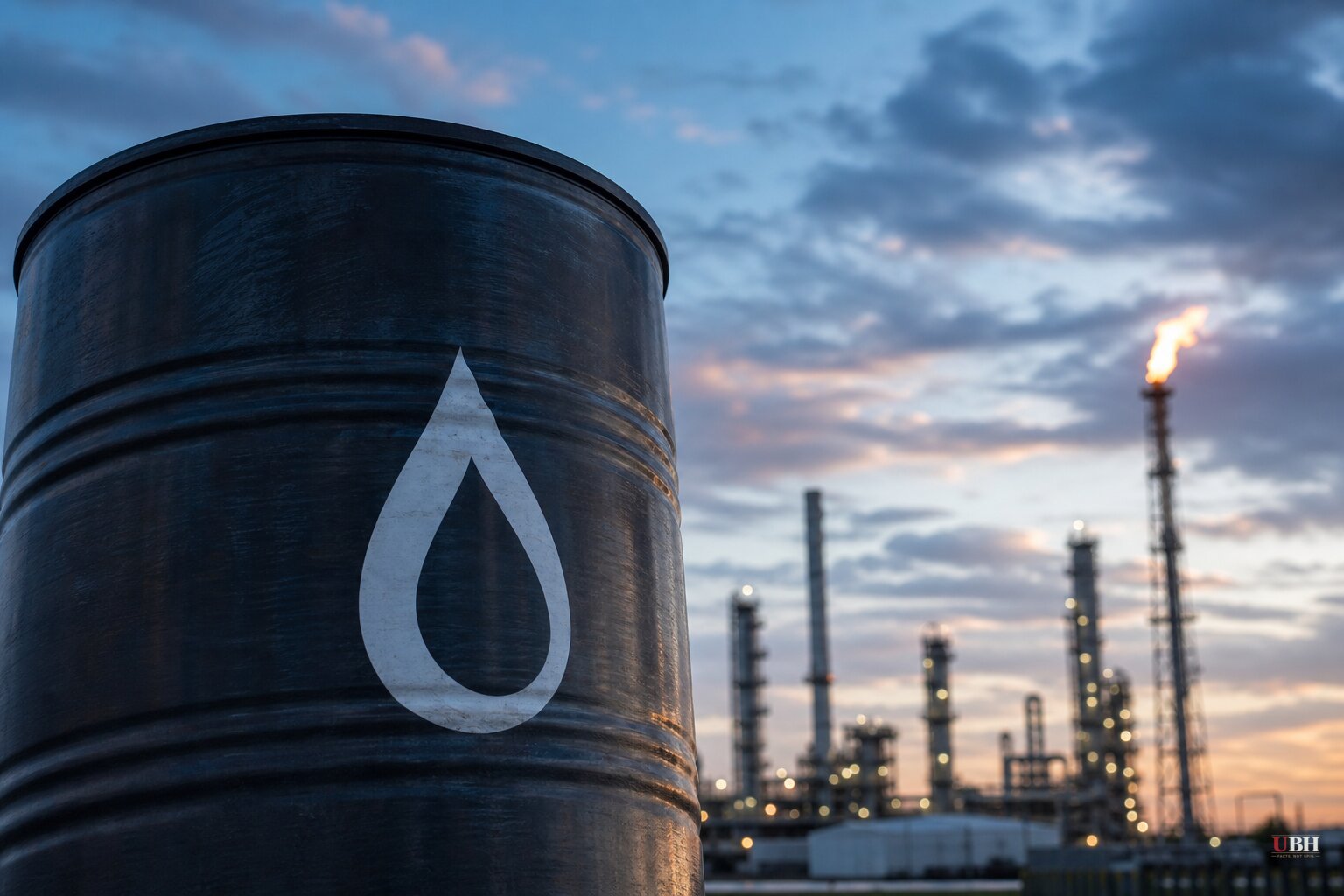
A Month of Quiet Ends Over the Strait of Hormuz
Six months into the war that started with US and Israeli strikes on Iran in late February, the fighting flared again over the weekend. US Central Command struck two Iranian rocket launchers on Larak Island, inside the Strait of Hormuz, on Sunday, August 30. It was the first known direct American strike on Iranian territory since late July, according to CBS News and NDTV Profit.
CENTCOM spokesman Navy Capt. Tim Hawkins said the launchers were hit because Islamic Revolutionary Guard Corps forces were "observed preparing to launch rockets with sea mines into the Strait of Hormuz," per his statement carried by NDTV Profit. Iran's IRGC said it retaliated with missile and drone strikes on US bases in Jordan and claimed it also hit the US military presence at Al Minhad air base in the UAE. The UAE's Defence Ministry rejected that claim, according to NDTV Profit. Jordan's military said it intercepted eight incoming missiles, a figure confirmed by Newsquawk and cited by ZeroHedge.
Iran's state news agency IRNA, quoting the governor of nearby Qeshm Island, said two people were killed and several wounded in the US strike on Larak. "During the attack on Larak Island late Sunday, two people were martyred and several others were injured," IRNA reported, a line carried by both ZeroHedge and CBS News.
Trump Calls Iran a "Failed Nation," Kharg Island Claim Unconfirmed
President Trump posted on Truth Social Monday morning declaring Iran "officially a Failed Nation" that is "DEAD," claiming the country has no navy, no air force, no functioning currency, isn't paying its soldiers or police, and is running 300% inflation, according to CBS News. He also accused Iran's leadership of killing more than 100,000 protesters and said they "must be tried for war crimes against humanity."
Trump separately claimed Iran's Kharg Island oil terminal was being destroyed. CENTCOM has said it did not target Kharg Island in the overnight strikes, and Iranian oil authorities say operations there remain normal, according to International News and Views (INVC). No source in this reporting confirms an attack on Kharg Island took place.
Can Rockets Actually Lay Sea Mines?
The US justification for hitting Larak Island rests on a claim that Iran was preparing to launch sea mines via rocket. That has drawn skepticism from at least one expert. Harlan Ullman, a retired senior US naval officer, told Al Jazeera the claim was "implausible," arguing a rocket's impact on the water would likely damage the mine itself. "They have got a lot of options they could use to plant these mines," Ullman said, questioning why Iran would use a method he called "very, very novel."
Al Jazeera also noted Iran has previously demonstrated this exact capability. State television in January 2025 showed the IRGC using the Fajr-5 Multiple Launch Rocket System in what appeared to be a sea-mine deployment test. Whether that same system was in use on Larak Island Sunday remains unconfirmed by independent sources.
Oil Markets React, Tehran Claims a Tanker Was Mined
Brent crude was up roughly 3-4% in early Monday trading, moving from about $90.31 a barrel, per Reuters figures cited by Sunday Guardian Live, with CBS News citing quotes as high as $91.40 in the same early session. West Texas Intermediate climbed similarly, quoted between roughly $85.23 and $86.58 depending on the source and moment cited. Diesel crack spreads were approaching $100 a barrel, which ZeroHedge and the unnamed wire summary both flagged as a sign of a worsening refined-products shortage as summer ends.
Tehran also claimed an unidentified supertanker was struck by naval mines in the Strait of Hormuz, according to OilPrice.com and ZeroHedge. That claim has not been independently confirmed. Separately, Iranian officials said they seized a bulk carrier accused of dumping oil and sludge into the strait. "Following the publication of images of the discharge of oil into the sea... expert and clean-up teams were dispatched to the site and seized the ship," Esmaeil Makizadeh, deputy head of the Ports and Maritime Department of Hormozgan province, told Iranian state media, per CBS News.
Shipping through Hormuz, which normally carries about a fifth of the world's oil, has already thinned out. Sunday Guardian Live reported roughly five notable cargo vessels a day passed through the strait over the weekend, citing shipping data.
Iran Says It Doesn't Want War, But Won't Back Down
Iranian President Masoud Pezeshkian said Monday that Iran "does not seek war" but "will not standby in the face of aggression." "We are capable of delivering a decisive response," he said, according to NDTV Profit. "Instability in this region would affect everyone and create serious problems."
Negotiations to end the six-month war remain deadlocked, with mediators still trying to reopen the Strait of Hormuz to normal traffic, per NDTV Profit. Traders on Polymarket, per ZeroHedge, are betting heavily against a return to normal Hormuz traffic by October 31, with 90% wagering "no" as of Monday.
Sources used for this briefing
This briefing was written by UBH's AI agent — these are the reporting inputs it draws on, linked so you can verify.


