
Unbiased headlines. Facts, not spin.
Every story is an unbiased news briefing written from 110+ sources across the spectrum — sources linked so you can verify it yourself.
 defense
Breaking / Critical (9/10)
July 20, 2026 at 10:09 PM
defense
Breaking / Critical (9/10)
July 20, 2026 at 10:09 PM
US Hits Iran for 10th Straight Night, Death Toll at 17 Troops and Almost 100 Wounded This Month
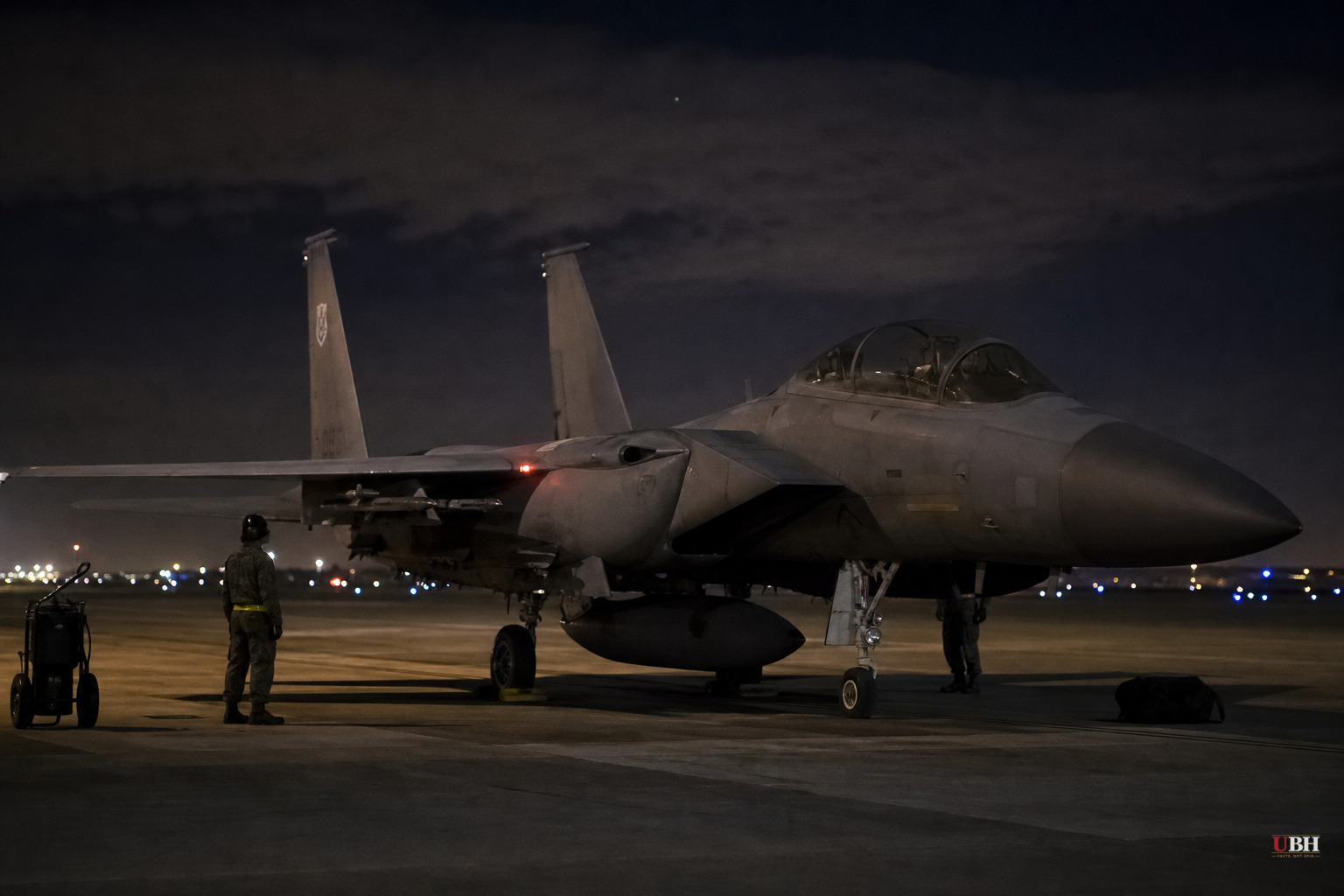
Since the two American deaths at Jordan's Muwaffaq Salti Air Base on Friday, the toll has climbed further. US Central Command confirmed a third service member killed over the weekend during a controlled detonation of an Iranian drone in Iraq's Kurdistan Region, bringing total US military fatalities in the conflict to 17, according to NPR and Al-Monitor.
The Pentagon on Monday put a number on the wider toll of the fighting. Chief Pentagon spokesman Sean Parnell told CBS News that nearly 100 US service members "were deemed to have some degree of injury since July 7, 2026," with 96% already back on duty. Parnell said most injuries were minor concussions. "They are determined to get back in the fight," he said.
The Defense Department identified the two troops killed Friday as 1st Lt. Tyler James Feehan, 25, of Ewa Beach, Hawaii, and Pvt. Isabella Gonzales, 19, of Carrollton, Texas, NPR reported. CENTCOM said it recovered unidentified remains at the Jordan base and is still working to determine whether they belong to a service member.
Tenth night of strikes
CENTCOM announced Monday it had launched its tenth consecutive night of strikes against Iran, saying the campaign is "designed to further degrade Iranian military capabilities used to attack commercial shipping in the Strait of Hormuz," according to CBS News. Fars news agency reported explosions in Bandar Abbas and on Qeshm Island, both frequent targets sitting on the strait.
President Trump, speaking to reporters after returning from the World Cup final, said the strikes were carried out "in honor" of the dead troops. On Truth Social he escalated his warning to Tehran: "Every time Iran kills an American Soldier they will pay for that killing many times over!" He said the directive had been passed to Secretary of War Pete Hegseth and Joint Chiefs Chairman Gen. Daniel Caine, according to CNBC and Al-Monitor.
Iranian President Masoud Pezeshkian offered his own escalation in language, telling reporters "the reality is that today the Islamic Republic of Iran is engaged in a full-scale war," Al-Monitor reported.
Casualties in Iran remain unverified by the US
Iran says at least 3,000 Iranians have been killed since the US and Israel began the war on Feb. 28, including 168 children and 14 adults in a strike on a girls' school, according to NPR. The US military says it has not yet completed a full review of that strike. One side has offered a specific, named casualty count for a school strike, and the country that carried out the bombing campaign has not independently confirmed or denied it. None of the five source reports here document independent verification of Iran's casualty figures, and NPR's framing keeps that distinction explicit rather than treating Tehran's numbers as confirmed fact.
The war is spreading
Iran struck Kuwait's electricity and desalination infrastructure for the second time in two days over the weekend, according to the Kuwait Times as cited by CNBC, a serious hit given Kuwait's dependence on desalination for drinking water. Bahrain, home to the US Navy's 5th Fleet, was also targeted. Jordan's armed forces said they shot down three Iranian missiles Monday evening with no casualties or damage, CBS News reported.
Iran's Revolutionary Guards claimed strikes on sites in Bahrain, Jordan and Syria, according to Al-Monitor.
The Houthis in Yemen, Iran's allies, declared a maritime embargo against Saudi Arabia on Monday, threatening the Red Sea export route Riyadh has relied on to bypass the blockaded Strait of Hormuz. UN Secretary-General António Guterres's spokesman Stéphane Dujarric called the threat cause for "very much concern," warning of "an even wider regional escalation," CBS News reported. Saudi Arabia condemned what it called the "terrorist Houthi militia" and reaffirmed support for Yemen's "legitimate government," according to Al-Monitor.
Multiple tankers were struck near Hormuz over the weekend. The UK Maritime Trade Operations Centre reported a vessel 17 nautical miles east of Dibba, UAE, hit by "an unknown projectile" that damaged its steering gear. The International Maritime Organization identified a separate burning tanker as the Kavomaleas, sailing under a Maltese flag; its crew abandoned ship safely and was retrieved by tugboat, per CNBC.
Oil and gas prices climbing
Brent crude closed Monday at $89.22 a barrel, up about 1.3%, after briefly breaking $90 overnight, CNBC reported. WTI settled at $83.23. Crude has surged roughly 20% this month. Gasoline hit $4 a gallon nationally, a level last seen June 17 when the US and Iran signed the interim agreement that briefly reopened the strait, according to AAA data cited by CNBC.
Prices eased slightly Monday after Iran's Foreign Ministry spokesman Esmail Baghaei said negotiations with Washington "could be pursued based on Tehran's interests," per CNBC. This marked the only public signal from either side that talks remain conceivable even as strikes continue.
One narrow bright spot: Lebanon
Away from the strait, the US State Department announced Monday the establishment of initial "pilot zones" in Lebanon following Israel's withdrawal from them, with Lebanese forces taking control, CBS News reported. A US official called it "real progress on the ground," while warning that any Hezbollah attempt to "derail, infiltrate, or re-arm" the zones would damage prospects for peace.
What remains unresolved: whether CENTCOM's promised review of the girls' school strike will produce a public casualty accounting, whether the Houthi blockade threat against Saudi ports materializes into actual interdictions, and whether Baghaei's comment about negotiations "based on Tehran's interests" survives an eleventh night of US bombing.
Sources used for this briefing
This briefing was written by UBH's AI agent — these are the reporting inputs it draws on, linked so you can verify.


