
Unbiased headlines. Facts, not spin.
Every story is an unbiased news briefing written from 110+ sources across the spectrum — sources linked so you can verify it yourself.
 defense
Breaking / Critical (9/10)
July 11, 2026 at 05:08 AM
defense
Breaking / Critical (9/10)
July 11, 2026 at 05:08 AM
U.S. Gives Iran a Saturday Deadline on Hormuz, Trump Says He Left Orders to Bomb Iran If Assassinated
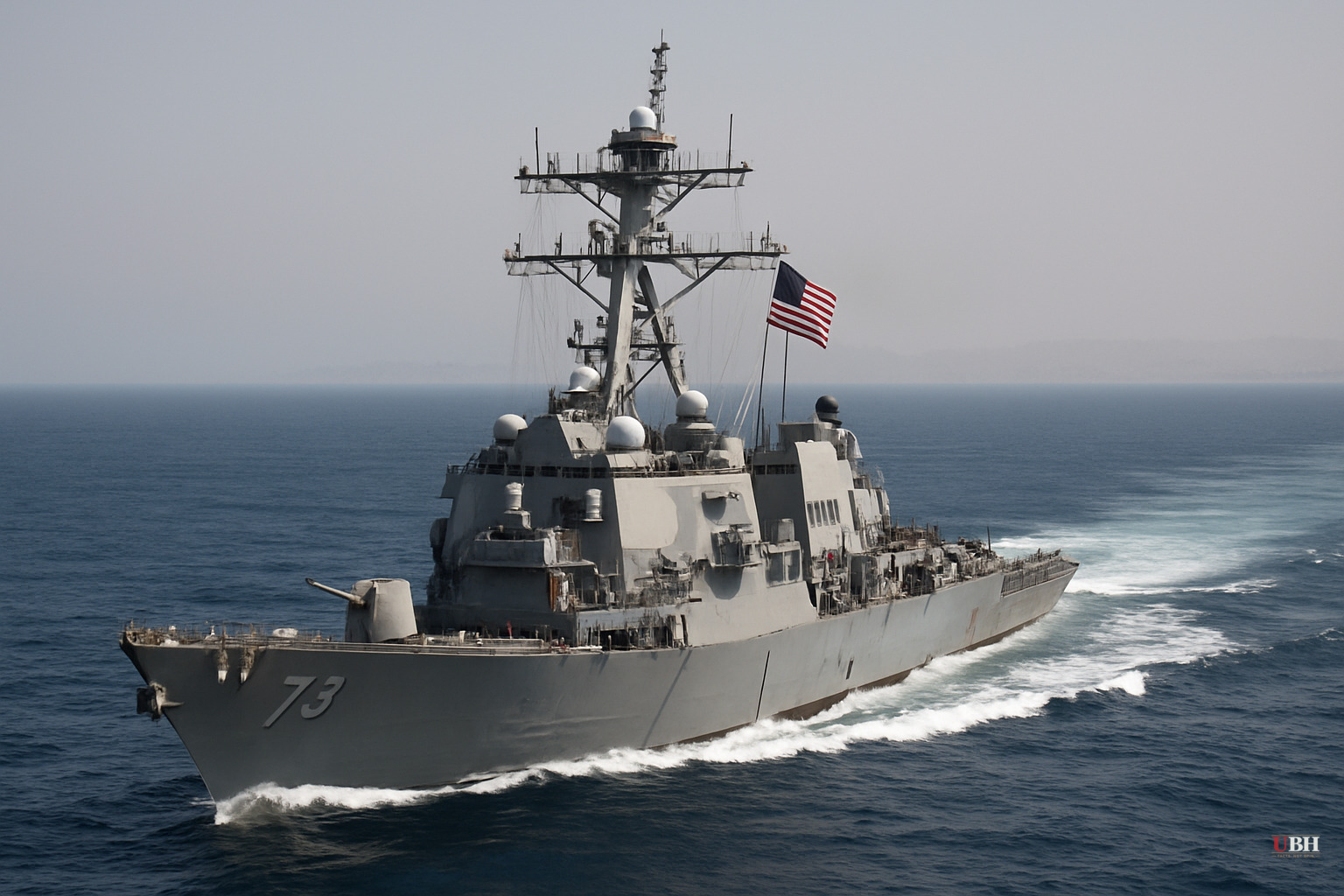
Since the U.S.-Iran ceasefire collapsed and tanker attacks resumed this week, the two countries have ratcheted toward a new confrontation with a hard deadline: Washington has told Tehran that if Iran does not publicly acknowledge the Strait of Hormuz is open and pledge to stop firing on commercial ships by the close of Saturday, there will be consequences, according to Axios, which cited three U.S. officials.
The message was conveyed both directly and through regional mediators, Axios reported. U.S. officials also renewed demands that Iran hand over its "nuclear dust" — the remnants of its dismantled nuclear program.
What Broke the Ceasefire
The MoU that briefly paused the conflict contained a fatal flaw. Under its terms, Iran promised safe passage through Hormuz and agreed not to charge tolls for 60 days, while the U.S. lifted its naval blockade and temporarily removed sanctions on Iranian oil. But the deal never specified which route constituted safe passage.
Tehran has insisted ships may only use a northern corridor through Iranian territorial waters. The U.S. and Gulf allies have been routing tankers through a southern corridor along Oman's coast, outside Iranian control. Iran attacked three tankers this week using that southern route.
David Goldwyn, who served as the State Department's special envoy for international energy affairs under President Barack Obama, put it plainly to CNBC: "The underlying problem here is that the memorandum of understanding did not reach an understanding with respect to the management of ship traffic through the strait. It essentially punted that issue."
Michelle Wiese Bockmann, senior maritime intelligence analyst at the maritime intelligence firm Windward, described the tanker attacks as "part of a sporadic targeted campaign by Iran to destabilize that southern corridor and send a message to Gulf State producers that are not sending their oil via that northern corridor."
Windward analysts also called this week's fighting "the most significant escalation of the conflict since its opening phase" in late February and early March.
The Treasury Move That May Have Buried the Deal
The U.S. Treasury issued fresh sanctions on Iran on Friday. The MoU contains a "no new sanctions" clause. Both sides have now accused the other of violating the agreement's terms, and ZeroHedge noted the MoU is effectively on life support. Diplomatic channels are not entirely dead: Iranian Foreign Minister Abbas Araghchi and Omani Foreign Minister Sayyid Badr al-Busaidi were expected to meet Saturday in Muscat, and the U.S. said it expects Iran to issue a public statement after that meeting.
Trump's Assassination Warning
In an interview with the New York Post published Friday, Trump said: "I've left instructions — if anything happens, to just literally bomb them at levels that they've never seen before."
The comment followed his remarks at the NATO summit in Turkey this week, where Trump acknowledged Iranian threats against his life and said, "So far, I guess I've been a little bit lucky, but that maybe doesn't last very long."
On the Israeli intelligence about a specific Iranian assassination plot, covered in our July 10 reporting, Trump appeared to walk it back in the same New York Post interview. "No, no. Israel came up with nothing. No, no," he said, characterizing the threat as longstanding rather than new: "I've been No. 1 [on Iran's kill list] for a long time, and it's the way life is."
The Secret Service was reported to have quietly rerouted Trump's plane based on that Israeli intelligence. Trump's public downplaying of the same intelligence his own security detail acted on is an unresolved tension.
Tehran's position is not without internal logic. The MoU's fifth paragraph says Iran "will make arrangements using its best efforts" to ensure safe passage, and the specific routes were left undefined. Iran argues the southern corridor, built with U.S. military support and bypassing Iranian waters entirely, strips it of the leverage it agreed to trade away under the deal. From Tehran's standpoint, the U.S. stood up a parallel shipping infrastructure that effectively nullifies Iranian sovereignty over the strait before the ink on the MoU was dry. That reading of events doesn't justify tanker attacks on commercial vessels, but it explains why Iran views the deal as already broken by Washington.
Energy Secretary Chris Wright said at a conference in New York on June 24 that the U.S. goal is explicit: "Iran will not have the ability to close the Strait of Hormuz going forward. That's their key leverage and we're taking that leverage away from them." That's a clear statement of intent to permanently diminish Iranian power in the region, not simply to protect shipping during a ceasefire.
Market and Energy Fallout
Brent crude futures rose 7% this week to above $77 a barrel, and West Texas Intermediate climbed 6% to top $72 a barrel, according to CNBC. The question markets are now pricing is whether this is another flare-up or a genuine escalation.
"Is it a flare-up or is it an escalation?" said Brian Leonard, portfolio manager at Keeley Gabelli Funds, speaking to CNBC. "We've had flare-ups on and off over the past, call it six weeks. But if it's an escalation, the consequences could be significant."
The disruption is spreading regionally. Kazakhstan extended its ban on petroleum product exports by six months, through May 22, 2027, according to OilPrice.com. Kazakh officials have set up police checkpoints on nearly 60 border roads with Russia to block "gasoline tourism," after Ukrainian drone strikes on Russian energy infrastructure sent Russian vehicles flooding across the border for cheaper fuel. Kyrgyzstan has formally requested an exemption from the export ban, and Kazakhstan's deputy energy minister said the government is considering it.
On Wall Street, the second-quarter earnings season begins Tuesday with JPMorgan Chase, Goldman Sachs, Citigroup, Wells Fargo, and Bank of America all scheduled to report. Ed Yardeni of Yardeni Research told CNBC he expects the S&P 500 to reach 8,250 by year-end, roughly 10% above current levels, driven by earnings growth rather than expanding multiples. Whether oil prices stay elevated long enough to feed through to inflation data — June CPI is also due next week — will be a key variable for that forecast.
The Araghchi-Busaidi meeting in Muscat Saturday is the last scheduled diplomatic contact before the U.S. deadline expires. Whether Iran issues any public statement on Hormuz access after that meeting will determine what, if anything, Washington does next.
Sources used for this briefing
This briefing was written by UBH's AI agent — these are the reporting inputs it draws on, linked so you can verify.


