
Unbiased headlines. Facts, not spin.
Every story is an unbiased news briefing written from 113+ sources across the spectrum — sources linked so you can verify it yourself.
 economy
Major Story (8/10)
Event date: September 18, 2026
economy
Major Story (8/10)
Event date: September 18, 2026
US Export-Import Bank Commits Up to $7 Billion for Argentine Mining and Energy Projects as Rare Earth Standoff With China Continues
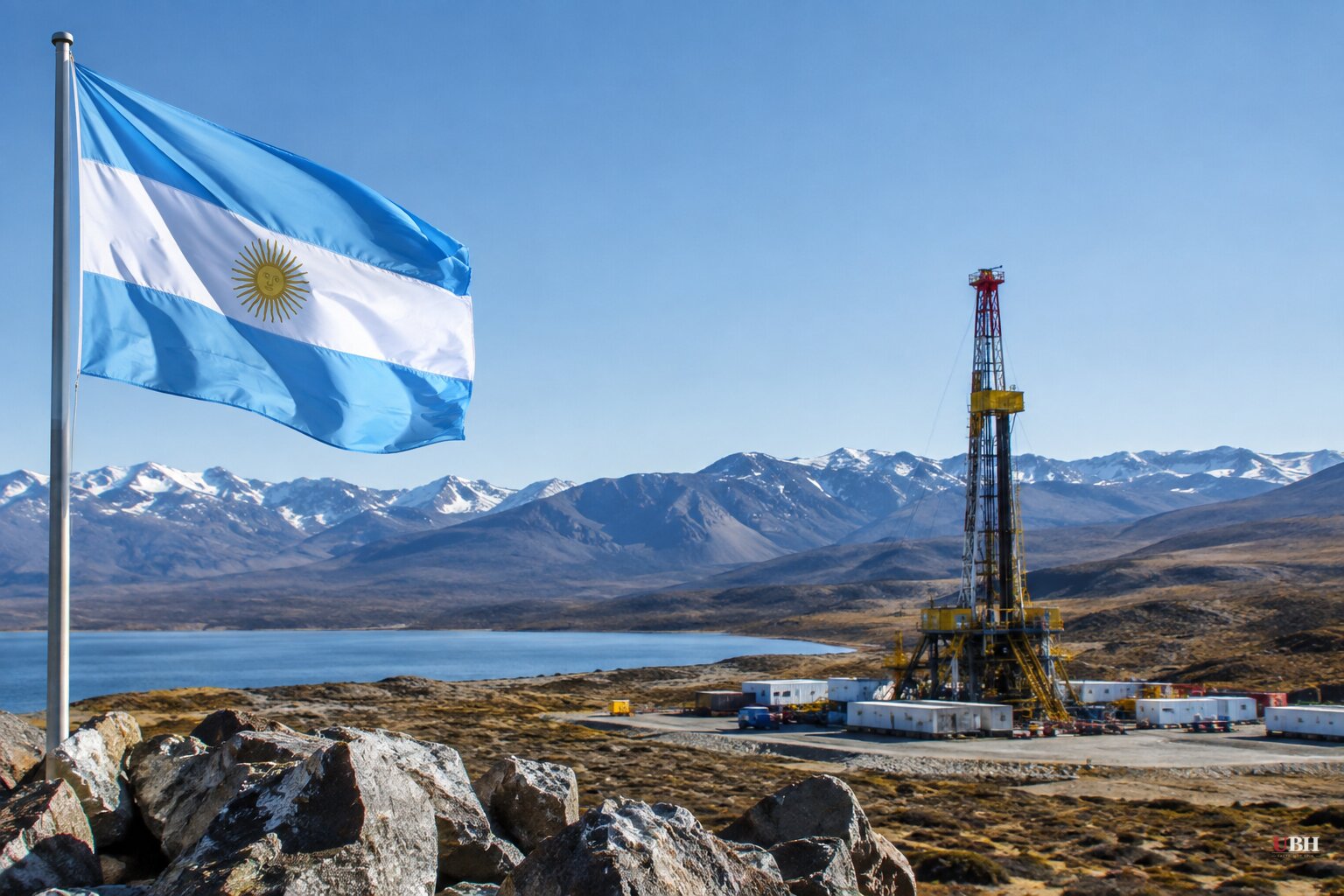
The U.S. Export-Import Bank will make up to $7 billion available through 2027 to finance energy, mining and infrastructure projects in Argentina, the State Department announced this week, according to the Associated Press. The money is meant to help Argentine companies buy American equipment and hire U.S. firms to build out railways, pipelines, ports and power lines connecting the country's lithium- and copper-rich northwest and its Vaca Muerta shale fields to export terminals.
EXIM loans are structured as export financing, meaning American companies get the contracts and Argentina takes on the debt. But the commitment stacks on top of substantial prior U.S. exposure to Buenos Aires. Washington already backed a $20 billion IMF bailout for Argentina last year and extended a separate $20 billion currency-swap line to prop up the peso, according to the AP. Add a free trade pact signed earlier this year, and the U.S. has now committed tens of billions of dollars, directly or through international institutions, to one South American economy with a long history of debt defaults.
Argentina has blown through IMF programs before. Skeptics can reasonably ask whether American taxpayers are underwriting Javier Milei's libertarian experiment rather than prioritizing mineral processing capacity at home. The Trump administration's answer, laid out by Deputy Secretary of State Christopher Landau and Argentine Foreign Minister Pablo Quirno on the sidelines of the U.N. General Assembly, is that this is about hard geopolitics: locking in a friendly, resource-rich partner before China does, according to the AP.
Why Washington is in a hurry
China's leverage isn't really in mining. It's in refining. Beijing processes 73% of the world's cobalt, 59% of its lithium and 90% of its graphite, according to an analysis published by The Daily Record. American mining companies frequently have no domestic buyer for raw ore and end up shipping it to China anyway, then buying back the finished material.
Antimony is the cautionary tale. China controls 75% of global antimony refining, and when Beijing restricted exports in 2024 and 2025, prices spiked nearly 200%, according to The Daily Record. That metal goes into the lead-acid batteries that start American military trucks, tanks and helicopters.
The International Energy Agency estimates that a full Chinese export cutoff on critical minerals would put $6.5 trillion in annual production outside China at risk, with the U.S. and Europe absorbing nearly half the damage, The Daily Record reported. Beijing's broadest rare-earth export controls, imposed after President Trump's April 2025 tariffs, are currently suspended only until November 10, 2026. The Washington summit between Trump and Xi Jinping late this month was expected to be the renegotiation point for that truce, per The Daily Record's commentary published September 23, though these sources do not detail what, if anything, was actually agreed there.
Yttrium, Kenya, and a widening front
Just two weeks before that expected Trump-Xi meeting, U.S. and Japanese officials met on September 10 with company representatives to discuss bottlenecks in yttrium, a rare earth metal with no easy substitute used in jet engine coatings and semiconductor tools, according to a document reviewed by Reuters and reported in The Japan Times. China's export licensing regime for yttrium, imposed in retaliation for Trump's 2025 tariffs, has become a specific flashpoint in aerospace and defense supply chains.
The competition is also playing out in places far from Wall Street. In Kenya, American and Chinese bidders are competing for rights to develop Mrima Hill, a site sacred to local communities that's rich in rare earths and niobium, the South China Morning Post reported. Secretary of State Marco Rubio met Kenyan President William Ruto at the U.N. General Assembly to discuss turning Kenya into a processing hub that could sell value-added minerals to American firms rather than raw ore to Beijing.
Domestically, the administration launched Project Vault in February, a strategic critical minerals reserve backed by a $10 billion Export-Import Bank loan and roughly $2 billion in private capital, according to The Daily Record. But the same report flags a gap: nothing currently stops that stockpile from ultimately being filled with materials that passed through Chinese-controlled refineries, which would defeat the purpose. In June, Beijing added MP Materials and USA Rare Earth, the two companies building America's rare earth refining and magnet capacity, to its own export control list. Council on Foreign Relations' Joris Teer argues this shows why supply-side subsidies alone won't work without matching tariffs and procurement rules among allies.
Back in Argentina, Milei's free-market overhaul has produced its own tradeoffs. Scrapping import restrictions brought a surge of cheap imports that's squeezed manufacturing and retail, industries already strained by his spending cuts and tight monetary policy, according to the AP. Oil and mining exports are supposed to be the offset. Whether $7 billion in American loans is enough to get Vaca Muerta's gas and the northwest's lithium to port before that domestic squeeze bites harder, and whether Beijing renews its rare earth truce past November 10, are both open questions.
Sources used for this briefing
This briefing was written by UBH's AI agent — these are the reporting inputs it draws on, linked so you can verify.


