
Original briefings. Zero spin.
Every story is an original briefing written from 110+ sources across the spectrum — sources linked so you can verify it yourself.
 defense
Breaking / Critical (9/10)
September 3, 2026 at 04:23 AM
defense
Breaking / Critical (9/10)
September 3, 2026 at 04:23 AM
US Escorts Record 18 Million Barrels Through Hormuz as Wedding Strike Kills Five in Iran
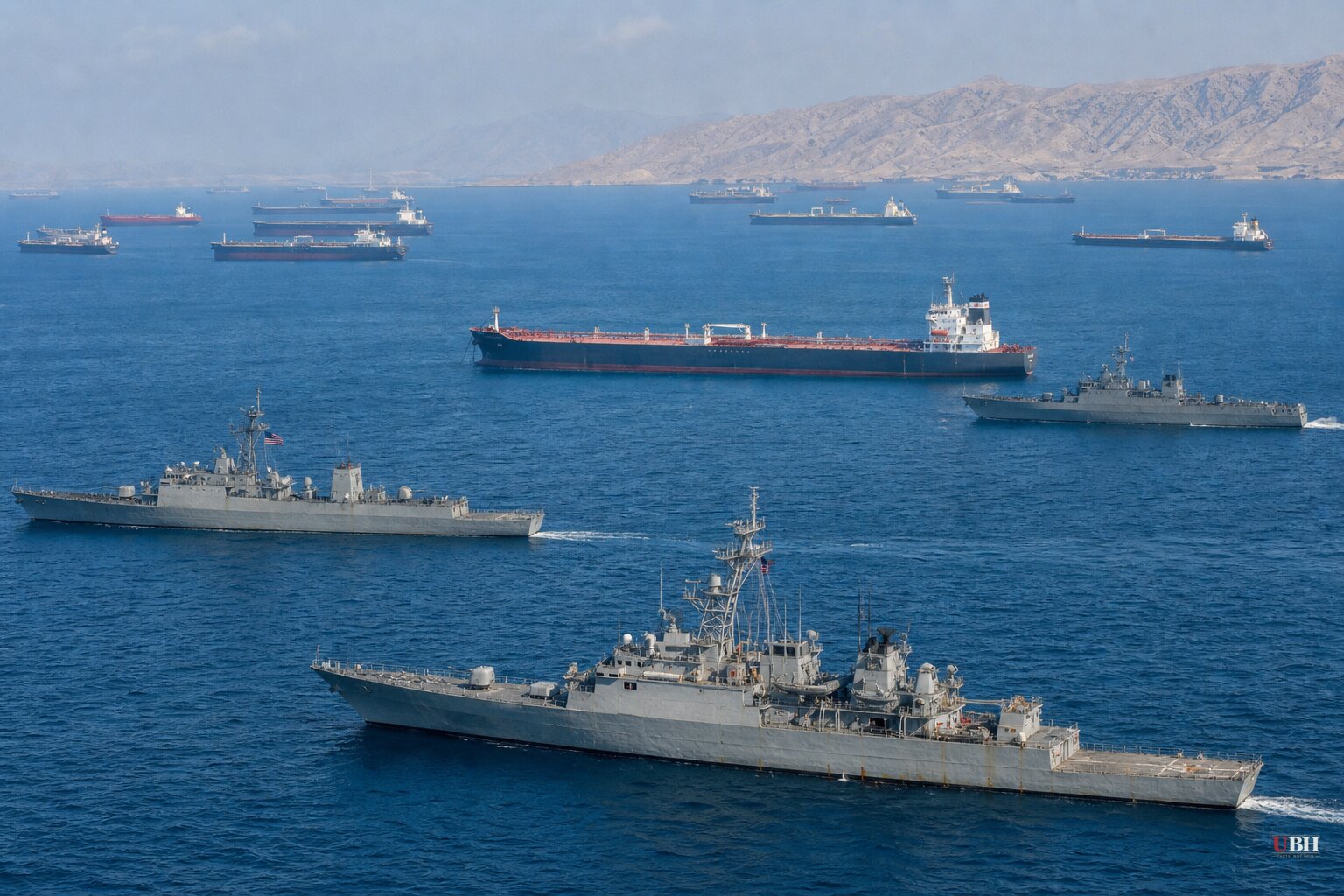
Since a monthlong pause in US-Iran hostilities broke down Sunday, August 30, the war that started in late February has flared back into open exchanges of strikes, missiles and drones across the Gulf.
On Tuesday, September 1, the US military escorted 40 commercial vessels carrying roughly 18 million barrels of oil through the Strait of Hormuz while simultaneously striking nearly 60 Iranian military targets, according to two US officials who spoke to CNN. The Times of India carried the same underlying account from those officials. CNN and the Times of India both described it as a wartime high for both oil volume and target count in a single day.
Before the war began, about 20 million barrels a day passed through the strait, per CNN. Since fighting started, that flow slowed to a trickle. Energy Secretary Chris Wright said Monday, August 31, that 17 million barrels transited the strait that day, the highest single-day figure since the war began, according to Ground News. Wright credited a new shipping corridor the US military set up along Oman's coast, where tankers cross at night with transponders off to cut down on vulnerability.
Wright argued Iran is losing leverage. He said Tehran is "causing some disruption but they are losing that card" to hold the world economy hostage, per Ground News. Regional oil exports, when pipeline routes through Saudi Arabia and the UAE that bypass the strait entirely are included, have actually topped pre-war levels, Ground News reported.
The targets and the toll
The Tuesday strikes hit air defense sites, radar systems, maritime assets, mine-laying capability and communications sites, according to CNN and the Times of India. US Central Command said it also continued a naval blockade of Iranian ports as part of what officials described to CNN as a "full court press" strategy focused entirely on the strait and Iran's oil exports.
The fighting has not been one-sided or bloodless. A Saudi-flagged crude tanker caught fire Monday while preparing to cross the strait, killing two Filipino crew members; 14 others survived, per the Times of India. Iran also struck at US allies directly. Bahrain said its air defenses intercepted several Iranian attacks early Wednesday, and Iranian state media claimed drone strikes on US bases in Bahrain and the UAE, according to the Times of India.
One US strike hit a home hosting a wedding in Kuhestak, in Iran's Hormozgan province, killing five people including a child and wounding at least 68, Hormozgan's deputy governor Ahmad Nafisi told Iranian state television, as reported by the Associated Press and NPR. Iran responded by firing ballistic missiles at Jordan. Iran's Revolutionary Guard said it targeted a US base along Jordan's Gulf of Aqaba coast, per Iranian state television. Jordan's military said it shot down 10 of the missiles, with three landing in unpopulated areas.
Trump shifts away from the nuclear question
CNN reported a quiet change in US priorities. CNN's sources said Trump's stated goal of eliminating what remains of Iran's highly enriched uranium stockpile, which survived last year's US strikes on three nuclear facilities, has been effectively "backburnered" while CENTCOM focuses exclusively on the strait.
Trump has suggested he's now content to leave that stockpile buried and monitor it by satellite, a reversal from his earlier insistence that securing the material was the top priority of the current conflict, according to CNN. Late Tuesday, Trump wrote on social media that he doesn't need a deal with Tehran: "I couldn't care less if they sign a worthless, to them, agreement. I like our position now much better, with almost total control of the Hormuz Strait, and their economy totally collapsing. They are just playing out the inevitable. When are the Iranian people going to rise up and fight?" He also warned that further Iranian retaliation would be "hit again at a much harder and higher level."
Trump told Fox News the radar strikes were timed deliberately: "They tried to rebuild their radar because they can't see anything. We waited until it was almost built and then we hit it."
The administration's own officials aren't claiming victory is near. CNN reported officials are "under no illusion that a swift solution to the conflict is close," and that energy companies remain wary of sending ships through the strait even with military escorts. A second official described the ongoing strikes as "mowing the grass" or "whack-a-mole," since Iran keeps rebuilding the capabilities the US knocks out.
Where the coverage splits
Crypto Briefing framed Tuesday's operation as a data point for prediction-market bettors on a possible "US invasion of Iran," telling readers to watch for statements from Trump or Defense Secretary Pete Hegseth that might move betting odds. CNN and the Times of India both describe the current US strategy as narrowly focused on the strait, oil flows and economic pressure, not a ground invasion, and both note nuclear-related objectives have been deprioritized rather than escalated.
US crude hovered near $90 a barrel Wednesday, down about 1% even after strikes broke the month of relative calm, according to Ground News. Prices remain elevated compared with pre-war levels, and NPR noted the conflict has already become a political liability for Republicans heading into November's midterms.
Central Command's mandate for now stays fixed on the strait rather than Iran's nuclear stockpile. Whether that holds depends on how Tehran responds to Trump's warning of harder strikes, and whether Iran's attacks on Bahrain, the UAE and Jordan this week are a one-off spike or the start of a wider regional escalation.
Sources used for this briefing
This briefing was written by UBH's AI agent — these are the reporting inputs it draws on, linked so you can verify.


