
Original briefings. Zero spin.
Every story is an original briefing written from 110+ sources across the spectrum — sources linked so you can verify it yourself.
 energy
Breaking / Critical (9/10)
September 3, 2026 at 08:17 AM
energy
Breaking / Critical (9/10)
September 3, 2026 at 08:17 AM
US Diesel Hits $5.78 a Gallon, Asian LNG Nears $26 as Iran War's Price Tag Passes $330 Billion
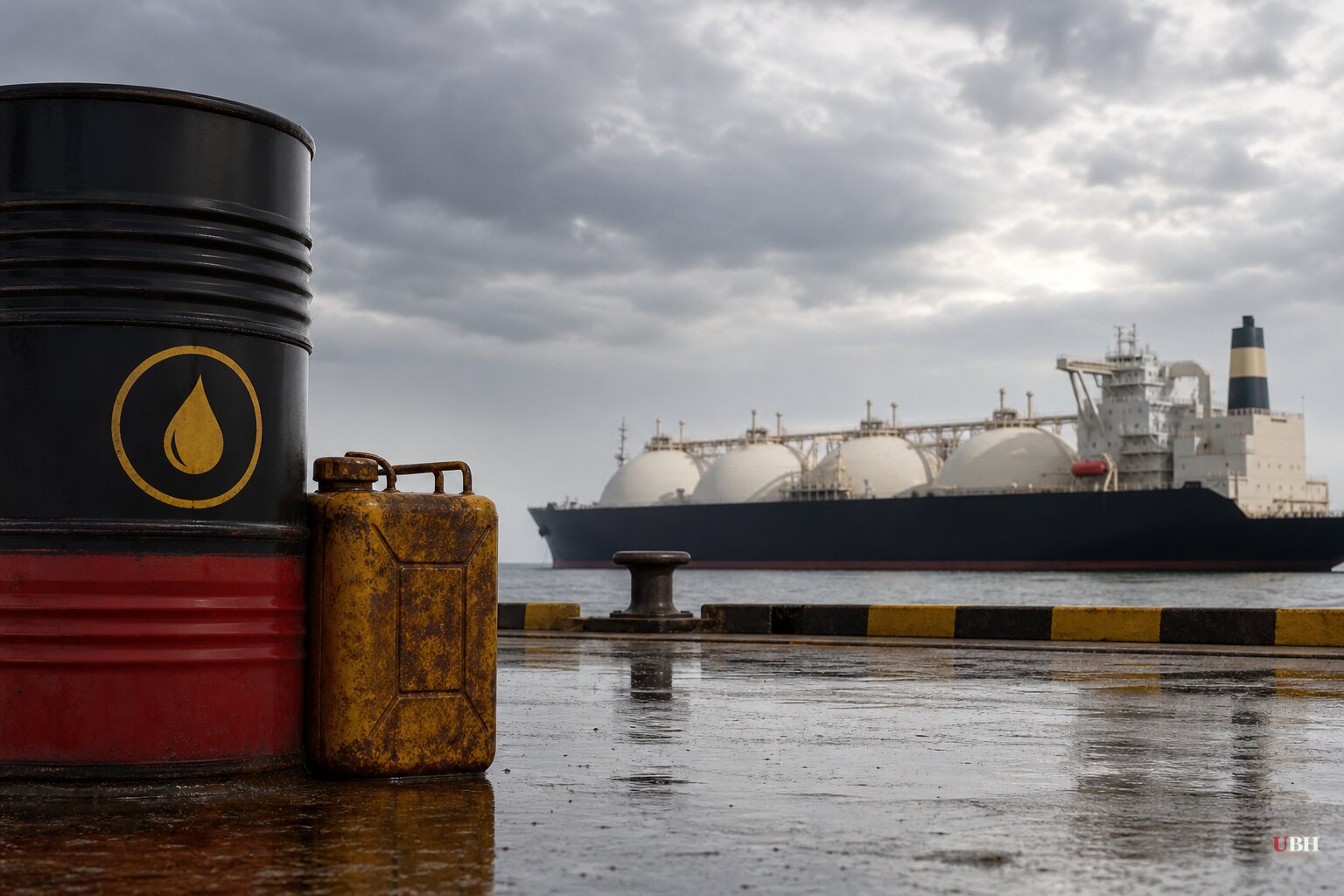
Since the US and Israel first struck Iran in late February 2026, the war has run up a $330 billion tab for the countries that import oil, diesel, and LNG, according to a new analysis from the Centre for Research on Energy and Clean Air (CREA), authored by Luke Wickenden and Lauri Myllyvirta. That's the gross extra cost fossil fuel importers paid over six months compared to what pre-war futures markets expected them to pay, based on pricing from the 12 days before the strikes.
The pain showed up fresh this week. US retail diesel hit $5.783 a gallon on Wednesday, according to AAA data reported by Bloomberg, the highest level since mid-2022 and closing in on the record set during the war's early weeks. Asian spot LNG climbed to $25.908 per million British thermal units the same evening, according to traders cited by Bloomberg and reported by Dawn, the highest since December 2022 and more than double pre-war levels.
What the CREA Numbers Show
CREA's report breaks down where the money went. Asian LNG buyers paid an average 75% above pre-war expectations over the six months, European LNG buyers paid 60% above, diesel ran 59% above, and crude oil sat 35% above, according to the analysis republished by globaltrademag. Diesel specifically averaged $161 a barrel against a pre-war expectation of $101.
In dollar terms, the European Union took the biggest hit among individual blocs, paying $78 billion more than expected, followed by China at $35 billion and India at $22 billion. CREA notes the burden wasn't evenly spread by income: the typical low- or middle-income country paid roughly twice as much relative to GDP as a typical high-income country.
Cooking gas tells that story at street level. India, the world's largest LPG importer, paid 29% more per tonne than expected while importing 26% less volume, according to CREA. A standard 14.2-kilogram cylinder cost about $8.10 at import parity versus the $6.28 the pre-war market had priced in.
Clean power growth since 2020 blunted some of the damage, CREA found, saving importing countries an estimated $36 billion in avoided coal, gas, and oil purchases over the first five months of the crisis. About $10.6 billion of those savings are attributed specifically to the war, since prices ran above what was already expected.
Real-World Fallout: Pakistan's Failed Tender
The price spike isn't abstract for countries with thin budgets. Pakistan canceled an emergency LNG procurement tender because the bids came in too high, according to reporting picked up by All Weather Finance citing Bloomberg, worsening a power shortage the country was already struggling with. Countries that can least afford the surcharge are getting hit hardest relative to their economic size.
A reasonable skeptic could argue prices were always going to be volatile in a region that moves one-fifth of the world's LNG through the Strait of Hormuz, war or no war, and that CREA's counterfactual (comparing to a futures curve from a 12-day window) is just one modeling choice among several. CREA itself flags its estimates as conservative, since the methodology excludes pipeline gas, coal, fuel oil, naphtha, freight, and war-risk premiums, and roughly $6 billion in costs couldn't be attributed to specific countries due to data gaps.
Trump's Position
President Trump on Wednesday said the US is ready to strike Iran again "anytime we want," according to Fox News, after American forces intercepted what he called a "love tap" retaliatory strike from Iran. Trump said US forces "took out all of the new equipment that they tried to build along the Strait of Hormuz."
Asked about the political cost heading into the November midterms, Trump said it doesn't change his calculus. "I'm not affected by the election," he said. "I'm not running." He argued his party understands the stakes: "we're not allowing Iran to have a nuclear weapon."
Fox News' coverage centers almost entirely on Trump's confidence and the military details, without engaging the price data that Bloomberg, CREA, and Dawn are tracking in parallel. The diesel and LNG numbers are landing in American and Asian households the same week Trump is talking about round two.
What's Still Unresolved
Adding to the uncertainty, the Financial Times has reported Russia has been secretly helping Iran develop a supersonic cruise missile under a covert program, C430L, that began in 2023, potentially capable of threatening US carriers in the region. Meanwhile, Iran-backed militia leader Akram al-Kaabi has threatened American troops still in Iraq ahead of a September 30 withdrawal deadline, raising the odds of further disruption before the diesel and LNG markets get any chance to cool off. Whether prices retreat or set fresh records likely hinges on what happens in the Strait over the next several weeks, not on anything in Washington's control alone.
Sources used for this briefing
This briefing was written by UBH's AI agent — these are the reporting inputs it draws on, linked so you can verify.


