
Original briefings. Zero spin.
Every story is an original briefing written from 110+ sources across the spectrum — sources linked so you can verify it yourself.
 energy
Major Story (8/10)
Event date: September 2, 2026
energy
Major Story (8/10)
Event date: September 2, 2026
Japan's Largest Tanker Line Says Hormuz Risk Won't Ease This Year, as Analysts Split on How Much Gulf Oil Is Still Shut In
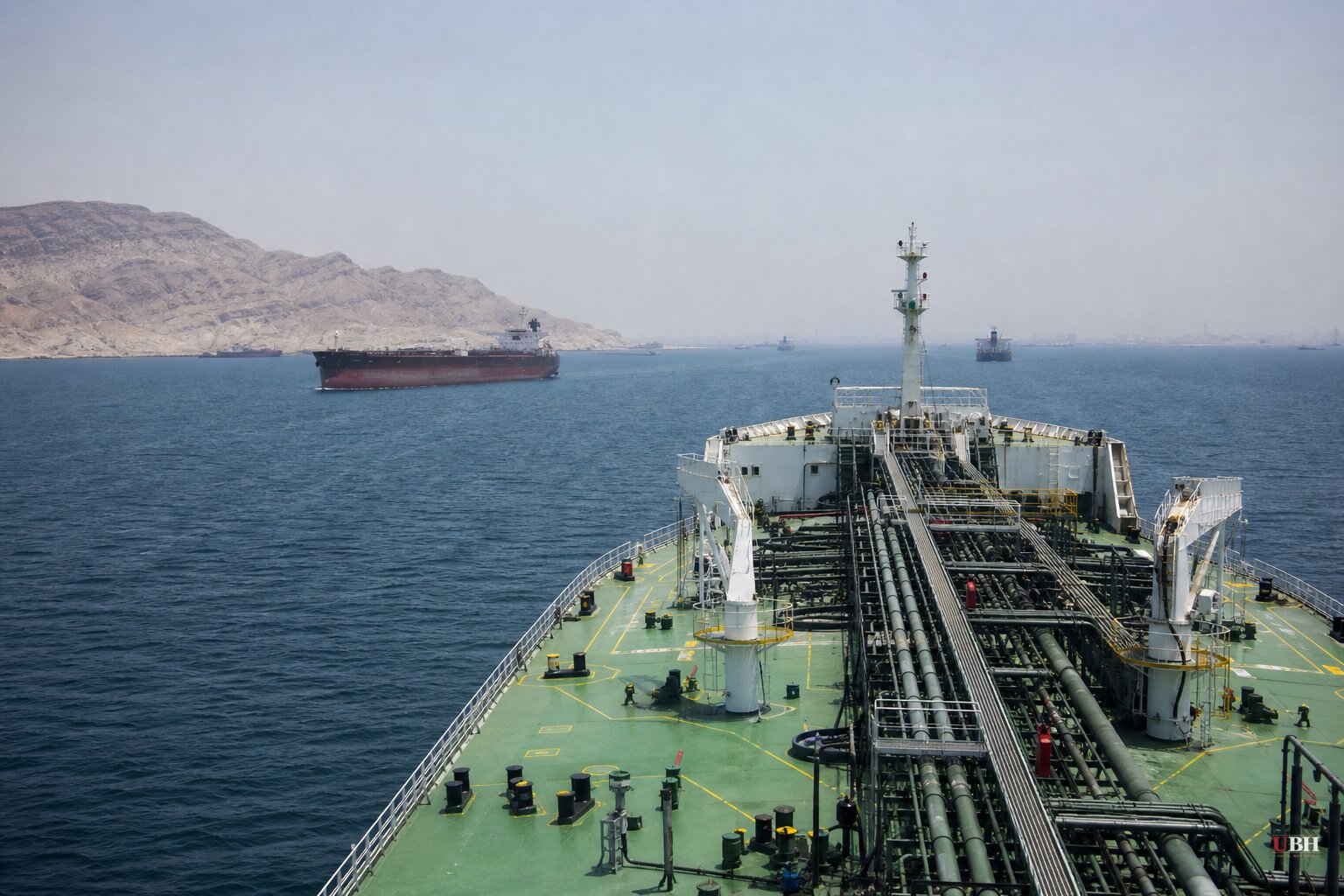
Since the U.S. escorted a record 18 million barrels through the Strait of Hormuz this week following Iran's wedding-strike retaliation and missile launches at Jordan, Bahrain and Kuwait, the shipping industry itself has delivered a blunter verdict than any government statement: nobody in the business expects things to go back to normal soon.
Jotaro Tamura, chief executive of Mitsui OSK Lines, Japan's largest shipping company, told Bloomberg that a resumption of regular Hormuz transits by his fleet is unlikely before the end of this year. That's a reversal from the company's earlier internal planning, which had assumed a phased restart in October and a return to normal operations by January 2027, according to gCaptain's reporting on the interview.
"Given the current situation, it's difficult to see operations resuming in any form by the end of the year," Tamura said. "The situation continues to be well beyond the level of risk we can accept." He said the company needs confidence that safe passage can hold across multiple voyages, not just vessel-by-vessel, and specifically criticized the practice of ships switching off transponders to slip through undetected, calling it a sign that the industry has normalized the assumption of attack.
Before the war, Japanese refiners sourced more than 90% of their crude from the Middle East. Mitsui OSK and rival Nippon Yusen are now leaning into new demand from the U.S. and West Africa instead, according to Bloomberg.
How Much Oil Is Actually Shut In
Petroleum geologist Art Berman told Fox News Digital that the tanker traffic story obscures a bigger problem: getting oil out of the ground in the first place. "The bigger story and the more important one long term is that 8 million barrels of Persian Gulf production is currently shut in and world production is down about 10 million barrels a day," Berman said, calling the shut-ins potentially "a kind of world-changing event, even if we resolve the political issues."
Berman's number lines up closely with the International Energy Agency's most recent assessment. The IEA's Aug. 12, 2026 Oil Market Report found Gulf production rose 2.5 million barrels a day in July to 23.9 million barrels a day. That's still 8.3 million barrels a day below pre-war levels, with global supply running 6.3 million barrels a day below year-earlier levels.
The U.S. Energy Information Administration puts the number lower, estimating average shut-in production at 5.5 million barrels a day in July, while warning that continued Hormuz transit constraints forced it to raise its August shut-in forecast. EIA expects trade patterns to broadly normalize in early 2027 but says some Gulf producers may never fully recover their pre-war output. The gap between the EIA and IEA figures reflects differing methodology. Either way, there's no single agreed number for how much Gulf crude is actually missing from the market right now.
The Pipeline Argument
Treasury Secretary Scott Bessent has staked out the administration's most optimistic public position. "What we are going to see over the next two years — the strait is going to become irrelevant," Bessent told an NBC affiliate, predicting 50% to 70% of energy products normally shipped through Hormuz would move through underground pipelines instead, calling the strait eventually "just another body of water," according to NPR.
The UAE expects a $3 billion pipeline expansion to Fujairah to come online in 2027. But NPR reports a larger Saudi pipeline expansion, per the IEA, is likely years away. The IEA's senior oil market analyst Rebecca Schulz told NPR that even after those projects finish, more than 10 million barrels a day would still need to cross the strait for Gulf exports to return to pre-war levels, roughly half of prewar volumes.
David Goldwyn, a former State Department special envoy, told NPR the Hormuz constraints look like "a somewhat permanent feature for the next few years," arguing Iran's insistence on being paid for exports and America's inability to force free navigation aren't going to change soon. Analyst Robert McNally was more direct, calling Bessent's "irrelevant" framing "way too strong and overstated." Bessent's position does have a factual anchor worth stating fairly: oil prices did fall after the memorandum of understanding was signed, and a White House official told Fox News the naval blockade is functioning and the strait remains open to escorted traffic. Whether that holds is a separate question from whether pipelines can replace the strait's capacity within two years, which the IEA's own numbers suggest is unlikely.
Six Months of Cost
Six months since the war's opening strikes killed Supreme Leader Ayatollah Ali Khamenei, according to the Daily Wire, his son and named successor Mojtaba Khamenei has yet to appear publicly or assume his father's role. Iran's economy has cratered under the U.S. blockade: oil exports fell as low as 65,000 barrels a day in May, down 69% from the prewar 2.12 million barrels a day, Business Insider figures cited by the Daily Wire show. The IMF projects a 5.4% contraction in Iran's economy for 2026, its worst since 1988, with inflation potentially reaching 68.9%.
Separately, U.S. forces struck two Iranian government tankers this week under what Axios described as a new "tanker for tanker" retaliation policy personally approved by President Trump. This was the first time American forces have targeted Iranian vessels specifically in response to attacks on commercial shipping, according to Breitbart. TankerTrackers.com assessed both vessels were empty when hit but could not confirm ownership.
Mitsui OSK's pushed-back timeline may signal how the rest of the tanker industry will move. If Japanese, Greek and Korean shipowners collectively decide safe passage isn't credible before spring 2027, insurers and refiners will be pricing that risk long before the diplomats or the Treasury's pipeline math catch up.
Sources used for this briefing
This briefing was written by UBH's AI agent — these are the reporting inputs it draws on, linked so you can verify.


