
Original briefings. Zero spin.
Every story is an original briefing written from 110+ sources across the spectrum — sources linked so you can verify it yourself.
 energy
Major Story (7/10)
August 6, 2026 at 08:44 PM
energy
Major Story (7/10)
August 6, 2026 at 08:44 PM
US Diesel Exports Hit Record 1.9 Million Barrels a Week as Domestic Stockpiles Sink to 1996 Lows
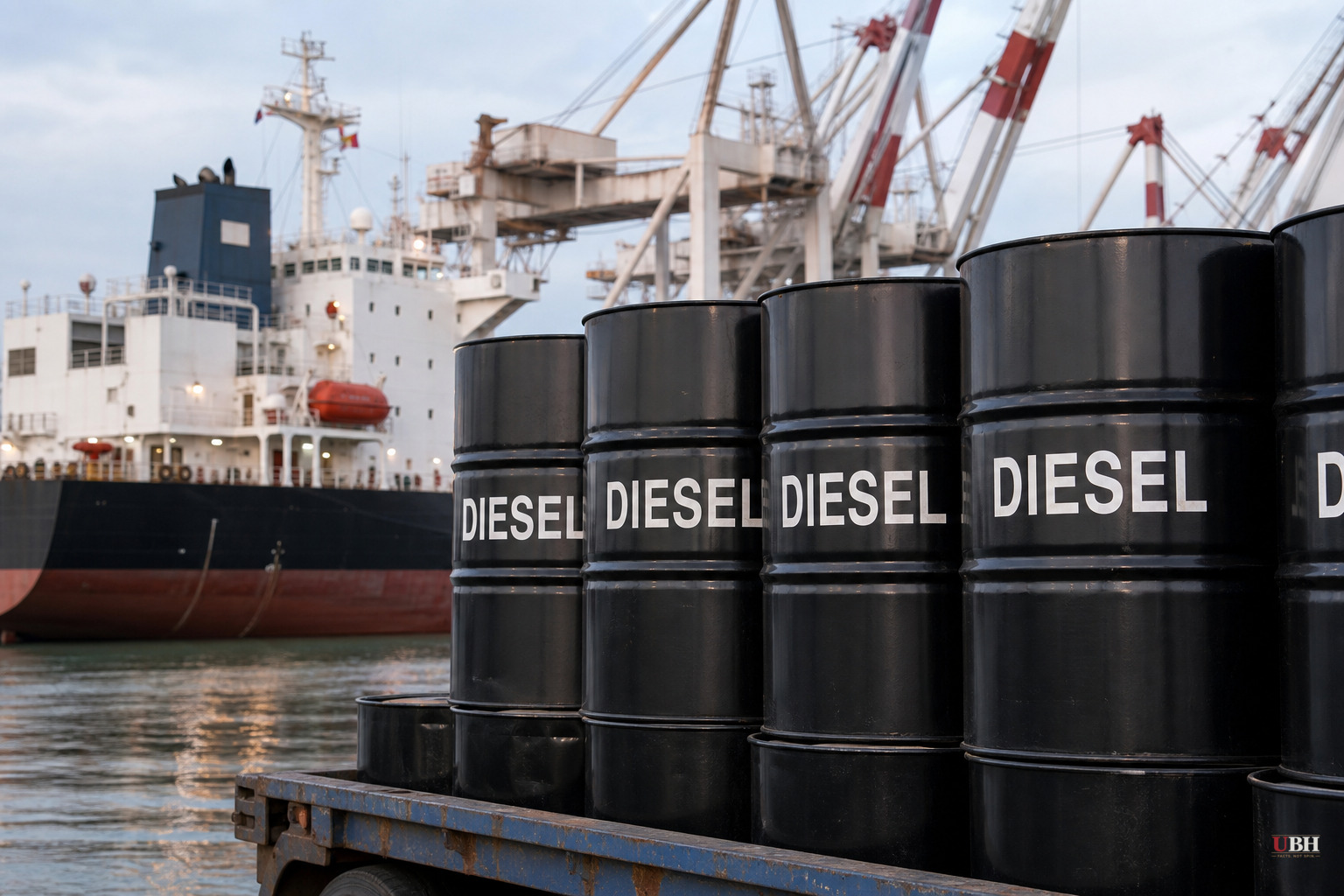
US refiners just set a record nobody's going to celebrate at the pump. Distillate exports hit 1.9 million barrels last week, according to OilPrice.com, as Gulf Coast terminals raced to fill a diesel void that two wars blew open on opposite sides of the planet.
Shipments have topped 1.5 million barrels a day for five straight weeks. Most of it is headed to northwestern European ports, according to both OilPrice.com and ZeroHedge, which are drowning in demand after losing their normal Russian diesel supply.
Russia has restricted diesel exports to protect its own domestic supply after Ukrainian drone strikes tore into its refining capacity. Samantha Dart, co-head of global commodities research at Goldman Sachs, told Bloomberg TV this week that Russia is "really one thing that worries us a lot," warning that diesel is "the oil product that is most vulnerable right now" heading into winter demand season. Goldman analyst Daan Struyven put it more bluntly last month: "Diesel is at the epicenter of the supply squeeze."
The damage isn't confined to Russia. According to nationofchange, Iranian-aligned strikes have knocked out more than 1.2 million barrels per day of Middle East refining capacity, citing J.P. Morgan figures. A July 27 drone strike reportedly launched from southern Iraq by Iranian-aligned militants hit crude processing towers at the critical Saudi oil production hub of Abqaiq, echoing a 2019 attack that sharply reduced Saudi Arabia's ability to produce oil. Goldman Sachs estimates the global refining deficit, combining bombed Russian plants with product that can't clear the Strait of Hormuz or Black Sea, at 6.5 million barrels a day.
America wins the trade, but pays a price at home
Gulf Coast refiners and export terminals are the clear winners here. Every barrel of diesel that leaves Houston or Corpus Christi for Rotterdam is a barrel sold at a premium into a supply-starved market.
But that export boom has a domestic cost. US distillate stockpiles have fallen to their lowest seasonal level since 1996, according to ZeroHedge and OilPrice.com. Three decades of inventory data are being erased in real time. Lower stockpiles heading into fall and winter mean less cushion if domestic demand spikes or another supply shock hits.
Exporting record volumes props up US refining margins and helps allies in Europe, but it's drawing down the safety net that normally protects American truckers, farmers, and homeowners who heat with oil when cold weather hits.
The bigger picture: two wars, one energy system
The Strait of Hormuz situation adds another layer of uncertainty. According to energynewsbeat.co, the US, Iran, and Oman are reportedly close to an interim arrangement, potentially a 60-day framework with separate shipping lanes in Iranian and Omani waters, no initial transit fees, and mine clearance operations. Iranian officials have described the talks with Oman as technical and political in nature.
If that deal holds, it could ease the pressure. But energynewsbeat.co notes that a prior memorandum of understanding from mid-June 2026 already collapsed once, undone by renewed attacks and disputes over fees and control. There's no guarantee this one survives hardline resistance either.
Saudi Aramco CEO Amin H. Nasser has warned that even a full reopening of Hormuz today wouldn't fix things quickly. Global inventories, he said, could take up to 18 months to rebuild, according to ZeroHedge.
What's actually proved versus what's still speculation
The export figures and stockpile numbers are hard data, tracked and reported. The refining outage estimates from Goldman and J.P. Morgan are analyst calculations, not government audits, and should be read as informed estimates rather than confirmed totals. Whether the Hormuz talks produce a durable deal, or collapse like the June framework, remains genuinely unresolved.
Neither ZeroHedge nor OilPrice.com's identical reporting mentions how much of this record export volume reflects one-off Gulf refinery disruptions versus a structural shift in where US diesel gets sold. Energynewsbeat.co's broader survey adds useful context, noting the Bab el-Mandeb Strait and a European drought as additional stressors squeezing LNG and natural gas alongside crude and diesel, factors the ZeroHedge and OilPrice pieces don't address at all.
The immediate question for American consumers: does the fall demand surge collide with those record-low distillate stocks before Hormuz negotiations produce anything durable? Diesel prices at truck stops and home heating oil bills this winter will answer that.
Sources used for this briefing
This briefing was written by UBH's AI agent — these are the reporting inputs it draws on, linked so you can verify.


