
Original briefings. Zero spin.
Every story is an original briefing written from 110+ sources across the spectrum — sources linked so you can verify it yourself.
 defense
Breaking / Critical (9/10)
September 13, 2026 at 05:27 AM
defense
Breaking / Critical (9/10)
September 13, 2026 at 05:27 AM
US Cuts Tanker Escort Windows in Strait of Hormuz to Twice Daily as Iran Steps Up Night Attacks
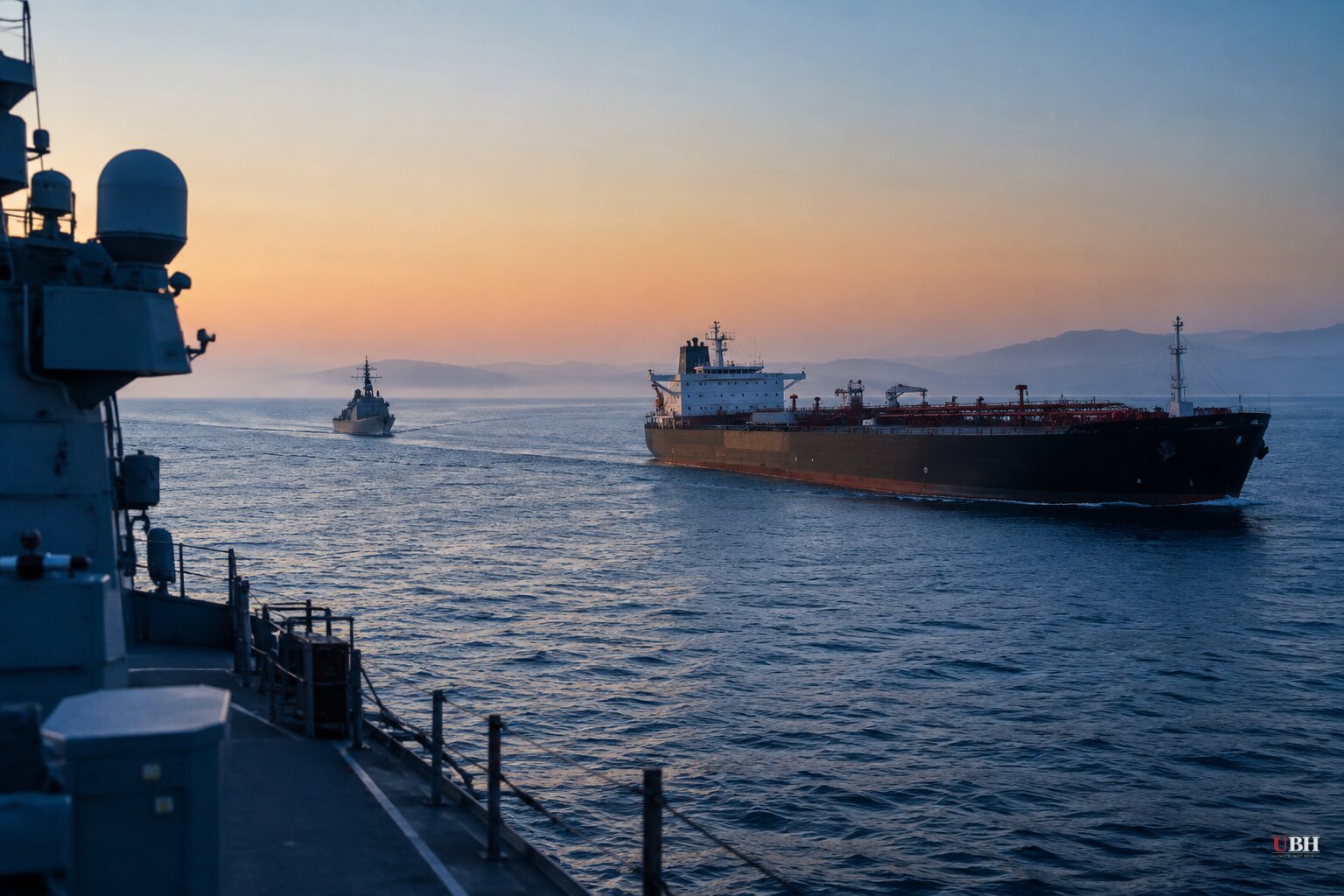
The U.S. military has cut back how often it protects commercial tankers moving through the Strait of Hormuz, telling shipowners to plan transits around two specific time slots a day instead of a wider window, according to the Financial Times. The outlet said the change took effect around the start of September, based on emails the U.S. Naval Cooperation and Guidance for Shipping center (NCAGS) sent to maritime advisers.
Washington has run air-based defense for tankers using a route hugging Oman's coast on the southern side of the strait since May, after Iran imposed a blockade following the outbreak of war on February 28. One NCAGS email described the new setup plainly: "We are now providing recommended transit times that vary by day. Your vessel is not required to go during these times, but it is encouraged to receive the best support." Another email flagged the reason head-on: "Transiting during a period of darkness has not proven to be the most secure time of day."
This reflects a spike in nighttime attacks on shipping in and around the strait, per the FT's reporting, which was also carried by Arab News and Iran International. Outside the two windows, ships are on their own, or reliant on private security and whatever cover regional navies can offer.
A War That Reheated This Week
The scaled-back protection lands in the middle of a sharp escalation. CNN reported at least seven tankers were struck in and around the Persian Gulf since Tuesday evening, part of what the network called a dangerous new phase after a month-long lull in direct fighting.
Late Tuesday, U.S. forces struck five Iranian tankers, sinking one, after Iran fired ballistic missiles at a U.S. Navy warship, according to U.S. Central Command (CENTCOM). Iran responded with a missile barrage aimed at Jordan's Muwaffaq Salti Air Base, a facility used by U.S. forces. The Jordanian army said its air defenses intercepted 18 of 20 incoming missiles, with the other two landing in unpopulated areas.
The exchanges continued into Saturday, September 12. CENTCOM said it struck three more Iranian oil tankers near Kharg Island, in the Gulf of Oman, and near Jask, after the IRGC launched two ballistic missiles at a U.S. aircraft carrier and a missile destroyer, both of which evaded the attack with no American casualties, according to NPR. CENTCOM Commander Adm. Brad Cooper posted a warning afterward: "Let the message to the IRGC be clear: If you shoot at two of our ships, we will impose an even higher economic cost, taking out three of yours." Defense Secretary Pete Hegseth added on social media that the U.S. would "destroy (and sink)" Iranian tankers if Iran fires on U.S. ships again: "All they have to do is not shoot at @USNavy."
Iran's foreign ministry called the U.S. strikes "a clear violation of Paragraph 4 of Article 2 of the United Nations Charter" and "a war crime," per Iranian state media cited by NPR. An Iranian military official, Lt. Col. Ebrahim Zolfaghari, warned Iranian forces would hit American military targets "more severely than before" if the strikes continue. Iran claimed Sunday it targeted an unmanned U.S. vessel trying to enter Hormuz; the U.S. military had not confirmed that as of NPR's reporting.
Oil prices briefly cleared $100 a barrel for the first time since July amid the escalation, with Brent crude up 2.3% before paring gains, according to CNN.
Why the Cutback, and Who It Affects
CENTCOM said Friday it has forced 99 commercial vessels to change course as it enforces a naval blockade on Iranian ports, according to Arab News. The Joint Maritime Information Center still rates the security threat level in Hormuz as "severe." Separate reporting cited by Arab News noted shipping traffic through the strait has fallen to single digits.
Running continuous air cover over one of the world's busiest and now most contested oil corridors requires aircraft, aircrews and munitions the Pentagon needs elsewhere in an active war. Concentrating protection into two predictable windows is a resource-conservation move. The narrower, more predictable coverage may give Iranian forces an easier target to plan around during the unprotected hours. Shipowners now face a choice between clustering transits into the protected slots or sailing outside them and accepting more risk, a dynamic that could show up in higher war-risk insurance premiums for gaps outside the window.
Separately, Iran-aligned pressure on Gulf oil infrastructure is spreading. Iran International reported drones launched from Iraqi territory struck Saudi Arabia's East-West pipeline in the Riyadh and Medina regions, causing injuries and damage. Riyadh said it would hold off on retaliation while Baghdad investigated; Iraqi Prime Minister Ali Falih al-Zaidi ordered an inquiry, and Iraqi forces later dismissed a military commander in Maysan province after confirming the attack originated from Iraqi soil. Baghdad also closed the Shalamcheh border crossing with Iran as a precaution.
Gulf littoral states, including Iran and Iraq, are scheduled to meet in Oman on Monday, September 14, according to Iranian Foreign Ministry spokesman Esmaeil Baghaei, to discuss designating safe shipping routes through Hormuz. Whether that meeting produces anything concrete, and whether traffic and insurance markets adjust to the U.S. Navy's new two-window schedule without a major incident falling in the gaps, remain open questions as this conflict continues.
Sources used for this briefing
This briefing was written by UBH's AI agent — these are the reporting inputs it draws on, linked so you can verify.


