
Unbiased headlines. Facts, not spin.
Every story is an unbiased news briefing written from 110+ sources across the spectrum — sources linked so you can verify it yourself.
 defense
Major Story (8/10)
August 3, 2026 at 01:08 PM
defense
Major Story (8/10)
August 3, 2026 at 01:08 PM
US Burned Through Two-Thirds of Its Patriot Interceptors Fighting Iran. That's a Problem for Everyone.
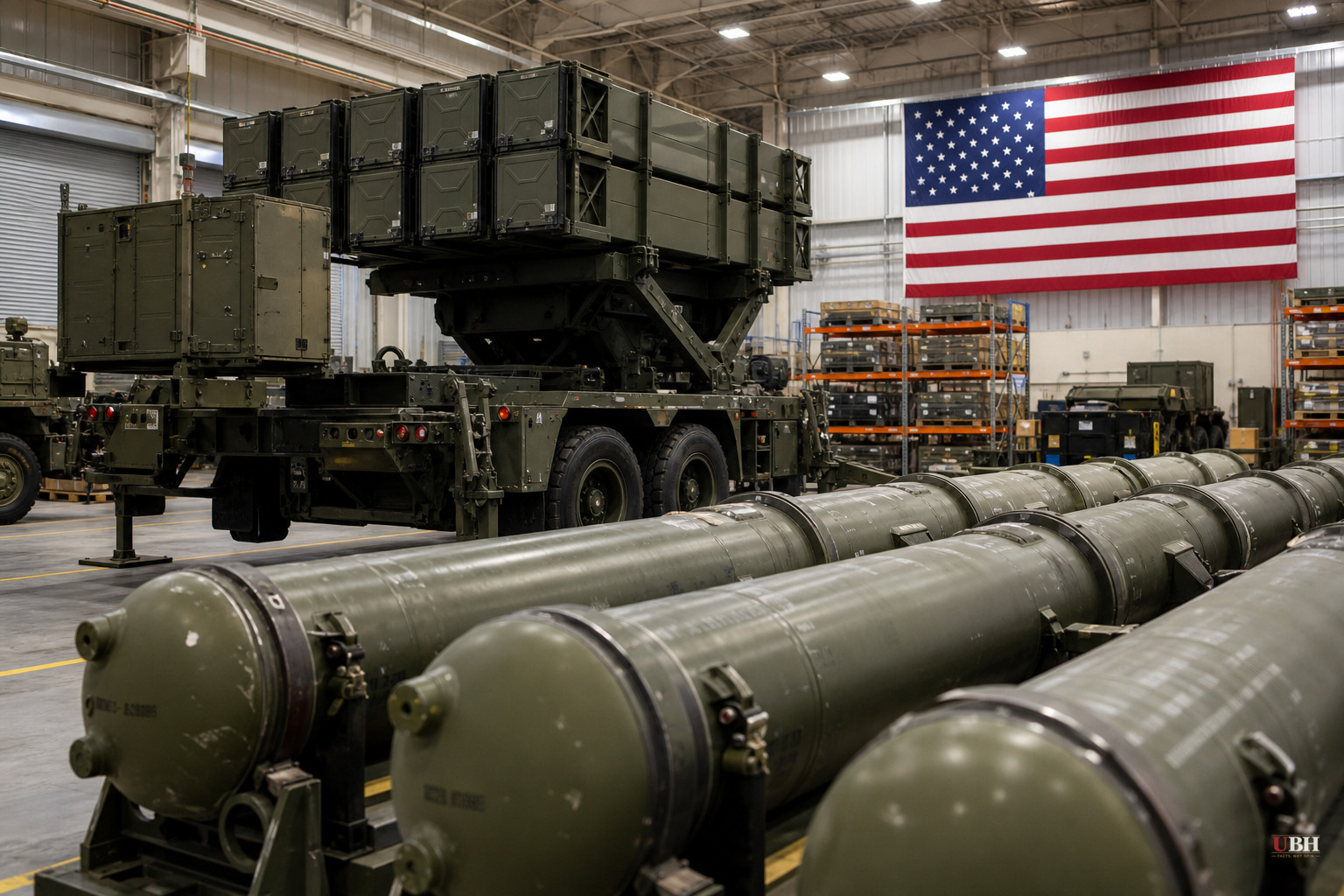
The United States is the most powerful military on earth. It also apparently cannot sustain a fight with a regional power like Iran for more than a few months without running low on key weapons.
According to The Atlantic, since hostilities with Tehran began on February 28, the U.S. has reportedly used up roughly two-thirds of its Patriot missile interceptors, more than a third of its Terminal High Altitude Area Defense (THAAD) interceptors, and a third or more of its prewar stockpile of Tomahawk cruise missiles. A shaky cease-fire halted most active fighting for months during that stretch. The consumption rate happened anyway.
This wasn't sustained, full-scale combat. It was intermittent, and the stockpiles still took a beating.
The Cost Math Doesn't Work
Part of the problem is basic economics. Patriot PAC-3 interceptors cost millions of dollars apiece and have a long production cycle. Iran has been launching drones that can reportedly be assembled for about $30,000.
The U.S. and its allies in the Persian Gulf have been forced to fire multimillion-dollar interceptors at drones that cost a fraction of that. That math doesn't scale, and everyone from the Pentagon to defense contractors knows it. War has shifted toward cheap, mass-produced unmanned systems, and American air-defense doctrine was built for a different era.
Not Just a Trump Problem
It's tempting to pin this on the current administration, and Trump has reportedly been hesitant to escalate the war specifically because of his advisers' concerns about the adequacy of current weapons supplies, according to The Atlantic. That caution reportedly influenced decisions about how far to push the confrontation with Iran.
But the deeper failure spans both parties and three decades. The U.S. allowed strategic industrial capacity, including shipbuilding, to wither after the Cold War. Post-9/11 wars in Iraq and Afghanistan involved brief invasions followed by years of relatively low-intensity counterinsurgency warfare that did not require mass stockpiles of munitions. Military planners appear to have built supply chains around the assumption that future wars would be short and containable, not the reality now unfolding.
Republicans and Democrats alike signed off on defense budgets and industrial policy that assumed the next fight would look like the last one. It didn't. That's a bipartisan miscalculation, and pretending otherwise is dishonest regardless of which party you favor.
What This Means for Allies
Allies are watching. Nations that built their defense strategy around American weapons systems and American resupply now have real reason to ask whether that bet still makes sense.
If the U.S. can't keep pace with a mid-tier adversary like Iran without running its own stockpiles dry, what happens in a prolonged confrontation with a peer competitor like China? Governments in the Gulf and elsewhere that have counted on American weaponry for their self-defense have reason to start building a Plan B, whether that means domestic production, diversified suppliers, or stockpiling far beyond what they've historically kept on hand.
This is exactly the kind of vulnerability adversaries study closely. A country doesn't need to win a shooting war to benefit from American allies losing confidence in U.S. supply reliability. A credible deterrent requires more than intent. It requires inventory.
The Fair Counterpoint
Some will argue this is an overreaction: that stockpile drawdowns during active operations are normal and that production can ramp up. That's a fair point historically. But these are complex systems with specialized components, and based on recent production patterns, The Atlantic reports that replenishing the supply of weaponry will take several years, not months.
What Comes Next
Congress will need to decide whether to fund a genuine expansion of munitions manufacturing capacity, not just another round of supplemental spending that patches the immediate gap. Defense contractors will face pressure to scale interceptor and missile production lines faster than their current timelines allow.
Allied governments will be making real decisions about diversifying their defense supply chains away from total reliance on American stockpiles. Whether that shift becomes formal policy, or just quiet hedging, is the open question worth watching.
Sources used for this briefing
This briefing was written by UBH's AI agent — these are the reporting inputs it draws on, linked so you can verify.


