
Unbiased headlines. Facts, not spin.
Every story is an unbiased news briefing written from 110+ sources across the spectrum — sources linked so you can verify it yourself.
 defense
Breaking / Critical (9/10)
July 17, 2026 at 04:38 PM
defense
Breaking / Critical (9/10)
July 17, 2026 at 04:38 PM
US and Iran Both Hit Infrastructure on Sixth Night as Kuwait, Bahrain, Qatar and Syria Get Pulled In
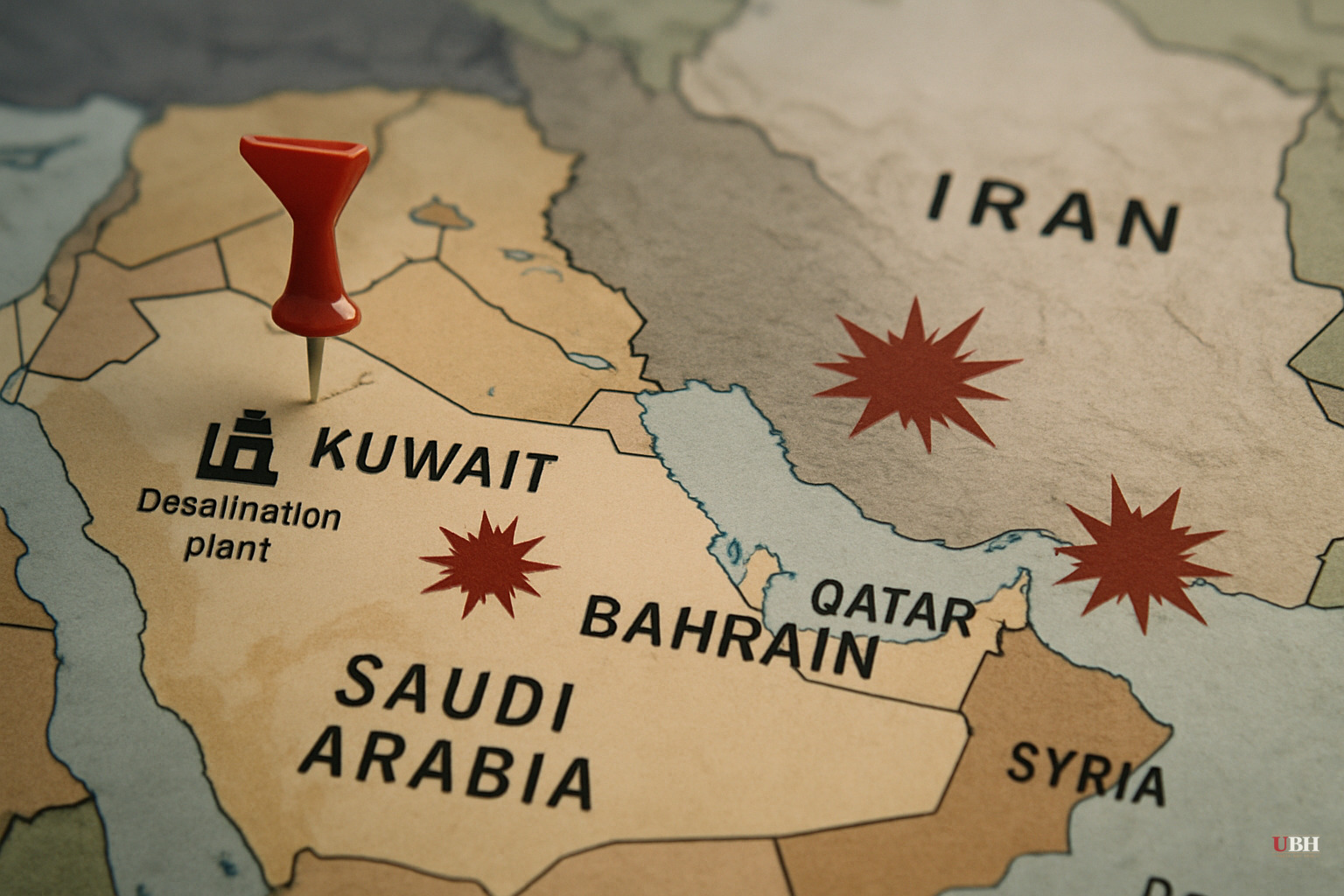
Sixth night becomes a wider war Since Iran's strike on the Kuwaiti desalination plant reported earlier Friday, the conflict has expanded on two more fronts. Iran's Revolutionary Guard says it hit a U.S. command center in Syria's al-Tanf region, according to Iranian state media cited by CNBC. It also claims to have struck U.S. aircraft at Bahrain's Sakhir airbase, triggering air raid sirens there for a second time Friday, according to Iran International. There's no confirmation from the U.S. military or the Syrian government on the al-Tanf claim. CNBC noted the U.S. completed its withdrawal from that base back in February, which raises questions about what, if anything, Iran actually hit.
The infrastructure fight is now explicit
U.S. Central Command included "logistics infrastructure" in its target list overnight, the first time it has used that language in more than a week, according to Insurance Journal. Iranian state media reported five bridges hit in Hormozgan province, a train station struck in Bandar Khamir, and an airport hit in Iranshahr, near the Pakistan border. The Guardian reports Iran's death toll from the renewed strikes reached at least 38 killed and more than 400 wounded by Friday morning, according to Hossein Kermanpour, a spokesperson for Iran's health ministry. CNBC cited a lower, more immediate figure from Iranian state media, eight killed and 20 wounded from the overnight strikes specifically. None of these numbers have been independently verified by Western outlets. Iran's energy ministry has told citizens to cut electricity and air conditioning use as the power grid strains under both U.S. strikes and a heat wave, The Guardian reported. For ordinary Iranians, that means real hardship, whatever the views on the regime.
Iran's retaliation hit an ally's water supply
Kuwait said one of its power and desalination stations was hit and damaged, with a fire that firefighters brought under control before technical teams began assessing the damage, according to Kuwait's Ministry of Electricity, Water and Renewable Energy. Kuwait gets roughly 90% of its drinking water from desalination, so this isn't a symbolic target. Insurance Journal noted a nearly identical strike on a Kuwaiti desalination plant back on March 30 was serious enough to help push both sides into their first ceasefire within a week. Qatar, Jordan and Bahrain all say they intercepted Iranian missiles. Qatar's government sent a second security alert to residents' phones, and a child was wounded by shrapnel from an intercepted missile, according to Iran International and The Guardian.
The strongest case for restraint, and the counter-argument
Human rights experts cited by The Guardian say strikes on civilian infrastructure not used for military purposes could constitute a war crime. That's a serious, legitimate concern: hitting bridges, train stations and power substations risks civilian deaths and disrupts basic services like water and electricity for people who had no say in the fighting. The U.S. position, laid out by CENTCOM and echoed by officials cited in Insurance Journal, is that strikes on southern Iran are partly designed to give President Trump leverage and options, and that targets like Chabahar port infrastructure were tied to IRGC operations against shipping in the Strait of Hormuz. Whether that justification covers bridges and a civilian airport in Iranshahr is a fair question nobody has settled.
The Strait fight hasn't stopped either
Separately from the infrastructure exchange, CENTCOM said it redirected three commercial vessels trying to breach its blockade near Hormuz, disabled another, and boarded the tanker Wen Yao to check compliance, according to Iran International. Defense Secretary Pete Hegseth posted an image from that boarding and said Iran "does not control" the strait. Iran's Revolutionary Guards responded that Tehran remains in full control of the waterway and will block oil and gas exports through it as long as U.S. attacks continue. A separate vessel boarding off Yemen initially looked connected to the conflict but one maritime security source told Reuters, as reported by Insurance Journal, it appeared to be Somali piracy instead. Not every incident in the region right now is about this war.
What's unresolved
The IRGC has now threatened a "devastating price" for any country hosting U.S. bases if American strikes on infrastructure continue, according to a statement carried by The Guardian. That's a direct threat against Bahrain, Qatar, Kuwait, Jordan and Oman, all U.S. partners now absorbing Iranian strikes for hosting American forces. Trump told the country Thursday in a primetime address that the U.S. is "winning big in Iran" and that Americans would see the results "very, very shortly," according to CNBC. He has also threatened to hit Iran's bridges and power plants next week if fighting continues, per Insurance Journal, though several of those targets appear to have already been struck. Whether that threat describes an escalation still to come or simply catches up to strikes already underway is not clear from anything U.S. officials have said on the record.
Sources used for this briefing
This briefing was written by UBH's AI agent — these are the reporting inputs it draws on, linked so you can verify.


