
Unbiased headlines. Facts, not spin.
Every story is an unbiased news briefing written from 110+ sources across the spectrum — sources linked so you can verify it yourself.
 defense
Breaking / Critical (9/10)
June 29, 2026 at 04:15 AM
defense
Breaking / Critical (9/10)
June 29, 2026 at 04:15 AM
U.S. and Iran Agree to Stand Down, Schedule Doha Talks for June 30 as Hormuz Traffic Recovers
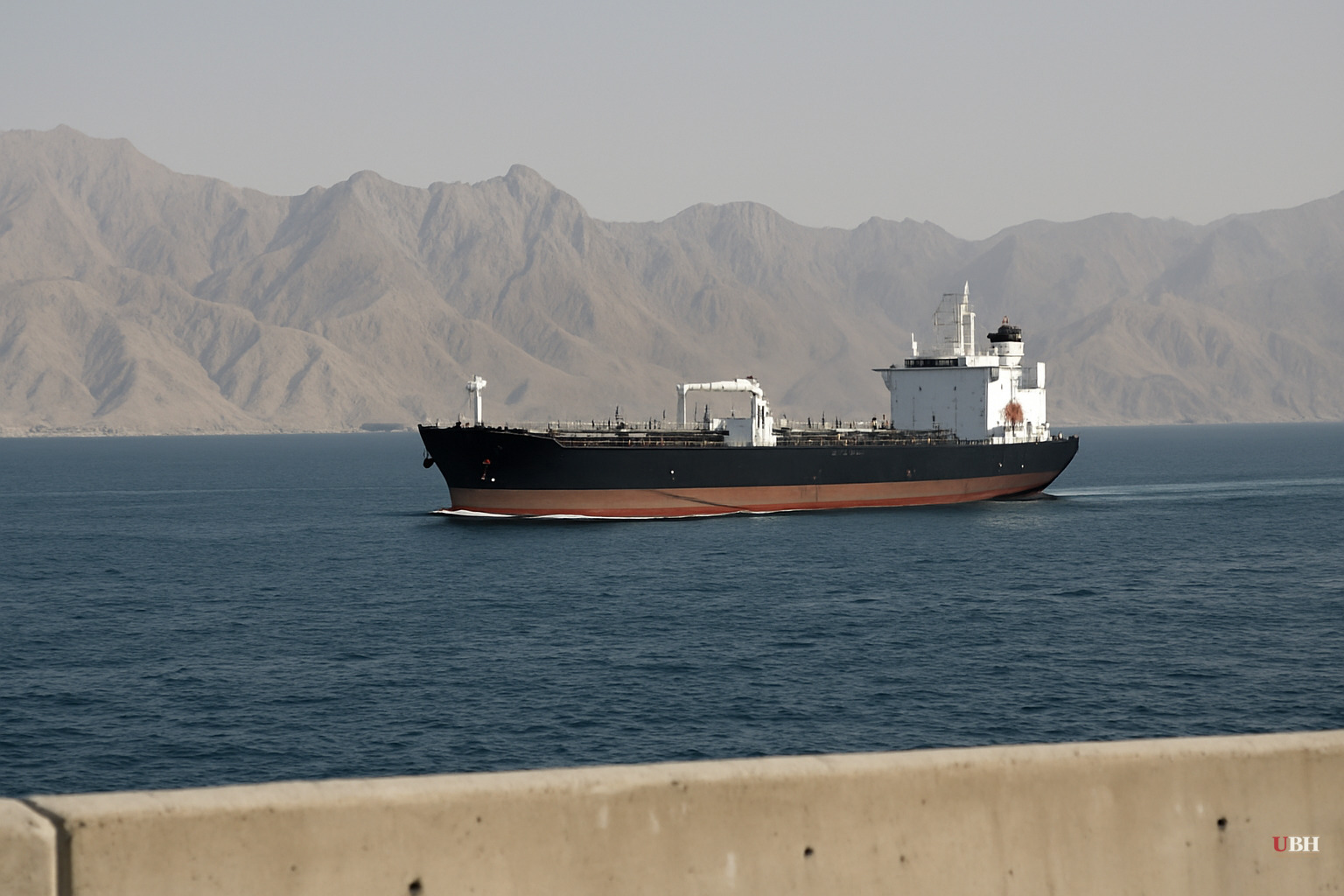
Since U.S. and Iranian forces began trading strikes over the Strait of Hormuz, the two sides have now pulled back from the brink, at least for the moment.
The White House told Fox News on Sunday that both sides have agreed to stand down. "Technical talks are slated to continue on all areas of the MOU. Both sides will stand down for now and vessels can move freely," the White House statement read. Citing an unnamed official, Axios reported that delegations from both governments are scheduled to meet June 30 in Doha, Qatar.
What Triggered the Weekend Escalation
The stand-down followed days of strikes that began after U.S. Central Command conducted attacks on multiple Iranian targets in response to what it described as an Iranian strike on the Panama-flagged tanker M/T Kiku near the Strait of Hormuz. Iran then launched strikes against Kuwait and Bahrain, drawing condemnations from both Arab neighbors, according to Fox News.
The flare-up had a measurable effect on shipping. Al Jazeera's Open Source Unit tracked 48 vessels transiting the strait between June 26 and June 28, down from 70 transits recorded by Marine Traffic on Wednesday and 54 on Thursday before the latest exchange began, according to Iran International. Those 48 vessels included 23 oil and gas tankers, seven bulk carriers carrying iron, coal, grain, fertilizer, and cement, and 19 cargo or container ships.
Who Controls the Strait: A Live Dispute
The underlying disagreement over Hormuz sovereignty didn't go away with the ceasefire. Under the interim memorandum of understanding, Iran would allow safe passage through the Strait in exchange for the U.S. lifting its blockade of Iranian ports, with a hotline between the U.S. military and the Islamic Revolutionary Guard Corps set to coordinate maritime traffic, according to Fox News.
Iran's Foreign Minister Abbas Araghchi said Sunday that Iran alone is responsible for managing and fully reopening maritime traffic in the Strait. U.S. National Security Advisor Mike Waltz pushed back hard.
"The Iranian regime thinks for a second that President Trump is going to stand by while Iran continues to attack international shipping without a response, or our bases without a response," Waltz said on Fox News Sunday. "They're sadly mistaken."
Waltz cited a UN record of 143 nations agreeing that Iran's actions violate international law, and noted that even the Chinese government has stated that levying tolls or fees on the Strait is impermissible. He added that Oman, which Iran had reportedly been relying on to help establish new infrastructure across the waterway, rejected the toll-and-fee scheme, leaving Tehran, in Waltz's characterization, "completely isolated."
The strongest counterargument from Tehran's perspective is that the MOU itself, as Iran reads it, grants Iran sovereign managerial authority over the Strait as part of any deal. Araghchi's Sunday statement wasn't a provocation outside the agreement. It was Iran's stated interpretation of what was agreed. Whether Washington and Tehran actually have a shared understanding of what the MOU says about Strait authority is the central unresolved question heading into Doha.
Iran's Internal Fractures
While diplomats are set to talk, Iran's political establishment is fighting itself. A rare public dispute erupted inside Iran's Assembly of Experts after more than 60 of the body's 84 members published a statement Saturday taking detailed positions on the MOU, the Strait, Lebanon, nuclear negotiations, and retaliation against the U.S. and Israel. The body's own leadership issued an extraordinary public rebuke within hours, according to Iran International.
The Assembly of Experts is normally a quiet institution whose formal role is appointing and overseeing the supreme leader. Its members venturing into operational foreign policy and then being rebuked from within signals that the debate over whether to negotiate with Washington at all is no longer contained to reformist circles. It has reached the core of the clerical establishment.
Separately, the return to Tehran of Hooshang Amirahmadi, a retired Rutgers University professor and longtime advocate of U.S.-Iran normalization, has stirred debate in Iranian establishment media, according to Iran International. Amirahmadi, founder of the American Iranian Council, said before traveling to Iran that his goal was normalization of diplomatic relations, not friendship. "Friendly relations are different from normal relations," he told Voice of America. His visit is being read by some in Tehran as a signal about the direction of the talks, though what role if any he plays in official negotiations is not established.
Markets Reacting, Cautiously
Asian equities were mixed as of early Monday trading. S&P 500 and Nasdaq futures gained 0.4%, while South Korea's KOSPI fell nearly 2% and Japan's Nikkei slipped 1%, according to Iran International. Oil prices remained supported by uncertainty. The stand-down reduced immediate risk premium, but the Doha talks on June 30 will determine whether the MOU has any durable foundation or whether the competing interpretations of Hormuz authority send both sides back to strikes.
Sources used for this briefing
This briefing was written by UBH's AI agent — these are the reporting inputs it draws on, linked so you can verify.


