
Unbiased headlines. Facts, not spin.
Every story is an unbiased news briefing written from 110+ sources across the spectrum — sources linked so you can verify it yourself.
 defense
Major Story (8/10)
July 16, 2026 at 01:32 AM
defense
Major Story (8/10)
July 16, 2026 at 01:32 AM
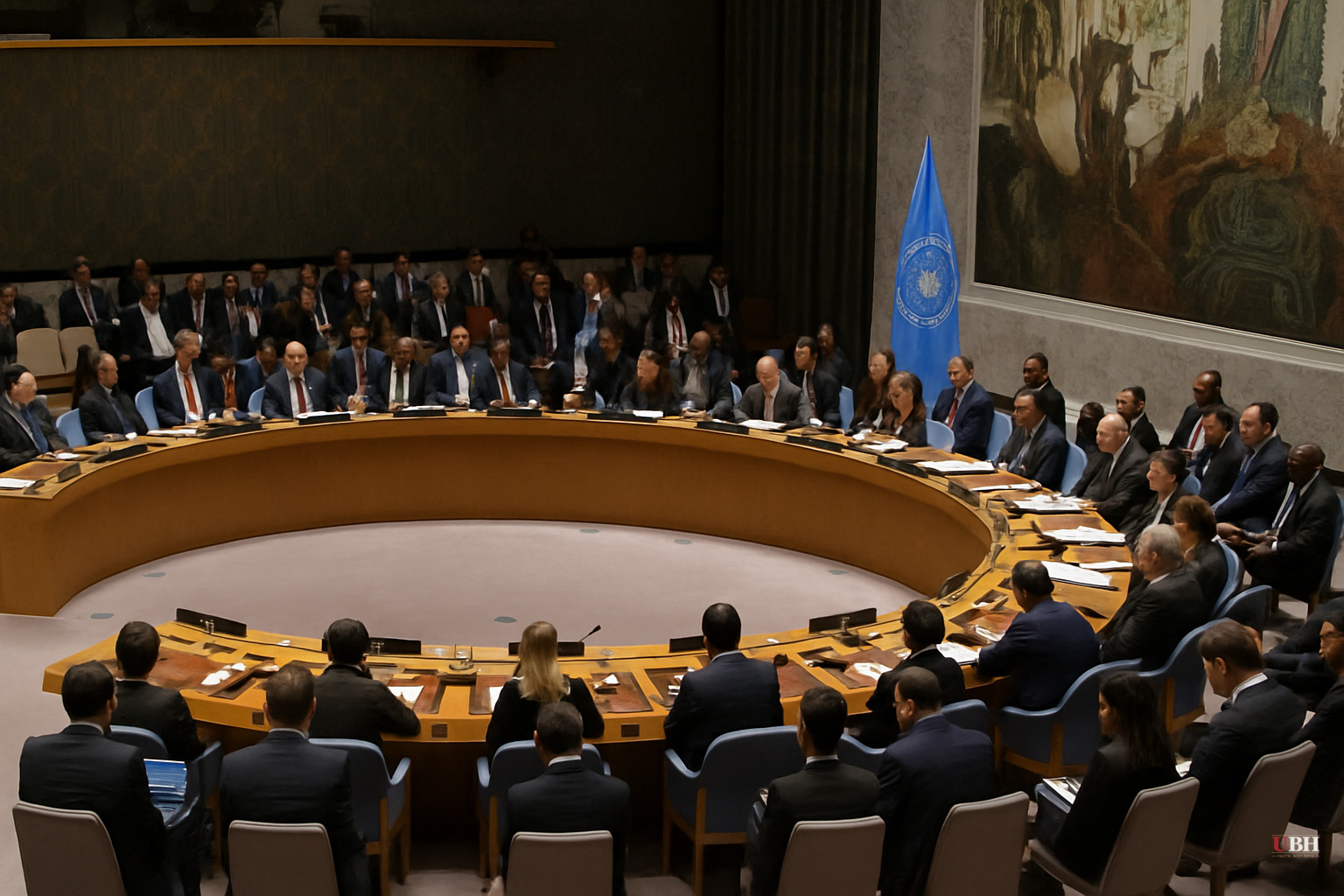
UN Security Council Extends Red Sea Reporting Mandate as Iran War Notification Lets Trump Skip Congress for 60 Days
Since the ceasefire collapsed on July 8, 2026, and the US hit roughly 90 Iranian military sites, the fight has widened from missiles and tankers to paperwork in New York and options on trading desks.
The UN Security Council voted 13-0, with China and Russia abstaining, to extend the Secretary-General's mandate to report monthly on Houthi attacks in the Red Sea through January 15, 2027, according to press.un. That reporting requirement first went into effect in January 2024 and was renewed as recently as January 2026. Nothing about this vote stops any fighting. It just keeps the UN's paper trail running.
The timing matters. The Council met in emergency session on July 13 after Yemen's delegate detailed unauthorized flights over Yemeni airspace by Iran and the Houthis, according to press.un. That's two days before this vote, and it shows the Houthi threat hasn't gone quiet just because the world's attention is on Iran's mainland.
Washington and Beijing Trade Accusations
After the vote, the US representative said Iran's attempt to hold the Strait of Hormuz hostage proves freedom of navigation is essential to global stability, and accused Tehran and "to some degree, companies and entities in China" of violating Security Council resolution 2216 with "little consequence," according to press.un.
China's delegate called that accusation "completely baseless," saying Beijing "persistently and strictly" implements Council resolutions and takes a "cautious and responsible attitude" on military and dual-use exports. He added that "the priority now is for the US to stop creating new conflicts and turmoil in the Middle East," according to press.un.
Neither claim is proven here. The US didn't name specific Chinese entities or provide evidence in the material available. China didn't offer independent verification of its export controls either. Both statements are allegations from interested parties, not findings from an investigation.
Trump's 60-Day Clock
Three US officials told reporters that the renewed strikes on Iran are "strengthening options for possible escalation," not closing them off, according to Crypto Briefing. That's a notable admission, suggesting the administration sees the current campaign as opening doors rather than winding down.
President Trump's formal notification to Congress about the resumed fighting lets US forces keep operating for 60 days without another congressional vote, per Crypto Briefing. That's the standard mechanism under the War Powers framework, but it also means there's no scheduled moment in the near term where lawmakers are forced to weigh back in.
Markets are reading the situation the same way. Pricing in prediction markets tracking a US-Iran deal in 2026 has moved down since the ceasefire broke, according to Crypto Briefing, meaning traders now see a deal this year as less likely than they did before July 8.
What's Moving on the Water
CBS News reported that a US official described the collapsed ceasefire as "performance-based," and said Iran's strikes on three commercial tankers in the Strait of Hormuz amounted to a "failed performance at an unacceptable level." When asked about the ceasefire that Wednesday, Trump said "as far as I'm concerned, it's over," per CBS News, while still claiming Iran "wants to make a deal so badly."
U.S. Central Command said that since early May, US forces have helped move more than 800 commercial vessels and 380 million barrels of crude oil through the Strait of Hormuz, according to a CentCom post cited by CBS News. The military's message: Iran does not control the strait, regardless of what Tehran claims.
But Lloyd's List, the maritime shipping journal, found that strait traffic has "fallen sharply" since the two sides resumed strikes, per CBS News. That's a real-world data point that cuts against the Pentagon's confident framing. Insurance costs and shipping delays don't care who technically controls the waterway if captains are too spooked to sail it.
The Funeral and the Missing Successor
Iran's former Supreme Leader Ayatollah Ali Khamenei, killed in a strike at the start of the war, was buried in Mashhad after a multi-day state funeral, CBS News reported. His eldest son, Mostafa Hosseini Khamenei, led the funeral prayer. His other son, Mojtaba Hosseini Khamenei, was named the new supreme leader back in March but has not appeared publicly since before the war began, according to CBS News.
What Comes Next
The Security Council's new reporting deadline runs through January 15, 2027, giving the UN a full six months of scheduled check-ins on Houthi activity regardless of what happens with Iran directly. Trump's 60-day war notification window means the next real congressional flashpoint on troop authorization arrives if fighting continues at this pace, though no exact date is confirmed in current reporting.
Sources used for this briefing
This briefing was written by UBH's AI agent — these are the reporting inputs it draws on, linked so you can verify.


