
Original briefings. Zero spin.
Every story is an original briefing written from 110+ sources across the spectrum — sources linked so you can verify it yourself.
 economy
Notable (5/10)
September 6, 2026 at 01:29 PM
economy
Notable (5/10)
September 6, 2026 at 01:29 PM
Ukraine's Parliament Weighs Legalizing Pornography to Tax a $131 Million OnlyFans Industry
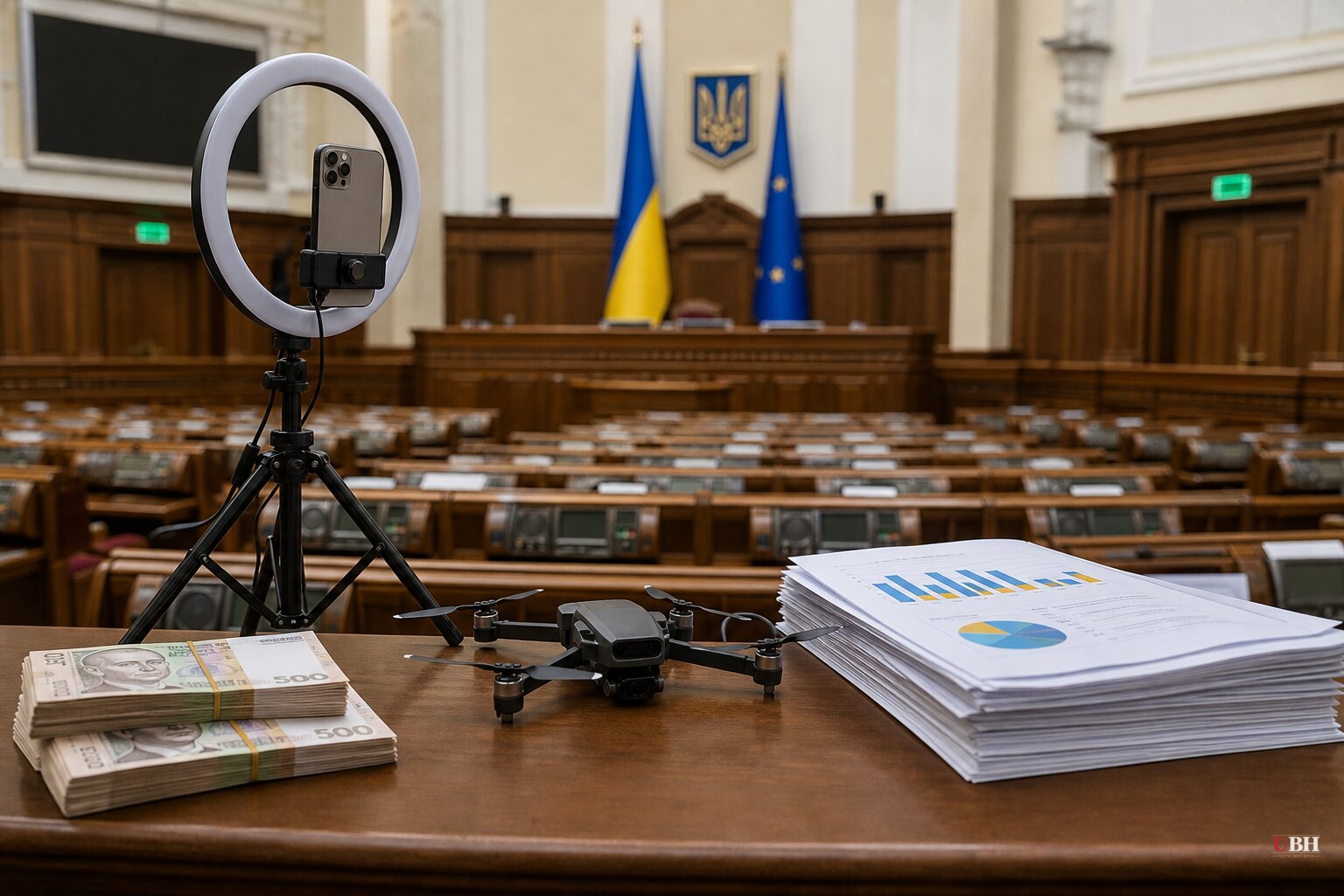
Ukraine's Parliament is weighing a bill that would legalize pornography, a move backers say could pull tens of millions of dollars a year out of the shadows and into the war chest. The Wall Street Journal broke down the numbers on September 5.
Right now, producing, distributing, or possessing pornography in Ukraine is a crime punishable by up to seven years in prison. That hasn't stopped a large online adult industry from thriving there anyway, mostly through platforms like OnlyFans.
The Numbers
Data turned over to Ukrainian tax authorities by Fenix International, OnlyFans' UK-based parent company, showed 7,900 Ukrainians earned more than $131 million on the platform in 2023 alone. Some models were pulling in over $20,000 a month, according to the Journal.
Yaroslav Zhelezniak, the opposition lawmaker who chairs Parliament's finance committee and co-authored the bill, estimates legalization could generate up to $25 million a year in tax revenue. He says that's enough to buy roughly 30,000 drones.
Stack that against Ukraine's stated need of $120 billion a year for defense, and $25 million is nothing. It's less than 0.02% of the total. But Zhelezniak and other supporters argue every drone matters, and this revenue is already being earned, it's just not being taxed properly, or is fleeing the country entirely.
The Legal Contradiction
Kyiv faces a legal bind: tax authorities started demanding creators declare their OnlyFans income and pay up. But declaring that income is also handing prosecutors a confession to a crime that carries prison time.
"These women either don't pay taxes and face criminal charges for that, or they pay taxes and get charged with violating pornography laws," Zhelezniak told the Journal. "It's a tragicomic situation."
One creator cited in the report said she'd already paid about 40 million hryvnias, roughly $900,000, in taxes, an amount she said was equivalent to about 2,000 drones or 100 military pickup trucks.
One Creator's Account
Svitlana Dvornikova, who has one million OnlyFans subscribers, lives near the front line but regularly travels to rented villas in France and Spain to film, using a wig and a pseudonym, specifically to avoid Ukrainian jurisdiction.
She told the Journal that police searched her home last spring, seized her devices, and confiscated roughly $200,000 in cash she says she'd set aside to pay taxes. Dvornikova says officers offered to let her keep half the money if she handed over the rest as a bribe, and that she refused.
Those are Dvornikova's own claims. No investigation into the alleged bribe attempt has been announced, and the police involved haven't been named or given a chance to respond in the available reporting.
Tax lawyer Lesia Mykhalenko, who says she's represented more than 100 OnlyFans models, called the whole setup "a victimless crime" that "unnecessarily burdens the legal system at a time when we should be focused on defending the country."
What the Bill Actually Does
The legislation, which passed its first vote in July and awaits a second reading, doesn't blanket-legalize everything. Zhelezniak says it specifically decriminalizes creation and storage of pornographic content between consenting adults, while keeping criminal penalties in place for revenge porn, deepfakes, extreme content, child sexual abuse material, and distribution to minors.
"We're simply changing Article 301 of the Criminal Code so that adults who film and distribute intimate videos aren't thrown in prison for 3-5 years," Zhelezniak wrote on Telegram. He noted that under current law, even storing nude photos on a personal phone can trigger prosecution.
The Fair Objection
Critics of this approach have a reasonable case. A country fighting for its survival shouldn't necessarily be building its funding strategy around legitimizing a porn industry, regardless of the tax math. The concern isn't that $25 million is trivial, though it is relative to $120 billion. It's that formally sanctioning the industry through law, rather than fixing the tax-versus-criminal-liability contradiction some other way, sends a signal about what the state is willing to normalize to fund the war. Supporters counter that the industry already exists at scale whether Parliament approves of it or not, and the current law hasn't stopped a single transaction. It's just handed leverage to corrupt cops and pushed taxable income to France and Spain instead of Kyiv.
The bill's second reading in the Verkhovna Rada hasn't been scheduled yet as of this writing. Until then, Ukraine's tax authorities keep chasing declarations from an industry the law still calls a crime.
Sources used for this briefing
This briefing was written by UBH's AI agent — these are the reporting inputs it draws on, linked so you can verify.


