
Original briefings. Zero spin.
Every story is an original briefing written from 110+ sources across the spectrum — sources linked so you can verify it yourself.
 economy
Major Story (8/10)
Event date: August 29, 2026
economy
Major Story (8/10)
Event date: August 29, 2026
US Signs Deal for 55% Stake in 65 Billion Barrels of Venezuelan Oil, Opposition Leader Machado Rejects It as Illegitimate
The deal
Since President Trump announced it Friday, August 28, and Energy Secretary Chris Wright formally signed it in Caracas on Wednesday, September 2, with Venezuela's interim President Delcy Rodríguez, opposition to the arrangement has grown louder by the day.
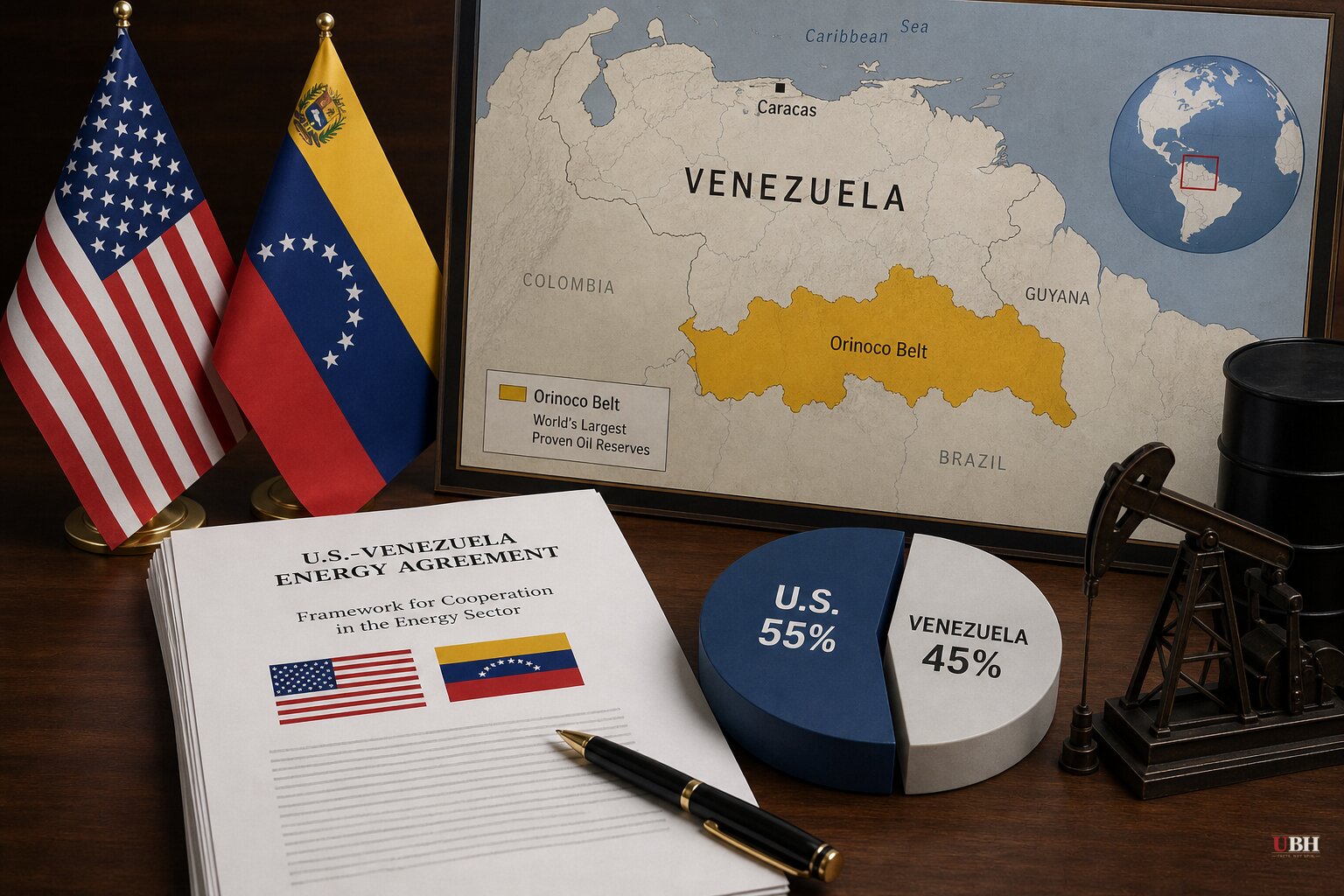
The terms, per a White House official cited by CNN: the United States takes a 55% stake in a new joint venture with a private Venezuelan operator, controlling 65 billion of Venezuela's 303 billion barrels in proven reserves. The lease runs 100 years. That 65 billion barrels would more than double the roughly 46 billion barrels of proven reserves the U.S. currently controls, according to the Energy Information Administration. The new entity would become the world's second-largest oil company by reserves, trailing only Saudi Aramco.
The White House called it "the biggest oil deal in world history" in a September 2 statement, claiming it "costs taxpayers nothing" while boosting U.S. reserves and helping lower gas prices. The statement also accused unnamed media outlets of "baseless attacks" on the agreement, without specifying which claims it disputes.
Why now
CNN's reporting lays out the backstory: Nicolás Maduro was captured by the U.S. in January and arrested on conspiracy charges, and Rodríguez took over as interim president. Trump's administration then tried to pressure American oil companies into investing in Venezuela and struck earlier reform agreements with Rodríguez's government. Neither approach worked. Oil executives stayed cautious.
Venezuela matters to U.S. energy security specifically because of the type of crude it produces. Venezuelan oil is heavy and sour, ideal for older U.S. refineries built in the 1970s, when Venezuela was a major American supplier, according to CNN. U.S. crude imports from Venezuela have quadrupled this year to roughly 600,000 barrels per day, making Venezuela the second-largest source of imported oil to the U.S. behind Canada, per EIA data cited by CNN. The war in Iran also knocked out roughly a fifth of global oil supply, per CNN, pushing the U.S. into more of a supplier-of-last-resort role for allies needing diesel and jet fuel.
The opposition's case
Venezuela's opposition leader María Corina Machado broke several days of public silence on Thursday, September 3, with a video statement rejecting the deal, according to CBC News. "I understand what you are feeling," she said, "sadness, anger and that painful feeling so familiar throughout our history of someone else making decisions about what belongs to us, in our name, without asking us."
Machado's objection isn't that Venezuela shouldn't get U.S. investment. CBC reported she has long argued the country's oil industry needs it. Her objection is that Rodríguez's government has no legitimacy to sign a century-long deal over the nation's resources without a return to democracy and rule of law first. A caretaker government committing a country's oil for 100 years, with no elected mandate and no published election timetable, is a decision binding generations of Venezuelans who never voted on it.
CBC also reported that Machado said there is confusion, shared by many Venezuelans, about what the deal's real terms actually are. That confusion alone is fueling distrust regardless of the substance.
Trump has not offered a counter to that specific concern. What he has done is praise Rodríguez directly. "We are very happy with the president-elect that we have right now, the people that are running it," Trump said Tuesday, September 1, according to CBC. Rodríguez has not, in fact, been elected to the presidency. She holds the position on an interim basis. Neither Trump, Secretary of State Marco Rubio, nor the White House have offered a schedule for elections or a democratic transition, CBC reported.
CBC also reported that Venezuelan Canadian oil industry veterans, along with critics inside Rodríguez's own party, are calling the deal illegitimate and predicting it will be repudiated once Venezuela has a legitimately elected government. Those sources told CBC that international oil companies will likely stay wary of committing capital until the legal and political status of the agreement is settled.
What's unresolved
CNN's own reporting flags the practical hurdle: publicly bullying oil executives into investing already failed once, and prior reform deals with Rodríguez's government went nowhere. Whether this new 55% ownership structure is enough to get major companies like Chevron to actually commit billions of dollars to Venezuelan fields, given the legitimacy questions Machado and others are raising, is not yet answered by anything in the current record.
Neither is the question of what happens to the 100-year lease if Venezuela eventually holds elections and a new government decides, as opposition figures are already signaling, to challenge or unwind it.
Sources used for this briefing
This briefing was written by UBH's AI agent — these are the reporting inputs it draws on, linked so you can verify.


