
Original briefings. Zero spin.
Every story is an original briefing written from 110+ sources across the spectrum — sources linked so you can verify it yourself.
 economy
Notable (6/10)
September 6, 2026 at 01:27 AM
economy
Notable (6/10)
September 6, 2026 at 01:27 AM
Truckers Are Cashing In on the AI Data Center Boom, But Record Diesel Prices and a Construction Cliff Loom
A recession-hit industry finds a new customer
U.S. trucking spent 2023 and 2024 in what Bloomberg Intelligence logistics analyst Lee Klaskow calls a "freight recession," a hangover from the pandemic goods-buying binge. The Dow Jones U.S. Trucking Index fell about 7% last year and 4% the year before, according to Morningstar. This year it's up roughly 30%, and Klaskow told Morningstar "truckers are finally starting to make some money" after three or four years of struggling.
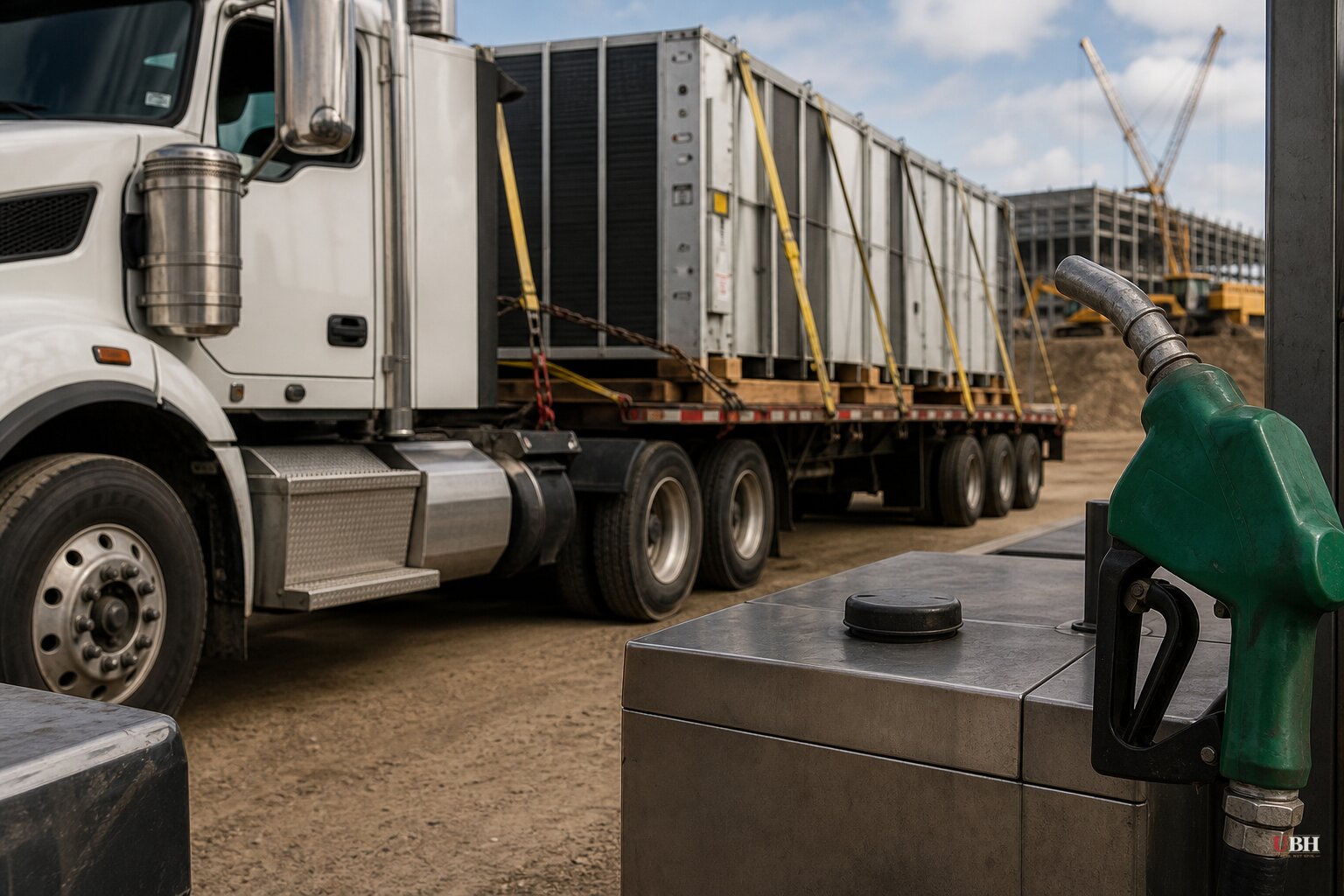
One driver of that turnaround: AI data centers. Servers don't build themselves, and neither do the buildings that house them. HVAC systems, tubing, wiring, semiconductors, transformers, generators and cooling equipment arrive at construction sites primarily by truck, or by rail with a truck for the final leg, according to CNBC.
"Against that backdrop, AI and data center activity presents an opportunity for fleets," said Patrick Brennan, senior vice president at Cox Fleet, a fleet management solutions provider. He said equipment-heavy projects tied to data centers, defense and semiconductors are inherently more freight-generating than typical freight demand, which remains uneven overall.
Flatbeds are the big winner, and routes are shifting
The gains aren't spread evenly. Flatbed and heavy-haul carriers are seeing the biggest lift, with spot rates hitting multiyear highs this summer in construction-heavy markets, Brennan told CNBC. Spot freight rates overall have climbed about 35% and contract rates about 10%, according to industry sources cited by Morningstar.
Because data center site selection hinges on power availability and land cost rather than proximity to existing freight corridors, the buildout is rerouting trucking lanes into places that were never traditional freight hubs. "This reshapes routes as much as it adds volume," Brennan said. Logistics executive Janelle Griffith told Superpower Daily that Georgia and Texas are already seeing spikes in trucking traffic tied to data-center construction.
A labor crunch on top of a fuel spike
The projects are also straining an already tight labor pool. Brennan said demand is rising for CDL drivers, diesel technicians, fleet-maintenance workers and logistics personnel, pushing out hiring timelines for specialized roles.
That's happening as diesel hit an all-time high of $5.85 a gallon on Friday, a spike CNBC and Briefs.co both tie to the Iran war. Morningstar notes higher fuel costs hit smaller operators hardest, the same carriers most likely to be chasing new data-center work.
Smaller carriers are picking up real business hauling transformers, generators and concrete to data center sites, according to Jennifer Lockett, freight-factoring operations manager at altLINE. But she told Traders Union those contracts can strain cash flow, since carriers often have to pay for trucks, drivers, fuel and labor before larger customers pay their invoices.
The construction cliff
There's a persistent warning about this boom: it's tied to construction, not operation. Kyle Roberts of Newmark Mountain West told Superpower Daily there's an "extraordinary drop off" in truck traffic once a data center site is finished. Kyre Lahtinen of Wake Forest University said operating data centers require comparatively little logistics support once servers are running, unlike facilities that handle physical goods. The sustainability of the trucking gain depends on whether new projects continue to break ground fast enough to replace freight that vanishes at completed sites.
The political fight over where these sites go
Separate from the freight numbers, data centers themselves have become politically contentious. The Daily Wire's opinion section reported that 71% of Americans now oppose having a data center in their own area, and that Prince William County, Virginia, rejected a 2,000-acre data center proposal. The piece argued Silicon Valley fed its own backlash by pairing AI hype with warnings about job losses, pointing to Anthropic CEO Dario Amodei's comment that a possible AI future includes a cured cancer, a 10%-growth economy and 20% unemployment.
Fox News's opinion section pushed back against that framing, arguing Democrats and "liberal journalists" are stoking fear of AI to justify government control over the technology, and quoted Democratic strategist Jesse Ferguson saying "the fight for Democrats is not 'we are for AI' or 'we are against AI' ... the fight is over control." That piece also cited local economic wins: Ellendale, North Dakota, using data-center tax revenue to repave streets and renovate its senior center, and a Meta facility in Louisiana's Richland Parish funding $50,000 teacher bonuses.
Both sets of facts are real and don't cancel each other out. Communities are genuinely divided between the tax windfalls data centers bring and the property-value and environmental concerns driving local rejections. The trucking boom and site-siting fights don't resolve the underlying question industry analysts keep raising: whether the current pace of construction can outrun the day the trucks stop coming.
Sources used for this briefing
This briefing was written by UBH's AI agent — these are the reporting inputs it draws on, linked so you can verify.


