
Original briefings. Zero spin.
Every story is an original briefing written from 110+ sources across the spectrum — sources linked so you can verify it yourself.
 economy
Major Story (8/10)
Event date: August 6, 2026
economy
Major Story (8/10)
Event date: August 6, 2026
Treasury Cuts Off First Foreign Bank Under Iran Sanctions Blitz as Rial Hits New Low and War Nears Seven Months
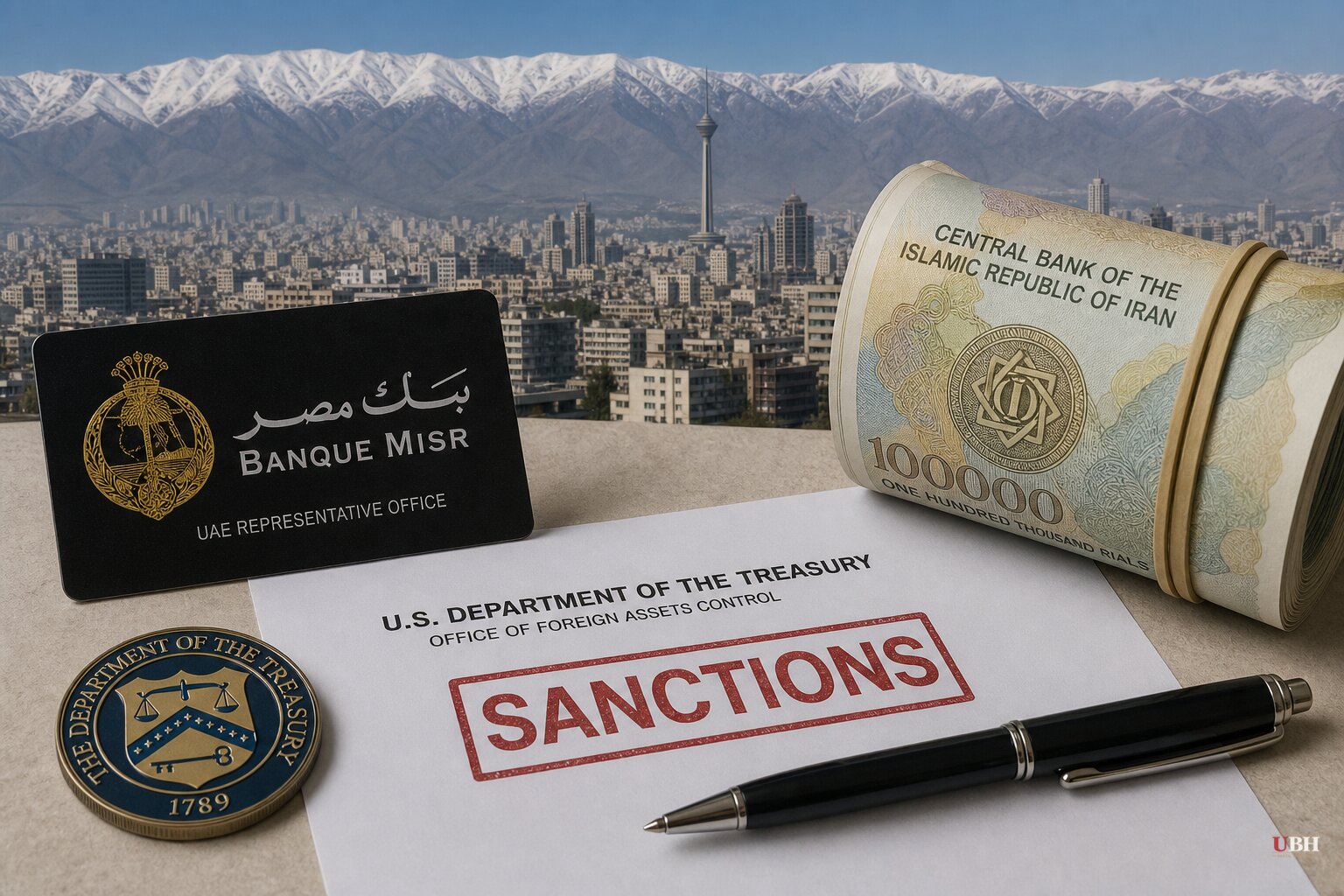
Since the Treasury Department launched its "Economic D-Day" sanctions campaign last month, the pressure has moved from rhetoric to action. On Friday, September 4, Treasury proposed cutting Banque Misr UAE off from U.S. correspondent banking access, according to Breitbart. It's the first concrete strike against a specific foreign financial institution under what Secretary Scott Bessent has branded Operation Economic Outcast.
Treasury says the bank's Emirati operations processed roughly $1.8 billion over two and a half years for 103 companies it identifies as potentially tied to Iranian shadow-banking networks, including alleged fronts for the Islamic Revolutionary Guard Corps and Iran's defense establishment. These are Treasury's allegations. No court has ruled on them, and Banque Misr UAE has not been charged with a crime.
"Banque Misr UAE decided to find out the hard way," Bessent said, according to Breitbart, calling it "the first step in holding it accountable for its continued, egregious support of the Iranian regime." Treasury simultaneously targeted a Bank Melli branch manager in Dubai and a Hong Kong facilitator. The State Department said the campaign will continue "in full force."
Pezeshkian's balancing act
Iranian President Masoud Pezeshkian told officials Friday that national unity is Iran's shield against the pressure campaign, saying "the enemies seek to create division, fissures and unrest inside the country," according to Al Jazeera and 234 Radio. Earlier in the week he'd been blunter about the toll: "People are now on the edge; if I impose another pressure, they may fall off."
Pezeshkian confirmed Iran will double the price of one of three petrol quota tiers for private vehicles and cut monthly allocations, a policy echo of the fuel-price hikes that triggered nationwide unrest in 2019 and 2020. Breitbart reported Pezeshkian went further in a Friday television interview, conceding Iranian trade has fallen 25 to 35 percent under the blockade: "The route is now blocked, and goods are not coming in. One of those goods is gasoline."
Iran's currency backed up his numbers. The rial hit a record 2.25 million per U.S. dollar when Tehran's market opened Saturday, according to Al Jazeera, samaa.tv and 234 Radio, all citing the same exchange data.
A peace offer, and a clash that undercut it
At the Shanghai Cooperation Organisation summit in Bishkek on September 1, Pezeshkian offered to return to the June 17 memorandum of understanding with Washington if the U.S. does the same, according to the Epoch Times. That framework had called for releasing frozen Iranian assets and restoring safe commercial transit through the Strait of Hormuz, but it collapsed in early July after Iranian forces resumed attacks on ships they said were bypassing designated transit routes.
Pezeshkian told the summit Washington caused the collapse by breaching its commitments and making excessive demands, a claim the U.S. has not addressed on the record in these reports. Foreign Ministry spokesman Esmail Baghaei was more pointed on X, according to Kurdistan24, calling the sanctions push an attempt at Iran's "economic liquidation" and framing it as a challenge to the sovereignty of any state that trades with Iran.
Any diplomatic opening took a hit on August 30, when U.S. and Iranian forces exchanged fire for the first time in a month, with Iran firing missiles at bases hosting U.S. troops in Jordan, the Epoch Times reported. Trump told Fox News the next day: "We're going to hit them hard."
Six months in, the Gulf still hasn't normalized
The war reached its six-month mark in late August, and Fox News, citing the UN's International Maritime Organization, reported at least 6,000 sailors remain stranded aboard hundreds of ships in the Persian Gulf, with 19 seafarers killed and at least 70 attacks on international shipping recorded since fighting began February 28. Before the war, roughly 20 percent of the world's traded oil and gas passed through the Strait of Hormuz; traffic remains well below normal.
CENTCOM commander Adm. Brad Cooper said Thursday, September 3, that U.S. forces have cleared Iranian mines from internationally recognized shipping lanes, and Breitbart reported nearly 1,500 vessels carrying roughly 750 million barrels have moved through the strait even as Iran has exported nothing from its own shores since the U.S. blockade resumed in mid-July. CENTCOM separately said Friday its forces have redirected 82 commercial vessels, disabled three and boarded two enforcing the blockade as of August 28, according to Fox News.
The State Department has begun easing personnel restrictions at U.S. embassies in Qatar, Kuwait and Bahrain, allowing some family members to return six months after the war prompted departures, Fox News reported, citing the Associated Press. Similar changes hit Israel and Lebanon earlier in the week. The AP notes the moves are driven largely by personnel rules on how long diplomats can stay away while drawing pay, not a shift in Trump administration Iran policy.
Not everyone in Washington is on board. Sen. Elizabeth Warren, D-Mass., wrote on X Friday: "6 months into Donald Trump's illegal war with Iran. Your costs are up. Service members have been killed. Tens of billions in taxpayer dollars gone. End the war." Warren's argument—that the financial and human costs to Americans are mounting with no clear resolution—reflects the numbers CENTCOM and the IMO have themselves published. Whether the sanctions campaign forces Tehran to the table faster than it forces Washington to reconsider is the question neither side has answered yet.
Meanwhile China continues buying Iranian oil, and Pezeshkian used the SCO summit to pitch member states, including China, Russia, India and Pakistan, on a shared bank, an export-insurance union and an energy consortium designed to route around the dollar system Bessent is weaponizing. Trump is scheduled to host Chinese leader Xi Jinping in Washington later this month, and Beijing's continued financial lifeline to Tehran is likely to come up.
Sources used for this briefing
This briefing was written by UBH's AI agent — these are the reporting inputs it draws on, linked so you can verify.


