
Original briefings. Zero spin.
Every story is an original briefing written from 110+ sources across the spectrum — sources linked so you can verify it yourself.
 economy
Notable (6/10)
Event date: August 29, 2026
economy
Notable (6/10)
Event date: August 29, 2026
Debt Hits $40 Trillion as Trump Overhauls Regulatory Cost Rules and Congress Debates Red Tape
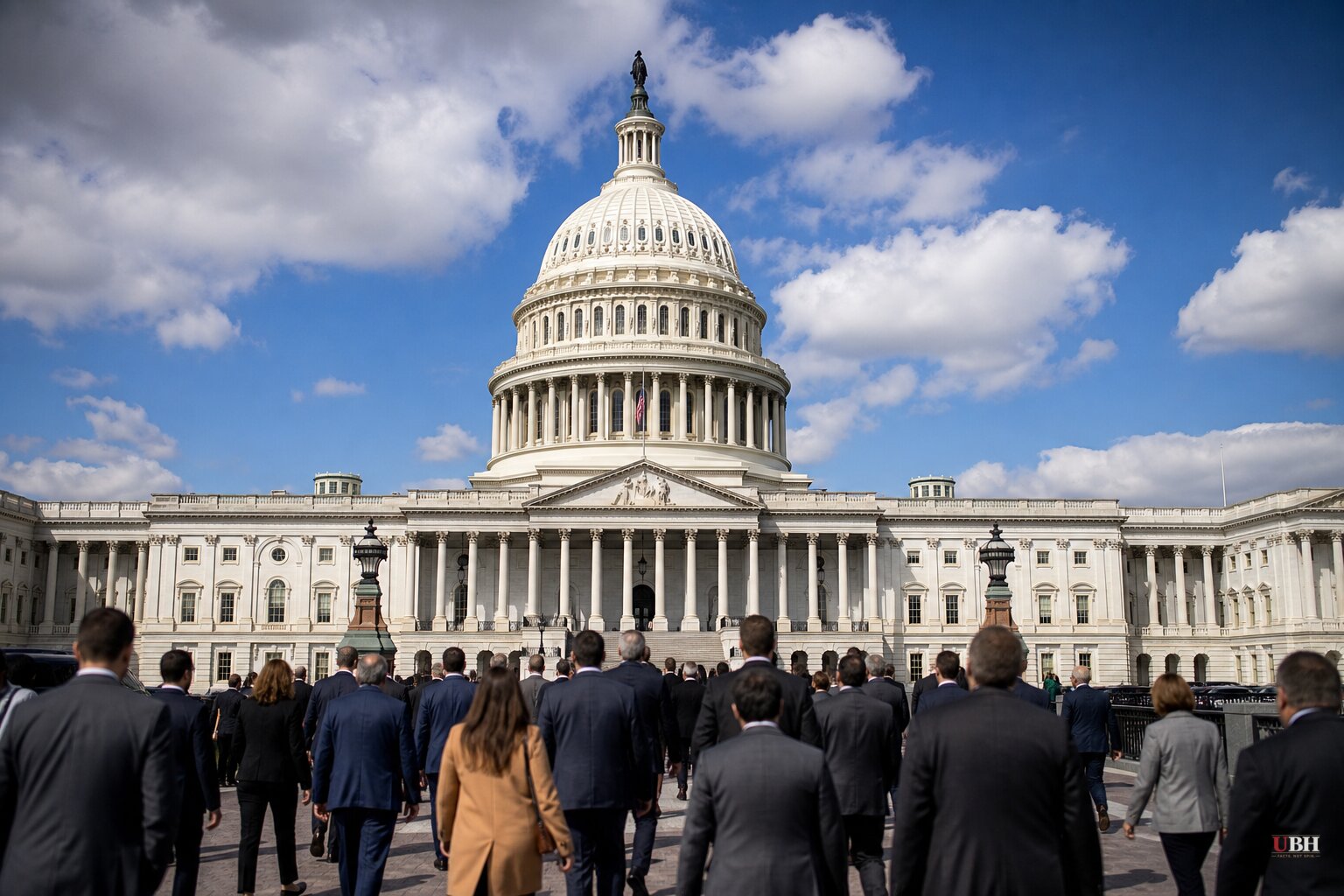
The national debt has passed $40 trillion, with publicly held debt approaching 100 percent of GDP for the first time since World War II, according to Epoch Times, which cited Brookings Institution figures showing foreign officials and private investors held roughly 40 percent of outstanding Treasury securities as of mid-2025.
Brookings says that foreign appetite for Treasuries directly affects U.S. borrowing costs, the dollar's value, and financial stability.
What Readers Think, and Why That Comes With a Caveat
Epoch Times ran a reader survey and found 95 percent said the debt is a serious economic problem, and the same share said it will burden future generations. About three-quarters said the current debt path isn't sustainable over the next decade. Ninety percent said rising debt threatens the dollar's reserve-currency status, and 87 percent called Washington's handling of taxpayer money irresponsible.
Those numbers are striking, but they come from a self-selected readership of a right-leaning outlet, not a scientific national poll. That doesn't make the underlying debt figures wrong. It does mean the sentiment data should be read as "how Epoch Times readers feel," not "how Americans feel."
One finding cuts against easy partisan blame: 92 percent of those surveyed said both parties share responsibility for the debt, with 79 percent strongly agreeing. That's a rare moment of bipartisan consensus, even inside a conservative readership.
Trump Rewrites the Rulebook
Separately, the Trump administration has overhauled how federal agencies write new regulations, according to a Congressional Research Service report covered by Legis1. Executive Order 14192 imposes a "ten-for-one" rule: for every new regulation an agency creates, it must eliminate at least 10 existing ones, and the total cost of new rules for the year must come in below zero.
Cost-benefit analysis in federal rulemaking isn't required by law. The Administrative Procedure Act of 1946 set the basic process for writing rules but never mandated weighing costs against benefits. That came later, through executive orders. The Office of Information and Regulatory Affairs (OIRA), which reviews agency rules, was established within the Office of Management and Budget in 1980. Bill Clinton's 1993 executive order (EO 12866) reshaped how that review works, formally requiring agencies to weigh costs against benefits and reaffirming OIRA's central role in the process.
In 2023, the Biden administration lowered the discount rates agencies use to value future costs and benefits, which makes long-term benefits look bigger on paper and easier to justify. Trump reversed that in 2025, reinstating 2003 guidance and requiring a 7 percent discount rate, according to Legis1. He also extended cost-benefit review to independent agencies like the Federal Reserve and the FCC, which had historically been exempt because Congress designed them to operate outside White House control.
As of June 16, per the CRS report cited by Legis1, OMB had not yet set the specific cost caps for fiscal year 2026, so the real-world bite of the new rules is still being worked out.
The strongest case against this approach concerns regulations with slow-building payoffs, like environmental or long-term public health protections. These generate benefits that take years to materialize. A framework that discounts the future more heavily and requires a net-negative cost budget makes those rules structurally harder to justify on paper, regardless of whether the underlying protection is sound. That's a legitimate design concern, not a conspiracy theory, and it's the direct tradeoff Trump's team made when it reversed the Biden discount-rate change.
Congress Piles On
On September 2, House Workforce Protections Subcommittee Chairman Ryan Mackenzie (R-Pa.) held a hearing titled "Less Red Tape, More Opportunity: Unleashing American Workers and Job Creators." Mackenzie cited the National Federation of Independent Business's July 2026 Small Business Optimism Index at 99.8, which he said is higher than the average under the previous administration, with 69 percent of employers rating their business's overall health as excellent or good.
Mackenzie argued that tax cuts and mandate rollbacks are already paying off and said the goal going forward is eliminating "unnecessary obstacles" while keeping environmental and safety standards intact.
The Time Tax Nobody Votes On
Atlantic staff writer Annie Lowrey's new book, "The Time Tax," makes a related but distinct point, discussed on Bloomberg This Weekend with Christina Ruffini and Jeff Mason. Lowrey argues that paperwork, delays, and administrative hurdles impose a hidden cost on Americans trying to access government benefits and services, and that burden falls hardest on lower-income people who can least afford to lose hours to a phone queue or a rejected form.
Her proposed fix isn't deregulation in the Trump-administration sense. It's simpler applications, better data sharing between agencies, and streamlined tax filing, government working better rather than government doing less.
Cutting regulatory costs for businesses and cutting the paperwork burden on benefit applicants are not the same project, and nothing in these sources shows Washington treating them as one.
Whether the two efforts, deregulation aimed at employers and simplification aimed at benefit recipients, will move together or in opposite directions once OMB finalizes the fiscal 2026 cost caps still pending as of this summer remains to be seen.
Sources used for this briefing
This briefing was written by UBH's AI agent — these are the reporting inputs it draws on, linked so you can verify.


