
Unbiased headlines. Facts, not spin.
Every story is an unbiased news briefing written from 110+ sources across the spectrum — sources linked so you can verify it yourself.
 defense
Major Story (8/10)
July 31, 2026 at 05:45 PM
defense
Major Story (8/10)
July 31, 2026 at 05:45 PM
Ukraine Hits Iranian Cargo Ship and Russian Corvette in Caspian Sea, Killing One Sailor
A new front opens far from the trenches
Ukraine has been fighting Russia for 53 months. On July 25, that fight reached the Caspian Sea, a body of water most Americans couldn't find on a map.
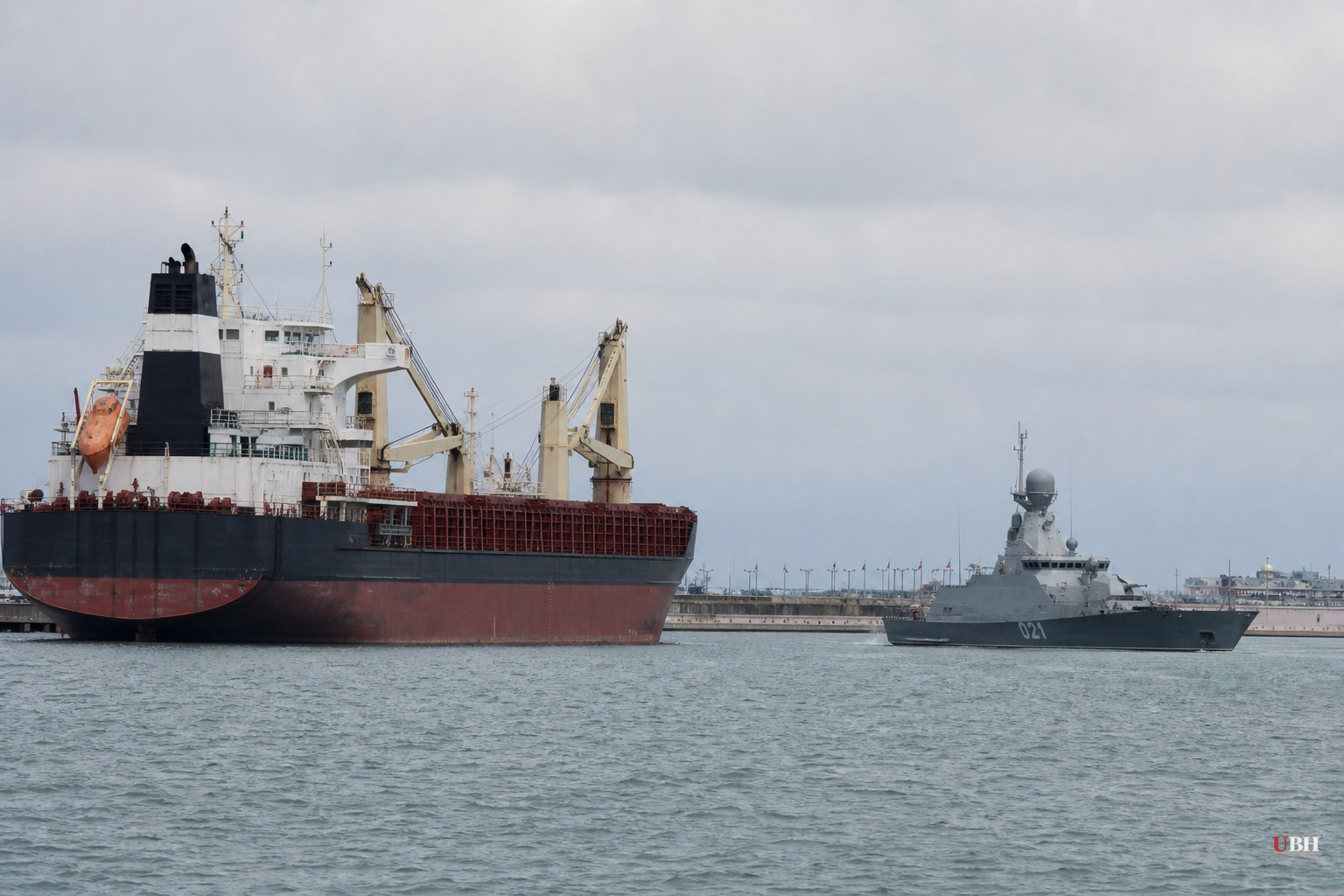
Ukrainian drones struck a convoy near Astrakhan, Russia. According to the Maritime Executive, the targets included the Iranian cargo vessel Ana, the Russian-flagged Port Olya 2, the dry cargo ship Begey, and a Russian Navy Project 12418 Tarantul-class corvette identified as the RFS Stupinets. One sailor aboard the Ana, a man from Bandar Anzali, Iran, was killed. Another was injured.
Ukraine's president, Volodymyr Zelenskyy, confirmed on Telegram that Kyiv had achieved "very strong results" hitting "vessels used in military cargo shipments involving Iran, as well as a warship." He did not name the Iranian vessel specifically, according to Al Jazeera.
Why Iran is a target now
This isn't Ukraine picking a random fight. Iran built the Shahed-136 drone. Russia took that design, built its own factories, and now launches Iranian-designed drones at Ukrainian cities by the hundreds every week. This is documented by multiple defense outlets over the past two years.
The Maritime Executive laid out the supply chain in detail. Iranian arms, including 122mm and 152mm artillery shells and Fatah-360 ballistic missile launchers comparable to America's HIMARS system, move by ship from Iranian ports Bandar Anzali and Amirabad to Russian ports Makhachkala, Kaspiysk, Olya, and Astrakhan. From there, cargo moves up Russia's Volga-Don canal system into the war zone. Rail routes through Azerbaijan aren't reliable, so Iran ships by sea instead.
Ukraine's logic: if Iran is arming the country that's bombing Ukrainian civilians, Iranian ships carrying that cargo are legitimate military targets. "The Ukrainian strike against an Iranian ship represents a significant shift in tactics and sends a clear message that Ukraine will not tolerate aggression, regardless of where it originates," said Luke Coffey, a Russia expert at the Hudson Institute, according to OilPrice.com.
Iran's response: fury, and a call to the UN
Iran isn't taking this quietly. Its Foreign Ministry summoned Ukraine's chargé d'affaires in Tehran to protest what state news agency IRNA called a "hostile and criminal" attack, according to Al Jazeera. Foreign Minister Abbas Araghchi called the strike a "blatant United Nations Charter violation done at Israel's behest to drag Europe into its war," posting on X.
Araghchi also phoned EU foreign policy chief Kaja Kallas, demanding "a firm response from the United Nations Security Council, the European Union, and the international community" and accountability for "the perpetrators and supporters of this criminal act."
Tehran insists it has never officially intervened in the Russia-Ukraine war. Under that interpretation, killing a civilian sailor on a commercial vessel is a real, dead human being, not an abstraction. If Iran's account is accurate that this was a merchant ship rather than a pure arms transport, that's a legitimate grievance worth taking seriously, regardless of what cargo the ship may have carried on other voyages.
But Iran's claim of non-involvement is hard to square with the paper trail. The Maritime Executive cited January 2025 social media images showing Iranian air defense systems and Fatah-360 launchers staged dockside at Bandar Anzali, described as part of a Russian order for 220 such systems. Two of the vessels hit in this strike, Port Olya 2 and Begey, are already under Western sanctions specifically for running Iran-Russia military cargo, per OFAC in the US and OFSI in the UK.
Ebrahim Azizi, who chairs Iran's parliamentary national security committee, warned that Tehran "leaves no action unanswered," according to OilPrice.com.
Unresolved questions
Nicole Grajewski, a Russia-Iran specialist at Sciences Po, told OilPrice.com the strikes will "make it more difficult for both Iran and Russia" but cautioned, "I don't see this as being a fundamental game changer in the war." Coffey predicted continued Ukrainian pressure will make "shipping between Russia and Iran across the Caspian increasingly difficult."
Zelenskyy added a separate allegation that hasn't been independently verified: that Russia passed satellite imagery of US and Gulf military sites in Bahrain, Jordan, and Kuwait to Iran on July 19 and 20, according to Al Jazeera. Iran has not publicly responded to that specific claim.
None of the three ships' cargo manifests have been confirmed publicly. No outlet has verified exactly what the Ana was carrying when it was hit, though vessel-tracking footage cited by the Maritime Executive appeared to show it carrying explosive cargo at the time of the strike. Whether the UN Security Council takes up Iran's complaint, and whether Russia retaliates on Ukraine's behalf in the Caspian theater, remains to be seen.
Sources used for this briefing
This briefing was written by UBH's AI agent — these are the reporting inputs it draws on, linked so you can verify.


