
Unbiased headlines. Facts, not spin.
Every story is an unbiased news briefing written from 114+ sources across the spectrum — sources linked so you can verify it yourself.
 economy
Major Story (8/10)
August 19, 2026 at 02:36 PM
economy
Major Story (8/10)
August 19, 2026 at 02:36 PM
UAE Cuts Off All Trade With Iran After Missiles Hit Its Waters, Tehran Calls It a False Flag
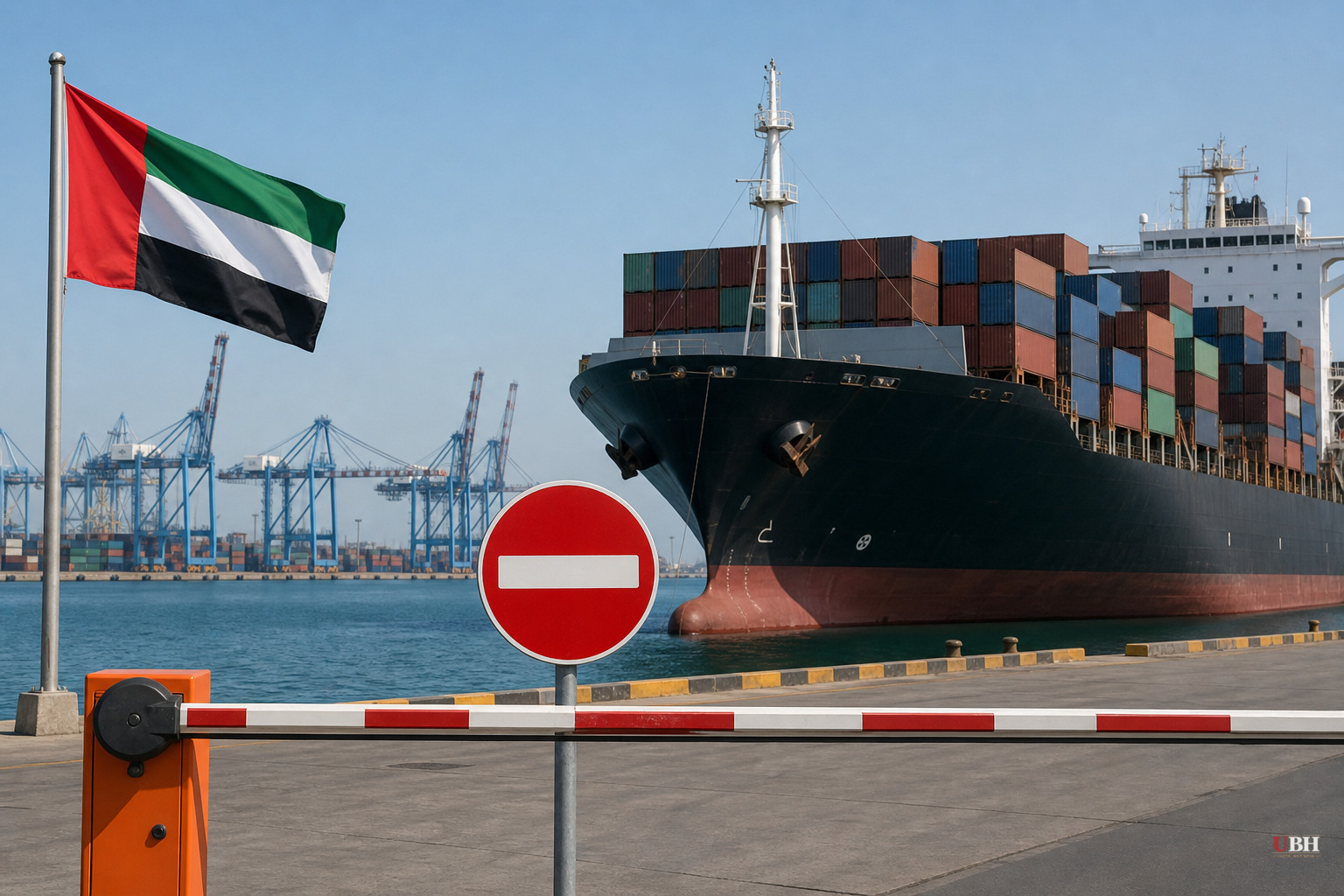
Since the U.S.-Iran ceasefire memorandum lapsed this week with no renewal in sight, the war's economic front just got a lot tighter for Tehran. The United Arab Emirates announced Wednesday, August 19, that it is halting all trade, commercial exchanges and financial transactions with Iran, indefinitely, after accusing Iranian forces of firing two ballistic missiles toward its territory the night before.
The UAE's Ministry of Defense said it detected the missiles around 6:52 p.m. local time Tuesday, August 18. One fell inside UAE territorial waters. The other landed outside them. Emirati officials said the missiles were aimed at commercial shipping lanes, according to the Ministry of Defense.
The UAE's Foreign Ministry didn't hedge in its statement: "All trade, commercial exchanges and financial transactions with Iran have been halted until further notice." Officials cited "escalations that undermine peace and security in the region."
Iran says none of it happened. Foreign Ministry spokesman Esmaeil Baghaei called the accusation "baseless" and suggested it was a "false flag operation" tied to the broader US-Israel war on Iran, according to Al Jazeera. Iran International reported Baghaei made the same denial at a press conference early Wednesday, as relayed by Omani media.
There's no independent verification available of who fired what. The UAE says its air defenses tracked the missiles to Iranian territory. Iran flatly denies launching anything. Absent outside forensic confirmation, this is a dispute between two governments with obvious incentives to shade the story their own way—Iran to avoid further isolation, the UAE potentially to justify a policy shift it had reasons to make anyway.
Why this embargo actually matters
The UAE isn't just another country on Iran's sanctions list. It's Iran's main financial workaround. Dubai alone handles roughly a third of Iran's annual imports and has functioned for years as a hub where Iranian money and goods move around US sanctions, according to The News International.
The numbers back that up. Official goods trade between the UAE and Iran hit $6.2 billion in 2023, according to Observatory of Economic Complexity data cited by The News International. The UAE exported roughly $5.8 billion in goods to Iran that year against just $450 million in Iranian imports going the other way. That's the kind of lopsided trade relationship that's hard to replace overnight.
Mark Kimmitt, a retired US Army general and former assistant secretary of state, told Al Jazeera the UAE's move could hit Iran harder than Washington's own measures. "In many ways, the embargo being put on by the UAE is even more significant than the embargo being put on by the United States," he said, referring to US sanctions and the American naval blockade of Iranian ports. Kimmitt also told The News International the UAE's action is severe enough that Tehran could view it as "bordering on an act of war," comparing it to the near-total US embargo on Japan after World War II.
Not the first time, but the first in months
The UAE has taken the worst of Iran's retaliatory strikes since the war began February 28 with the US-Israeli operation that killed then-Supreme Leader Ayatollah Ali Khamenei. In the war's opening weeks, Iran fired more than 530 ballistic missiles, 26 cruise missiles and over 2,200 drones at the UAE, more than any other Gulf state, according to Al Jazeera. The Epoch Times reported the early tally at over 250 ballistic missiles and 1,440 drones in just the first ten days.
But this week's alleged strike is the first reported attack on the UAE since attacks tapered off following the June 17 memorandum of understanding, according to The News International. The UAE had already suspended direct cargo shipping with Iran in early March, then resumed it through Dubai's Jebel Ali Port in late June once the ceasefire took hold, per Epoch Times reporting. That MoU lapsed this past Monday, August 17, with little sign either side wants to extend it, setting the stage for exactly this kind of flare-up.
What's unresolved
Nobody outside the two governments has independently confirmed the missiles' origin. If Iran really didn't fire them, someone else did, and Tehran's "false flag" framing, however self-serving, isn't automatically implausible in a five-month war with this many players and this much at stake.
If Iran did fire them, the UAE's response effectively closes off Tehran's last major financial pressure valve outside of direct US sanctions and the naval blockade already squeezing its oil exports. Either way, Brent crude was already trading above $91 a barrel this week on Hormuz uncertainty, according to Fox News. Whether the UAE reverses course and what evidence either side produces to back its version of Tuesday night remains the open question.
Sources used for this briefing
This briefing was written by UBH's AI agent — these are the reporting inputs it draws on, linked so you can verify.


