
Unbiased headlines. Facts, not spin.
Unbiased Headlines is an independently owned news organization. We bring you the facts, not opinions, written fresh from 110+ named sources. Sources linked so you can verify it yourself.
 economy
Notable (6/10)
U.S. China Commission: Beijing Is Working to Suppress India's Rise, Urges Deeper Defense Ties With New Delhi
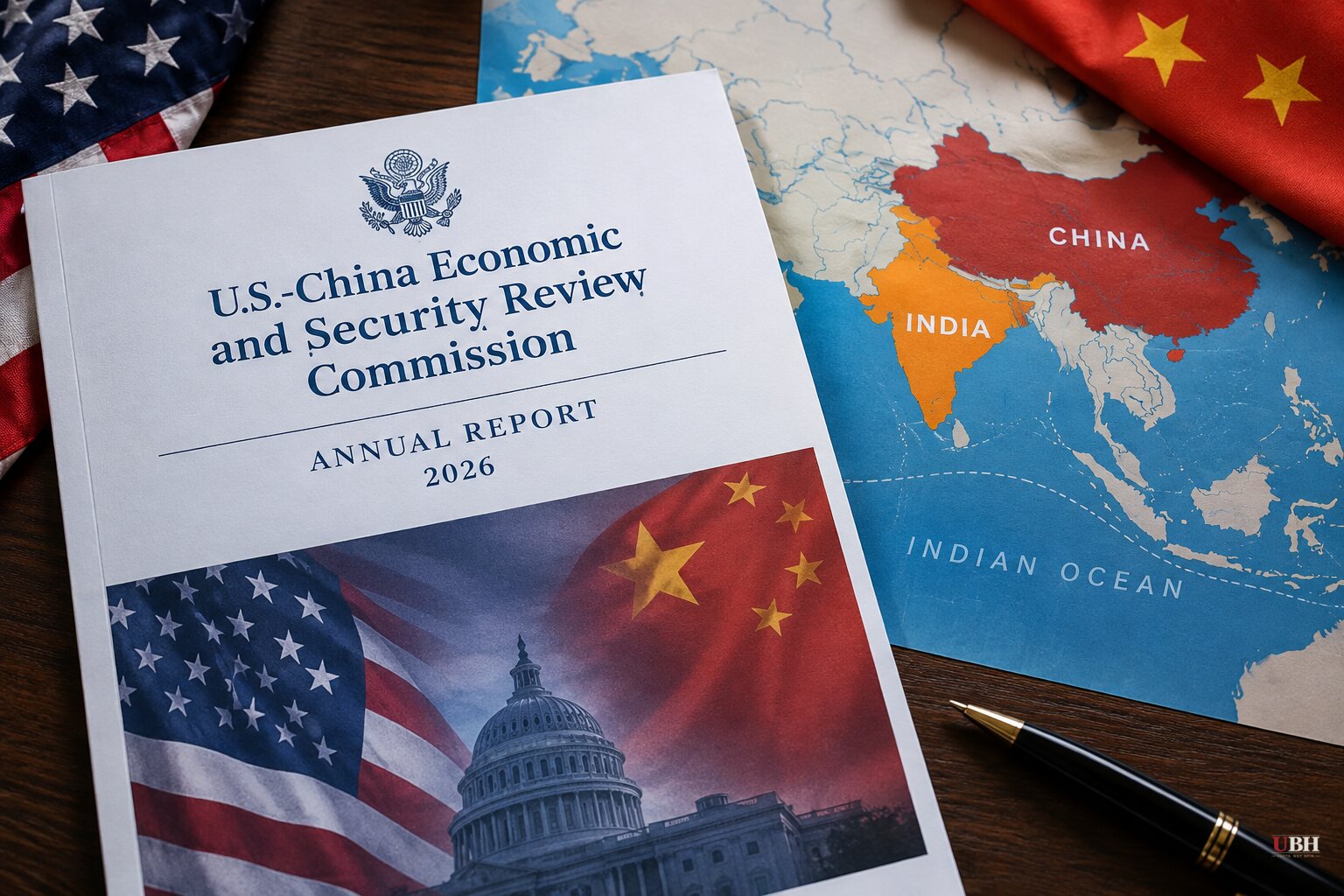
China is "actively working to suppress India's rise across multiple domains," according to the U.S.-China Economic and Security Review Commission. The bipartisan congressional panel put the finding in its 2026 annual report, released Nov. 18.
The report devotes a chapter to India, titled "China's Other Front: India and the Future of US Strategy in the Indo-Pacific." It opens by calling India "one of the few powers outside the US alliance system with the scale to materially affect the long-term competition with China."
Economic pressure is the sharpest tool
The commission calls economic leverage Beijing's most effective weapon against India. It says China has restricted industrial inputs, equipment, technology and expertise.
The report lists specific moves:
- China recalled engineers and withheld equipment to slow India's electronics manufacturing.
- It slashed pharmaceutical input prices to undercut new Indian plants.
- It imposed export controls on battery technology to hinder India's clean energy industry.
Last month Beijing also put export controls on tunnel boring machines. India's Commerce Minister Piyush Goyal reportedly responded: "Our relations with China remain good, and if there aren't any new hurdles, they can improve further."
The commission says a stronger India could shift the balance of power in Asia and offer U.S. companies a real alternative to Chinese supply chains. India's continued dependence on Chinese machinery and inputs gives Beijing a lever over those same supply chains.
Pakistan and the two-front problem
The report ties China's military partnership with Pakistan directly to the suppression effort. China supplied 81% of Pakistan's arms imports from 2020 to 2024, according to SIPRI data cited by the commission.
The May 2025 India-Pakistan conflict followed the April 21, 2025 killing of 26 civilians, mostly tourists, in Pahalgam, Jammu and Kashmir. India responded with Operation Sindoor against what it called terror bases. The commission says the fighting showed how China "could strengthen Pakistan during a crisis without Beijing entering the fighting directly."
Pakistan reportedly used advanced Chinese weaponry. A Chinese survey vessel with advanced sensors operated around the waters of India's exclusive economic zone. An engineer from state-owned Aviation Industry Corporation of China told CCTV in May 2026 that he and colleagues had given on-site technical support in Pakistan during the fighting.
India says it downed six Pakistani aircraft in the clash. It has since approved five more S-400 systems from Russia, which it praised for their performance.
The commission also says hackers tried large-scale distributed denial-of-service attacks on Indian critical infrastructure, including government systems, during the conflict.
The Indian Ocean and the Himalayan frontier
On the 2,100-mile contested border, the report says China's infrastructure and pre-positioned forces force India "to maintain substantial forces and readiness along the frontier." Last month an Indian military official said confrontations with Chinese soldiers were ongoing at several locations along the northeastern border. That came even as the two countries' leaders met at the BRICS Summit in September.
At sea, the commission says Beijing is "beginning to bring its South China Sea playbook to the Indian Ocean, invoking historic rights and renaming undersea features." It says those tactics could lay groundwork for jurisdiction claims. About 80% of China's oil imports cross that ocean, and Chinese survey and research ships regularly operate near India's coast.
India is not signing up as a U.S. ally
The commission acknowledges that relations between New Delhi and Beijing have been gradually rebuilt since late 2024, though it says strategic distrust remains high. It also says India's rivalry with China comes from its own interests and its commitment to "strategic autonomy," not alignment with Washington.
Experts interviewed by CNBC say the same. Arpit Chaturvedi, South Asia advisor at Teneo, said the thaw reflected industrial demand and "a whole lot of posturing for the U.S." India faced U.S. tariff pressure over the past year and needed to show Washington its options were open, he said.
Chaturvedi added that with the U.S.-India trade deal "close enough now," there is less need for that signaling. He said further improvement with China is limited by renewed border tensions and Beijing's scant reciprocation on technology access and movement of people. The experts told CNBC the uneasy peace is unlikely to make India an automatic U.S. ally.
A Chinese Foreign Ministry spokesperson reportedly said Beijing is ready to work with India on visa arrangements for business personnel. That followed reports that fewer Indian businesspeople got visas to attend a trade fair in Shanghai.
The Indian foreign and commerce ministries and the Chinese foreign ministry did not respond to CNBC's requests for comment on the report.
What the commission wants
The commission recommends that Congress direct the Defense Secretary and the Chairman of the Joint Chiefs of Staff to work with their Indian counterparts. The goal is stronger coordination on undersea and maritime domain awareness in the Indian Ocean, moving beyond what the commission describes as limited military engagement.
The recommendation now sits with Congress. Whether New Delhi will accept deeper operational ties, given its stated autonomy and its own thaw with Beijing, is unresolved, and so is how the pending U.S.-India trade deal fits in.
Sources used for this briefing
7 links from 6 independent newsrooms (syndicated copies of the same report count once)
These are the sources it draws on, linked so you can verify.


