
Unbiased headlines. Facts, not spin.
Unbiased Headlines is an independently owned news organization. We bring you the facts, not opinions, written fresh from 110+ named sources. Sources linked so you can verify it yourself.
 economy
Major Story (7/10)
Event date: November 19, 2026 ·
San Francisco Mayor Calls King Tide Flood Threat 'Extremely Serious' as Record El Niño Bears Down on Thanksgiving Week
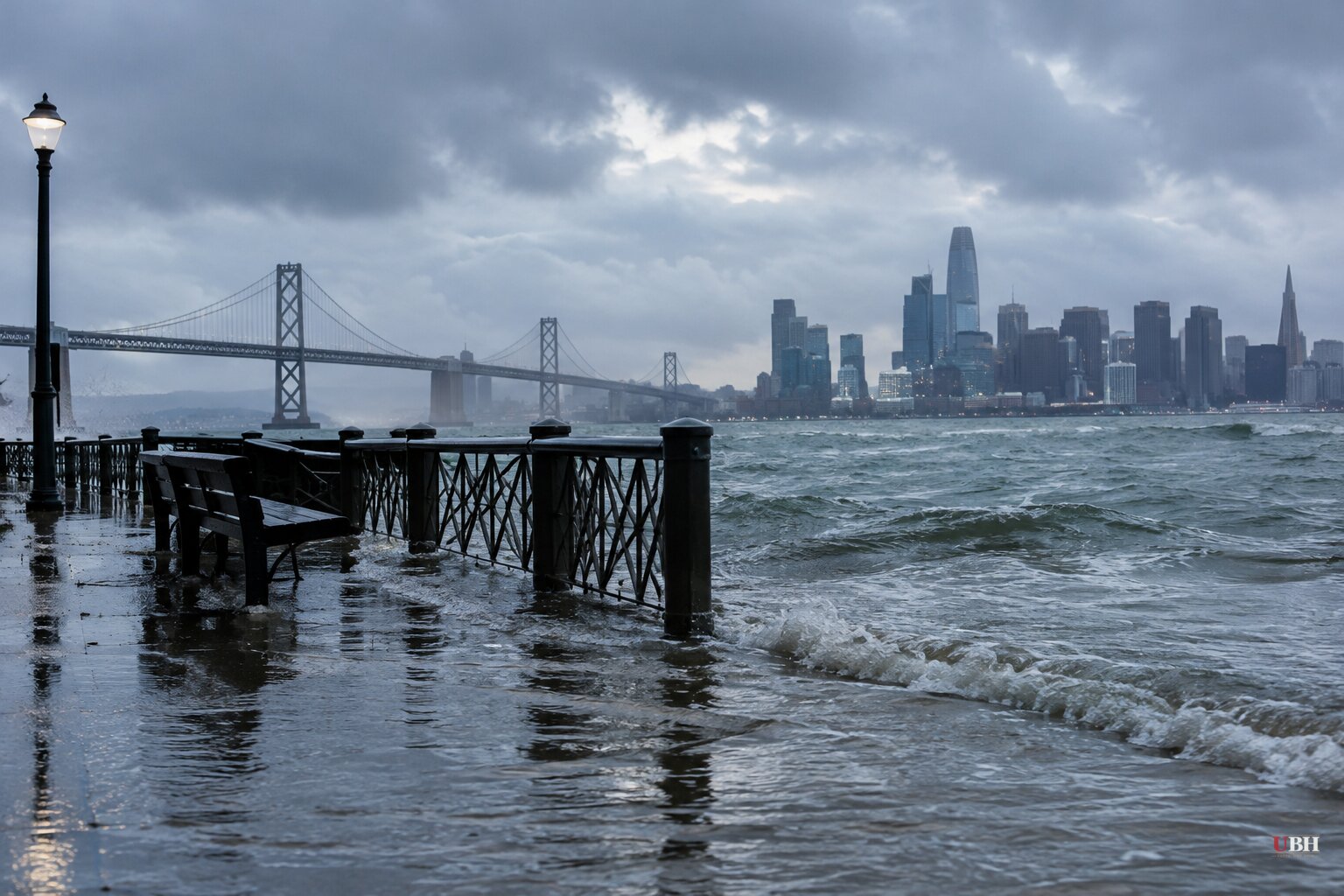
Since NOAA's Climate Prediction Center put the odds of a strong or very strong El Niño persisting through March above 79% on Nov. 12, the focus has shifted from winter outlooks to a flood threat on the California coast during the busiest travel week of the year.
San Francisco Mayor Daniel Lurie called the situation "extremely serious" and asked people to limit unnecessary travel. US authorities have urged residents to reconsider Thanksgiving plans.
King tides on top of record-warm water
The tides themselves are not an El Niño product. King tides happen every year because of the alignment of the Earth, Moon and Sun. They arrive this week and again in December and January.
What is different is the water they are riding on. Dial Hoang of the National Weather Service said this year's tides are forecast to be the highest since January 1983. In San Francisco they are expected to approach or exceed the more than 40-year-old record of 8.66 feet (2.6 meters).
Ocean water is warmer than usual, and therefore greater in volume. The warming comes from human-caused climate change and from this year's exceptionally strong El Niño, according to the reporting from the scene.
Hoang told AFP the Bay Area could see up to nearly three feet of flooding when the tides peak Wednesday, Nov. 25. Forecasters have warned that seawater could reach low-lying areas, including San Francisco's airport.
The National Weather Service said dangerously large breaking waves of up to 30 feet could hit California's coast Wednesday. Hazardous beach conditions are expected to last through Sunday, Nov. 29. "These conditions will coincide with King Tides and up to 1.6 ft of surge, bringing water and waves farther up the beach than normal," the agency said.
How big this El Niño is
NOAA's El Niño lead, Michelle L'Heureux, told a Nov. 17 Southeast climate webinar that the 2026–27 event is tracking closely with the historic 1997–98 El Niño. Relative Oceanic Niño Index values are hovering near 2.0°C above average. She put the probability of reaching or exceeding 2.5°C at 60%. That would rival or surpass the 1982–83 record of 2.4°C.
NOAA has had an El Niño Advisory in effect since June 2026. L'Heureux called the subsurface ocean temperatures "pretty extraordinary." CNN reported that the warmest subsurface water in the eastern tropical Pacific is running up to 18°F above average, the warmest observed there since records began in 1980.
The event also came on fast. NWS meteorologist Lindsey Long said that at the start of 2026 the Pacific was still in La Niña conditions, yet by July monthly sea surface temperatures trailed only the 1997–98 event. University of Colorado Boulder atmospheric scientist Kris Karnauskas called it a "textbook example of an East Pacific El Niño."
One caution on labels. Neither NOAA nor the World Meteorological Organization treats "super El Niño" as an official category. They classify events at least 2°C above normal for five consecutive overlapping three-month periods as "very strong."
What forecasters are, and are not, promising
Strength does not guarantee outcomes, and forecasters say so themselves. L'Heureux said record-level intensity raises the odds of typical impacts, such as a wetter West Coast winter, but does not ensure them. The National Weather Service's Nov. 19 outlook put it bluntly: "El Niño is not a storm." It shifts the odds of certain conditions.
That shows up in the regional picture:
- California and the South: NOAA's outlook tilts toward heavier precipitation from California across the Southwest and Gulf Coast and up the Eastern Seaboard. The federal drought portal says a wetter Southeast could bring relief to drought-stressed farms and watersheds, along with a higher risk of river flooding. The Washington Post's analysis gives San Francisco at least a 90% chance of a warmer and wetter winter.
- The North and Northwest: Strong El Niño winters typically run warmer and drier across the northern tier. SnowBrains, citing the European model, reports precipitation deficits of up to six inches over parts of the Cascades through Jan. 2. That is a model projection, and precipitation totals do not establish how much snow any individual resort will get.
- January in the South: Direct Weather's reading of NOAA's Climate Forecast System points to a colder-than-average January across Texas, the southern Great Plains and the Southeast. NOAA's official seasonal outlook, however, favors near-average three-month temperatures across parts of the Southeast. A colder January stretch remains uncertain.
Forecasters also flag a wildcard. A mid-winter polar vortex disruption could still trigger sudden Arctic outbreaks in northern states despite the milder baseline.
What comes next
The immediate test is Wednesday's tide peak in the Bay Area. Whether the airport and low-lying neighborhoods flood will depend on how the surge and waves line up with the tide, since no one can say precisely how those factors will combine.
The king tides return in December and January. NOAA says Pacific temperatures should peak in late fall or early winter. Weather impacts across the southern United States typically build later in the winter and into early spring, so this week may be a preview rather than the peak.
Sources used for this briefing
6 links from 6 independent newsrooms (syndicated copies of the same report count once)
These are the sources it draws on, linked so you can verify.


