
Unbiased headlines. Facts, not spin.
Unbiased Headlines is an independently owned news organization. We bring you the facts, not opinions, written fresh from 110+ named sources. Sources linked so you can verify it yourself.
 economy
Major Story (7/10)
WFP Chief Warns Shipping Chokepoints Could Add $727 Million in Costs and Cut Aid for 7.3 Million People
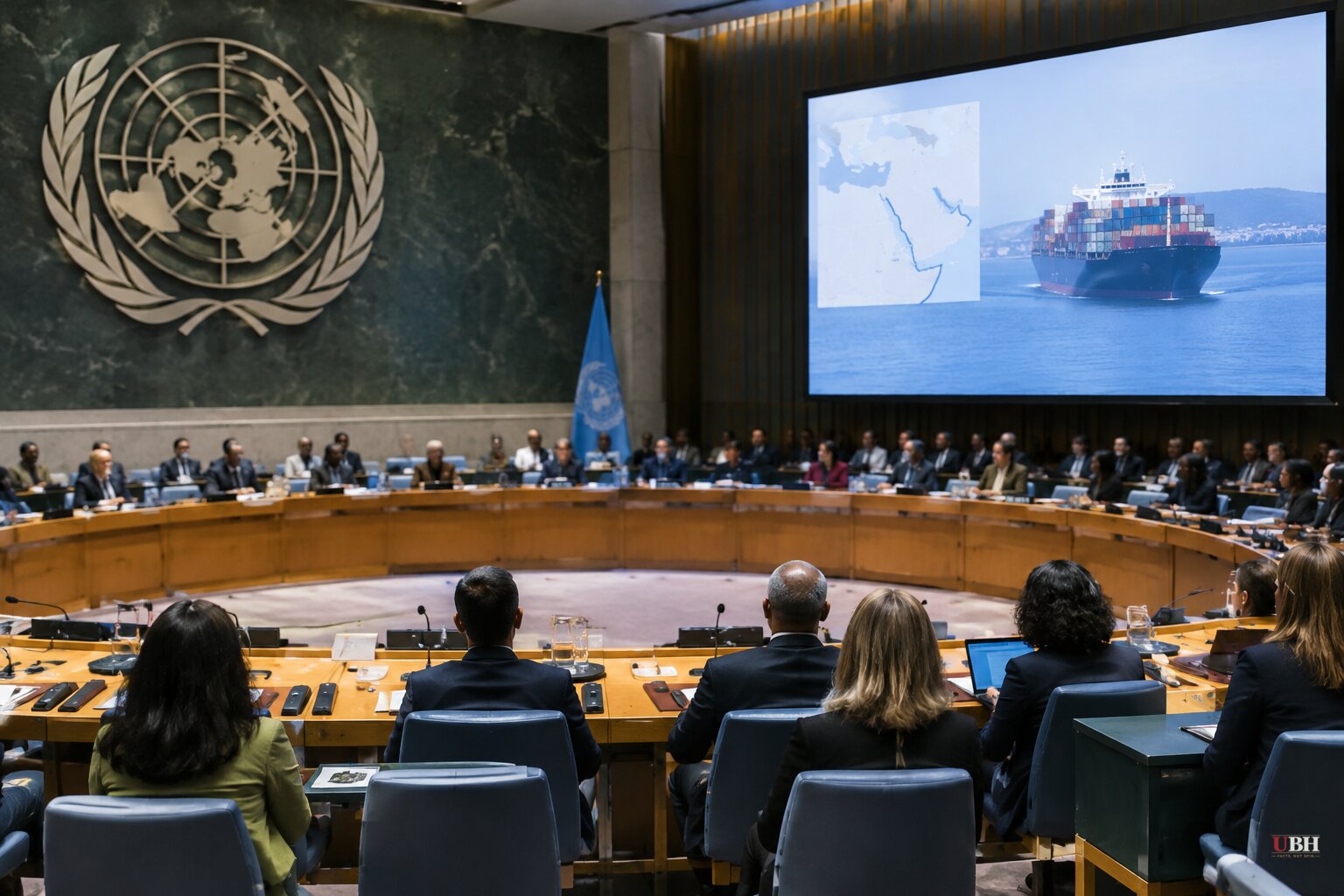
World Food Programme Executive Director Luke Lindberg told the UN Security Council on Monday, Nov. 23, that wars are choking three of the world's key trade routes and driving up what it costs to feed people. If conditions hold, the agency expects $727 million in additional costs by mid-2027. That money would otherwise fund assistance for 7.3 million people.
"This is taking money straight out of WFP's operations, directly translating into less food for fewer families," Lindberg said.
The three chokepoints
Lindberg called it a "triple chokepoint": the Strait of Hormuz, the Bab el-Mandeb Strait and the Black Sea. Together, he said, they have "dramatically tightened the supply of food exports and farming inputs." Climate shocks like El Niño make it worse.
The Hormuz problem is largely about fertilizer. About 30% of global fertilizer supplies flow through the strait, and Lindberg said constrained supply means food yields will likely be lower next season.
The fighting around the Gulf is not winding down. The war began with U.S.-Israeli strikes on Iran in late February. Bahrain said on Nov. 22 that Iran struck an industrial site as tankers were hit in Hormuz, ending a lull in the conflict.
The Black Sea numbers
The Black Sea figures are the starkest. As of mid-October, 63% fewer wheat and maize vessels were moving through the Bosphorus than at the same point in 2025, Lindberg said. More than 300 attacks have been recorded and at least 40 crew members have been killed.
As a result, about 10 million tons of Russian and Ukrainian wheat may not reach global markets this year. Lindberg said that is enough to feed an estimated 44 million people. He said some 10 million tons of grain are already sitting in silos.
Somalia and Yemen depend heavily on that grain. Yemen imports 90% of its food.
Prices and hunger
Lindberg said the UN Food and Agriculture Organization's food price index hit a near four-year high in September. Wheat prices are up almost 10% from January. Higher energy and transport costs have pushed up grocery prices, especially in import-dependent and food-insecure countries.
An estimated 266 million people already face acute hunger, and there is a risk of famine in parts of Sudan, South Sudan and Somalia. In Sudan, the cost of a basic diet has risen 130% since February.
The WFP assists more than 100 million people in 83 countries each year. "In spite of the scale and sophistication of WFP's supply chain operations, we cannot avoid the volatility that is inevitable with higher transport and commodity costs," Lindberg said.
A political problem, he says
"This is not a problem of production. It is a political problem," Lindberg said. "Grain is available, but it is not reaching the people who need it."
Lindberg, a former U.S. agriculture official, was nominated by President Donald Trump and appointed by the United Nations in September. He is pressing diplomats to build a humanitarian shipping arrangement modeled on the Black Sea Grain Initiative. That UN-brokered deal was agreed in July 2022 and allowed the safe export of nearly 33 million metric tons of Ukrainian grain.
Russia withdrew in 2023, complaining that its own food and fertilizer exports faced serious obstacles. Lindberg said any new deal would have to cover both countries' exports to win acceptance.
"It's untenable to have full grain silos in Ukraine and Poland and the region, and then you have empty stomachs in other parts of the world," he said. "If a diplomatic solution can be reached, we stand ready to move grain from both Russia and Ukraine."
Latvian President Edgars Rinkevics, whose country holds the Security Council's rotating presidency, said Latvia would back a new Black Sea initiative to get grain out of Ukraine and increase maritime security. He pointed to the "very dire situation" facing developing countries in Africa and Asia.
Lindberg also asked member states to commit to three "red lines": no more famines, no more weaponisation of food and no more attacks on humanitarians.
What comes next
No new Black Sea arrangement has been announced. It is unclear whether Moscow and Kyiv would both sign onto one while ships are still being attacked. The WFP's $727 million estimate assumes current conditions persist through mid-2027.
Sources used for this briefing
6 links from 5 independent newsrooms (syndicated copies of the same report count once)
These are the sources it draws on, linked so you can verify.


