
Unbiased headlines. Facts, not spin.
Unbiased Headlines is an independently owned news organization. We bring you the facts, not opinions, written fresh from 110+ named sources. Sources linked so you can verify it yourself.
 economy
Major Story (7/10)
China's Ban on US-Bound Gallium, Germanium and Antimony Stays Suspended Through Jan. 27
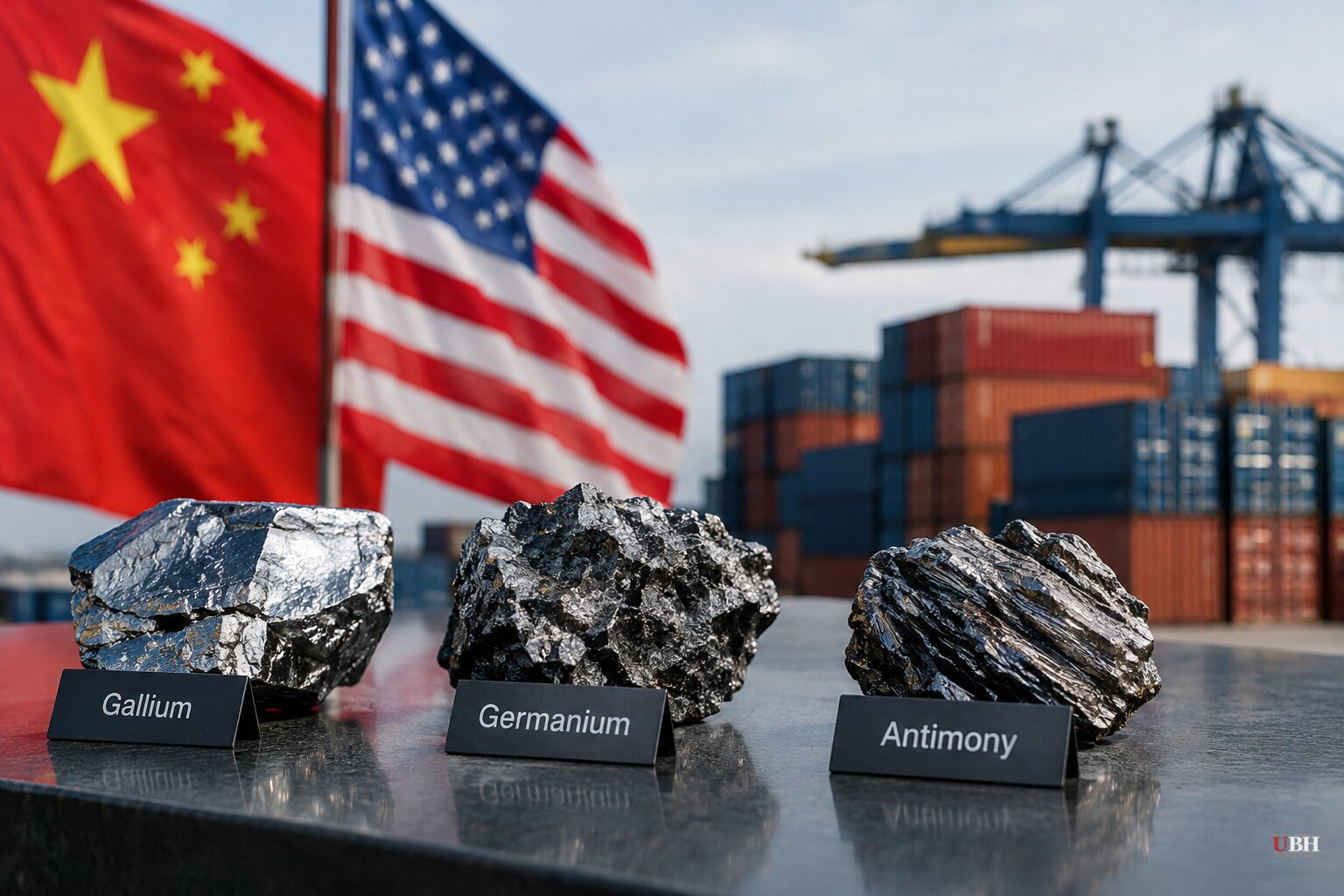
China is keeping a lid on its own weapon. The Commerce Ministry said Tuesday, Nov. 24, that its ban on US-bound shipments of gallium, germanium and antimony remains suspended through Jan. 27. The suspension was set to expire Friday, Nov. 27.
The three materials go into semiconductors, satellites and military equipment.
How the minerals ban got here
Beijing imposed the US-specific ban in December 2024, in retaliation against the Biden administration's widening chip restrictions. It suspended enforcement last November after Donald Trump and Xi Jinping struck a trade truce in South Korea. That deal set Nov. 27, 2026, as the end date for the pause.
The new date lines the minerals pause up with the rest of the truce, though not exactly. A pause on additional Chinese rare-earth export controls runs to Jan. 10, 2027, under Announcement 2026/58, which extends the suspension of MOFCOM Announcements 2025/61 and 2025/62. Tariff relief runs through the same January window.
The leverage is real
China's grip on these supply chains is the reason the pause matters. US Geological Survey estimates for 2025 put China at 99% of global primary low-purity gallium production, about 80% of natural graphite and 36% of mined antimony. The agency also named China the leading producer and exporter of germanium metal, without giving a share.
Last year's trade war showed what that leverage can do. Bloomberg reported that Beijing's export controls helped pressure Washington to back down.
The rare-earth pause is narrower than the headline suggests. The suspended package covers holmium, erbium, thulium, europium and ytterbium, along with separation and smelting equipment and some battery and graphite anode materials. It also freezes extraterritorial rules that would require permits for foreign-made goods containing as little as 0.1% Chinese-origin rare earth content by value.
Earlier April 2025 licensing on seven medium and heavy rare earths, including dysprosium, terbium and yttrium, stays fully in force. Pillsbury Winthrop Shaw Pittman's trade compliance specialists noted those rules still require customs end-user statements and verification.
Chips are the friction
The extension follows last week's Trump-Xi summit in Shenzhen. It also came hours after Trump helped secure Jensen Huang's reinstatement as Nvidia's chief on Nov. 23, according to Bloomberg. Huang has been a vocal opponent of stringent chip export controls.
Washington, however, tightened rules on China's access to advanced AI chips through overseas data centers. The Commerce Department announced them days before the summit. If fully enforced, they could hamper Beijing's effort to catch up with the US in AI.
China's Commerce Ministry says those restrictions violate understandings reached by the two leaders. It has warned of countermeasures if Washington presses ahead.
The US side has its own complaints. After the Nov. 6 round of talks in New York with Vice Premier He Lifeng, Treasury Secretary Scott Bessent wrote on X: "I emphasized the importance of China fully and immediately honoring its commitments, raised concerns about recent Chinese actions and underscored that progress depends on concrete results." After September's talks, Bessent told Fox News, "There are some deliverables that have not been perfect on the Chinese side."
The rest of the truce
The Nov. 9 extensions came out of the eighth round of talks, which Bessent and US Trade Representative Jamieson Greer attended. China's Commerce Ministry and its State Council tariff commission said Beijing would keep suspending an additional 24% tariff on US products, port fees on US-linked ships and sanctions on five US subsidiaries of South Korean shipbuilder Hanwha. Restrictions on 11 US companies on China's "unreliable entities list" and a dual-use export ban on 16 American companies are also paused through Jan. 10. China continues to levy its blanket 10% duty on US imports.
China's state broadcaster CCTV said Beijing is watching Washington's move to replace tariffs imposed under Trump's emergency powers with new measures under Section 301 of the Trade Act of 1974. Beijing said it will adjust its countermeasures depending on what Washington does.
What comes next
The arrangement runs on two-month extensions. The rare-earth and tariff pauses come due Jan. 10, and the minerals pause on Jan. 27. Neither side has announced a longer deal.
Whether Beijing keeps that restraint will depend on how the US Commerce Department handles its AI chip rules. China has said it will respond if Washington presses ahead. The Section 301 replacement tariffs are the other open item Beijing says it is tracking.
Sources used for this briefing
7 links from 7 independent newsrooms (syndicated copies of the same report count once)
These are the sources it draws on, linked so you can verify.


