
Unbiased headlines. Facts, not spin.
Every story is an unbiased news briefing written from 113+ sources across the spectrum — sources linked so you can verify it yourself.
 economy
Major Story (7/10)
September 24, 2026 at 06:50 AM
economy
Major Story (7/10)
September 24, 2026 at 06:50 AM
Turkish Airlines Locks In Up To 150 Boeing 737 MAX Jets After Year-Long Threat to Defect to Airbus
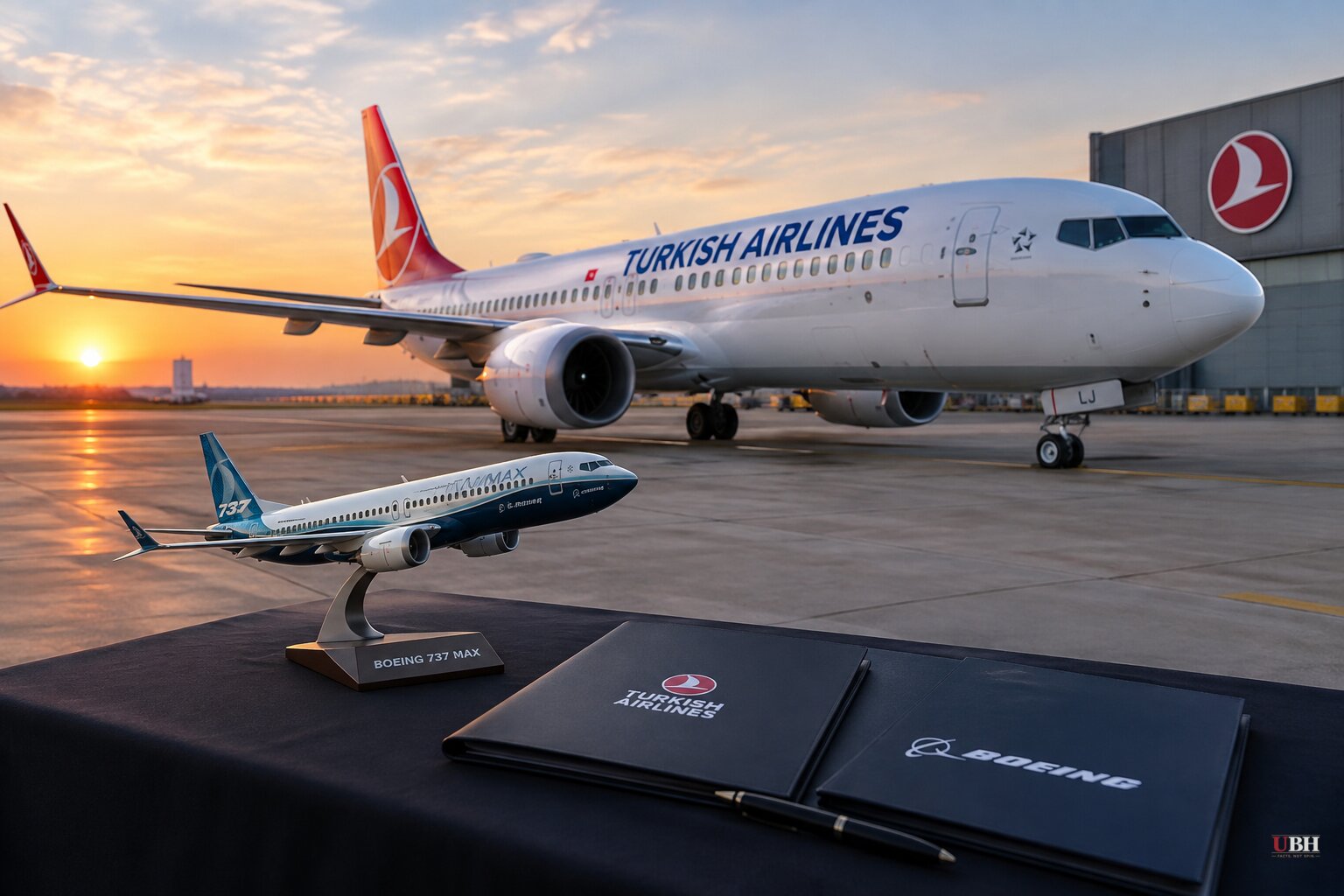
Turkish Airlines signed a deal with Boeing on Wednesday, September 23, for up to 150 737 MAX jets, the carrier's largest single-aisle order from the American manufacturer in its history, according to Boeing and Turkish Airlines statements carried by Anadolu Agency, Daily Sabah, Türkiye Today, and asianaviation. The firm order covers 100 Boeing 737-8 aircraft, with options for 50 more 737 MAX jets. Turkish Airlines also secured the right to swap some of those option slots for the larger 737-10 variant, giving it room to adjust seating capacity as demand shifts. Simple Flying estimates the total value at more than $30 billion based on current list prices, though airlines almost never pay sticker price and the actual discount was not disclosed.
Signed on the sidelines of the UN, with Erdogan and Trump nearby
The signing happened in New York during the UN General Assembly, in the presence of Turkish President Recep Tayyip Erdogan, one day after Erdogan met with President Donald Trump alongside other Middle Eastern leaders, according to Euronews. Trump posted on Truth Social calling it a "big day for Boeing and American manufacturing," claiming the combined deals, including a separate Biman Bangladesh Airlines order for 11 more Boeing jets, would generate tens of billions of dollars in sales and support tens of thousands of American jobs. Murat Şeker, chairman of Turkish Airlines' board and executive committee, said the deal "represents an important step in line with our strategy to expand our fleet" and would bring "greater efficiency and flexibility" to operations out of Istanbul, according to Anadolu Agency. Stephanie Pope, president and CEO of Boeing Commercial Airplanes, said the order reflected "mutual trust and shared vision" built over the companies' partnership.
The CFM engine pricing dispute that delayed the deal
Anadolu Agency, Daily Sabah, and Türkiye Today accounts of Wednesday's ceremony did not explain why this deal took roughly a year longer than expected to close. Simple Flying reported that Turkish Airlines had openly threatened to walk away from Boeing entirely over a pricing dispute with CFM International, the joint venture that builds the LEAP engines used on the 737 MAX. Ahmet Bolat, Turkish Airlines' chairman, told Reuters last year: "If CFM comes to feasible economic terms, then we are going to sign with Boeing. If CFM continues its stance, we'll change to Airbus. With Airbus, I have choices." That leverage was real. Airbus's competing A320neo family lets airlines choose between CFM and Pratt & Whitney engines, while the 737 MAX only comes with CFM's LEAP engine. Boeing had no fallback offer to make if CFM wouldn't move. According to Air Data News, cited by Simple Flying, the breakthrough came when the parties compromised on engine pricing, repair risk allocation, local workshare, and Turkish Airlines' interest in building its own LEAP engine maintenance capability inside Turkey. Boeing's own press materials as relayed by asianaviation and Daily Sabah do not mention the CFM dispute. The public version of events reads as a smooth partnership renewal, but the actual path there involved a credible threat to hand a multibillion-dollar order to Boeing's biggest rival.
The bigger picture for Turkish Airlines and Boeing stock
This is the second major Boeing order from Turkish Airlines in roughly a year. Anadolu Agency and Daily Sabah both note the carrier placed an order for 75 Boeing 787 Dreamliners in 2025, and Euronews reports the airline agreed to buy 225 Boeing jets in a separate deal after Erdogan-Trump talks at the White House about a year before Wednesday's signing. Turkish Airlines and its low-cost affiliate AJet now operate more than 200 Boeing aircraft, spanning the 737 MAX, 737 Next-Generation, 787 Dreamliner, 777, and 777 Freighter, according to the airline's own figures cited by Türkiye Today. The carrier's total fleet, including non-Boeing aircraft, stands at 514 planes serving more than 130 countries, and it carried 92.6 million passengers in 2025, per figures on its website reported by Euronews. Boeing shares traded about 1.4% higher Wednesday afternoon following the announcement, according to TradingView, though the stock remains down 7% year-to-date. TradingView also noted retail sentiment on Stocktwits slipped from "extremely bullish" to just "bullish" in the 24 hours around the news, even as trading volume stayed high. Deliveries under the new firm order are scheduled to run from 2033 through 2037, according to Euronews, meaning the first jets from this specific agreement won't reach Istanbul for roughly seven years. What terms Boeing and CFM ultimately settled on for engine pricing, the detail that nearly sank the whole deal, has not been made public by either company.
Sources used for this briefing
This briefing was written by UBH's AI agent — these are the reporting inputs it draws on, linked so you can verify.


