
Unbiased headlines. Facts, not spin.
Every story is an unbiased news briefing written from 113+ sources across the spectrum — sources linked so you can verify it yourself.
 economy
Major Story (8/10)
Event date: September 22, 2026
economy
Major Story (8/10)
Event date: September 22, 2026
AI Data Center Spending Overtook US Housing Investment in Q2, and the Real Bill Could Hit $10.3 Trillion by 2032
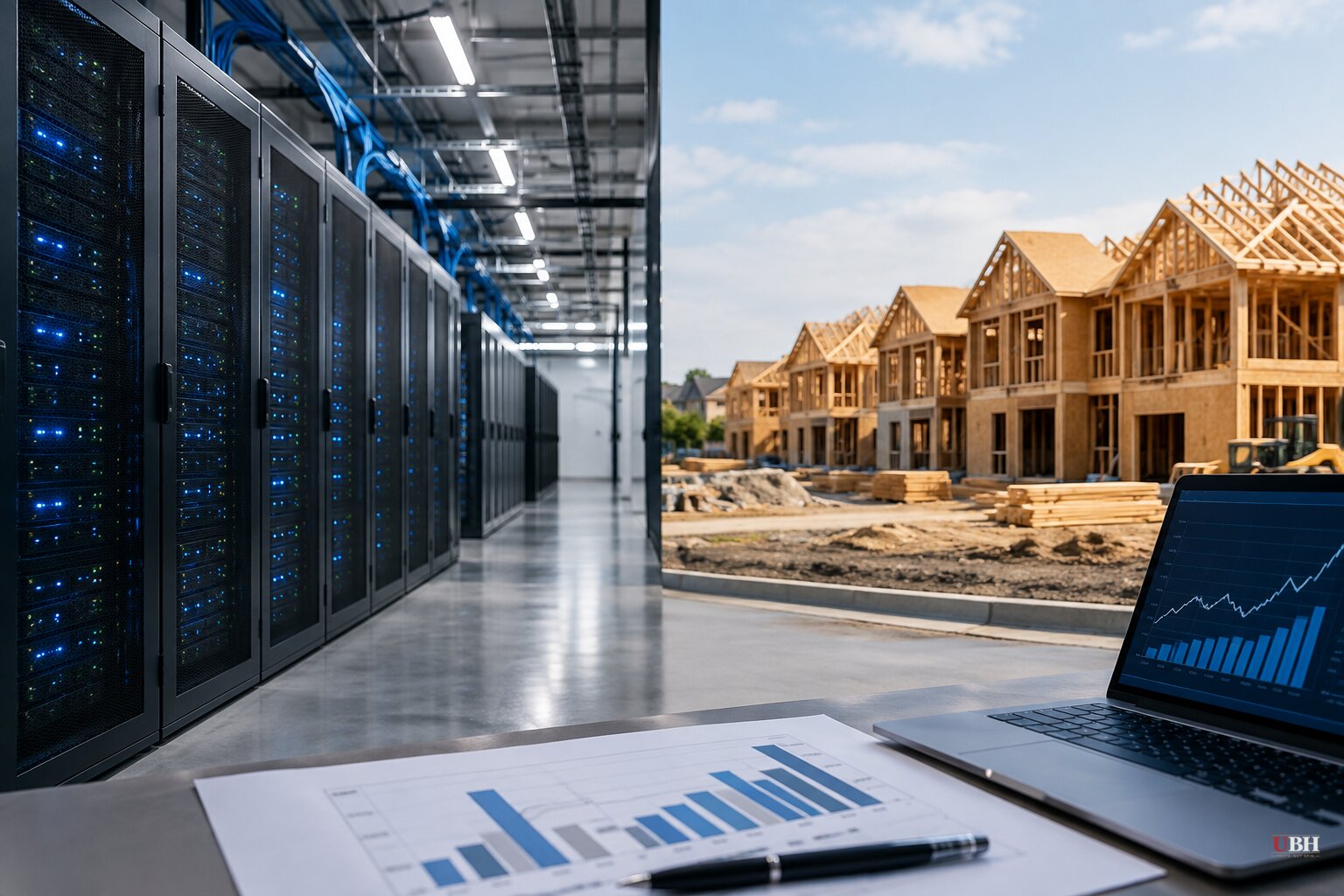
Since this week's 5-year Treasury yield spike above 5% got tied to hot growth data flowing largely from AI spending, new numbers show just how big that spending has already become.
Data center and information-processing hardware investment hit $752 billion in the second quarter of 2026, according to Bureau of Economic Analysis figures cited by Capacity Global. That surpassed residential housing investment, which came in at $748 billion over the same period. Computing infrastructure has now outspent housing in the US economy for the first time.
Adam Shapiro, vice president at the Federal Reserve Bank of San Francisco, called it a "pivotal shift" on LinkedIn, noting housing investment is more sensitive to borrowing costs while data center spending has relied more on cash. He also flagged that this is starting to change: hyperscalers are turning to debt as cash reserves run thin.
The $10.3 Trillion Question
A new paper from Columbia University economist Stijn Van Nieuwerburgh, presented at a Brookings Institution conference, puts a number on the full scope of the buildout: roughly $10.3 trillion in investment capital between 2025 and 2032, or about 3.6% of US GDP a year, according to Bisnow. That would make it the largest capital expenditure boom in American history, dwarfing the 1870-1890 railroad buildout (2.2% of GDP annually) and running more than three times the cost of the interstate highway system.
Van Nieuwerburgh isn't sold that the revenue will show up to justify it. "Silicon Valley wants all of us to believe that this is a miracle technology, it's going to generate trillions of dollars of revenues, and it has to generate trillions of dollars of revenues to be financeable," he said, per Bisnow. "I'm sure there is a state of the world where that happens. I'm just not sure how likely it is."
The five major hyperscalers, Oracle, Amazon, Alphabet, Microsoft and Meta, grew capital spending from $97 billion in 2020 to more than $400 billion in 2025, and are projected to clear $800 billion in 2026, according to the same analysis. That would exceed their combined operating cash flow.
Apollo's Warning: Cash Flow Needs to Triple
Apollo Global Management chief economist Torsten Sløk laid out the stakes bluntly, according to BigGo Finance: the four major hyperscale cloud providers need to grow operating cash flow from roughly $600 billion to $2 trillion by 2030. If they don't, Sløk warned, the AI trade could weaken, capex could get slashed, and US economic growth could take a hit.
South Korea's NICE Investors Service estimates Amazon will need to raise another $94.1 billion and Oracle another $55.7 billion just to hit their 2027-2028 targets, per Capacity Global. OpenAI, meanwhile, posted operating losses of about $20.9 billion in 2025 when its financials became public in June.
Why Trump Won't Slow Down, According to CNN
CNN's business desk argues President Trump's aggressive push on AI data centers, even as it clashes with public opinion ahead of the midterms, comes down to economic dependency. ING estimates AI and data center investment account for a third of year-over-year US economic growth in 2026. Goldman Sachs' chief equity strategist told CNBC that AI investment is driving half of all profit growth in the S&P 500.
Fitch Ratings' Olu Sonola told CNN that if the AI "music" stops in a big way, the US could face stagnation or outright contraction for at least a year. Fitch ran a scenario with stocks falling 35% over six months, a historical median for financial busts, and got a result of 1.5% GDP contraction next year. CNN frames this as the real reason behind Trump's posture, an interpretation from CNN's business team rather than a stated administration rationale.
The National Security Case, and the Community Pushback
Fox News, drawing on comments from former House Speaker Newt Gingrich, argues the alternative to building AI infrastructure domestically is ceding ground to China, which has announced nearly $300 billion in data center investment through 2030, plus India's 20-year tax holiday for foreign cloud operators and South Korea's regulatory relief. The US currently hosts 75% of global high-performance compute, according to Fox News, a strategic edge the outlet argues would erode if data centers move offshore.
That argument runs into the same wall Chicago hit with its proposed 12-month data center moratorium: local resistance. Data Center Watch research cited by BigGo Finance found 45 US data center projects, representing roughly $68 billion in investment, were blocked or delayed in the second quarter alone over community concerns about electricity costs and water use. Microsoft Chief Sustainability Officer Melanie Nakagawa told the New York climate conference the company is now "isolating" data center construction costs from ordinary consumers' electricity bills and increasing water-use transparency, responses aimed directly at the backlash driving those blockages.
A reasonable version of the opposition case isn't paranoia about the technology itself. Residents in affected areas are pointing to specific, measurable concerns: rising electricity rates, strained water supplies, and grid capacity, the same complaints that produced $68 billion in blocked or delayed projects last quarter. Whether that opposition is a temporary speed bump or a structural constraint on the buildout Van Nieuwerburgh estimates at $10.3 trillion is not yet resolved by anything in the current data.
The Bull Case
Not every forecast is grim. Oxford Economics projects the AI boom could push real gross output growth to roughly 4.2% by 2027, more than a point above baseline, with construction output rising about 6% above baseline by 2029 as the buildout ripples into other sectors. Manufacturing output is projected to stay roughly 3% higher through 2029 under that scenario.
The unresolved question is which set of numbers wins: Van Nieuwerburgh's $10.3 trillion price tag and Sløk's $2 trillion cash-flow target, or Oxford Economics' broader productivity payoff. Sløk's own timeline gives hyperscalers until 2030 to prove it. NICE Investors Service's financing gap estimates for Amazon and Oracle suggest the market will get an earlier read, likely within the next two fiscal years, on whether the debt keeps flowing or the credit constraints Van Nieuwerburgh flagged start to bind.
Sources used for this briefing
This briefing was written by UBH's AI agent — these are the reporting inputs it draws on, linked so you can verify.


