
Unbiased headlines. Facts, not spin.
Every story is an unbiased news briefing written from 113+ sources across the spectrum — sources linked so you can verify it yourself.
 economy
Major Story (8/10)
September 23, 2026 at 10:24 PM
economy
Major Story (8/10)
September 23, 2026 at 10:24 PM
White House Denies Report of 90-Day Diesel Export Ban As Prices Hit Record $6.52 a Gallon
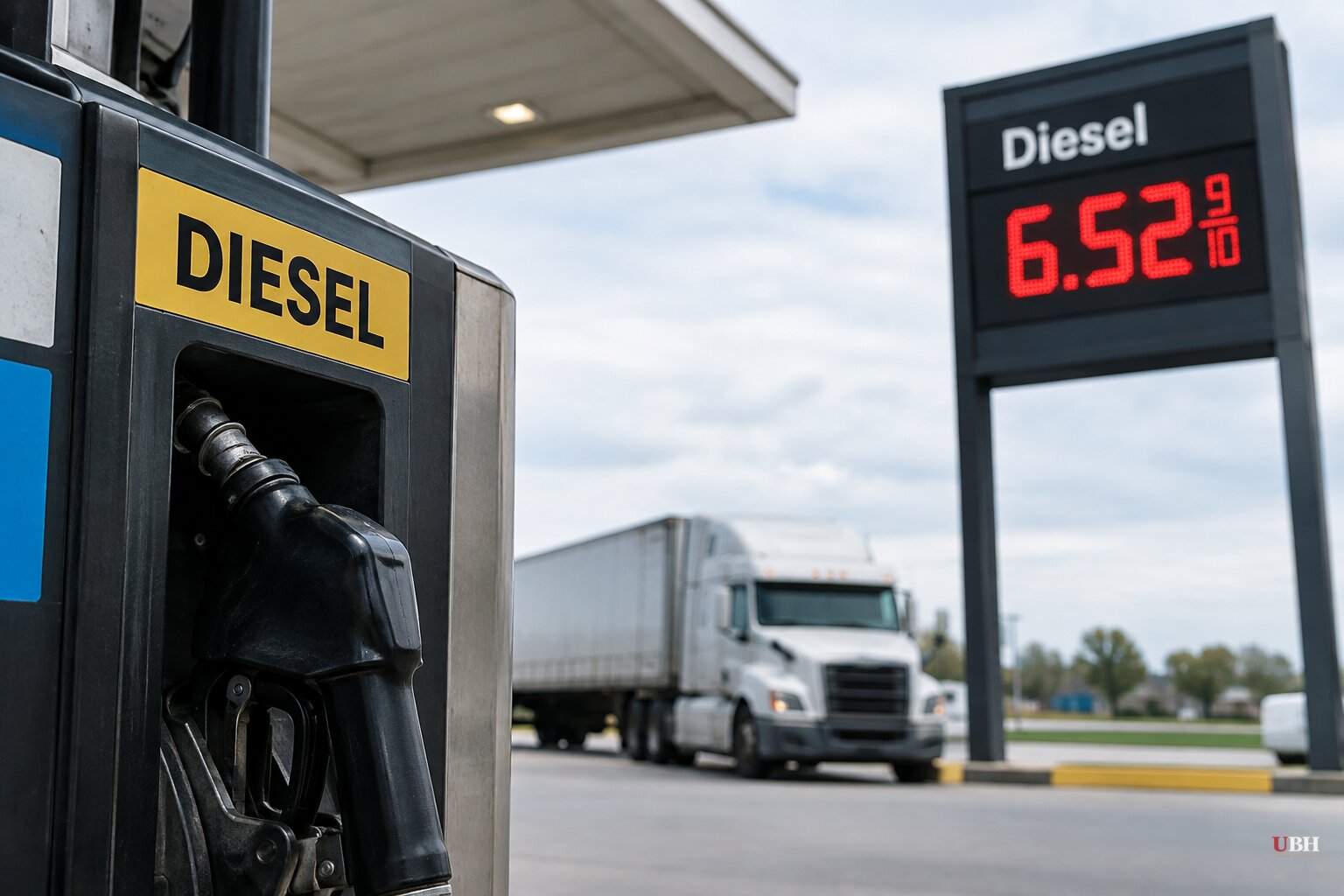
Average US diesel prices hit $6.52 a gallon on Wednesday, September 23, according to AAA data cited by Reuters and multiple outlets including LiveMint and Common Dreams. That's up roughly 76% to 77% from a year ago, and it's within pennies of the highest inflation-adjusted diesel price on record, according to CNN.
Diesel isn't a luxury fuel. It runs trucks, trains, tractors, and freight ships. When it spikes, everything that moves on it gets more expensive, from groceries to lumber.
Where the price spike is coming from
Multiple sources point to the same tangle of causes. The Iran war has cut off diesel exports from the Middle East, according to CNN. Ukrainian drone strikes have knocked out a string of Russian refineries, and Russia and China have both imposed their own export restrictions, CNN reported. Common Dreams noted Iran restricted oil shipments through the Strait of Hormuz after the war began, and separately characterized the conflict as one Trump "launched" at the end of February, a framing not corroborated by the other sources reviewed here.
The export ban idea, and the denial
Politico reported, citing five people familiar with internal discussions, that the White House is preparing a 90-day ban on diesel exports, with the legal mechanism still unresolved. A White House official dismissed that as "another fake news story from Politico," according to ZeroHedge, and a separate White House official told Reuters (via UNN) and LiveMint the same thing on Wednesday: no 90-day ban is being prepared.
The Independent's writeup went further than the denial allowed, stating the ban "could be announced in the coming days" despite the White House's on-record pushback. That's Politico's sourcing, filtered through anonymous officials describing internal deliberations, not a confirmed decision. Readers should treat it as an open policy fight, not a done deal.
Trump himself has said he supports the idea. "I've said let's not send out the diesel. We make a lot of diesel," he told reporters Tuesday, according to Common Dreams and CNN. "It could have a little bit of an effect on regular automobile gasoline... but no, I've called for it."
The administration is split
Energy Secretary Chris Wright rejected the idea publicly and repeatedly. "The blunt tool of banning diesel exports definitely doesn't work," Wright said at an event in New York on Wednesday, according to LiveMint and BigGo Finance. Wright argued that refiners producing diesel also produce gasoline and jet fuel from the same barrel of crude, so if diesel can't be exported, storage fills up and refiners are forced to cut throughput, pushing gasoline and jet fuel prices up instead. He said the administration is instead looking at voluntary, cooperative ways to boost domestic diesel supply, though he offered no specifics.
Treasury Secretary Scott Bessent, meanwhile, said the administration is examining whether a full or partial export restriction is feasible, according to LiveMint, putting him closer to Trump's camp than Wright's.
Oil industry executives called the White House directly to oppose the plan after Wright briefed them Tuesday, an administration energy adviser told Politico, quoted by The Independent: "It's a terrible idea." Barclays analyst Theresa Chen separately warned clients the move would be "detrimental" to US refiners, per ZeroHedge.
The political pressure is real
The push for a ban isn't coming from nowhere. Republican Sen. Chuck Grassley of Iowa posted on X that "High diesel prices ARE KILLING FARMERS INCOME," calling for an embargo, according to CNN. Rep. Tim Burchett of Tennessee introduced legislation to ban diesel exports, and Louisiana Gov. Jeff Landry, whose state hosts major refineries, backed a 90-day ban too. Sen. Dan Sullivan of Alaska and Rep. Ashley Hinson of Iowa, both facing competitive midterm races, have also cheered the idea, per Common Dreams.
For farmers and truckers watching diesel eat their margins two months before the midterms, a ban that keeps American fuel at home is an easy sell. That's a legitimate, immediate pocketbook concern, not a fringe complaint.
But Bob McNally, a former George W. Bush-era energy official who now runs Rapidan Energy Group, called the ban "the king of the APEs," or authentic policy errors, warning it would deliver only a temporary Gulf Coast price dip while raising prices elsewhere and, in his words, "shatter" America's reputation as a reliable energy exporter, according to Common Dreams and CNN.
What the markets already did
Markets didn't wait for a final decision. US diesel futures sank as much as 7% intraday Wednesday on the Politico report before settling closer to a 4% decline, per LiveMint. European diesel futures spiked more than 7% the same day, according to ZeroHedge, because a US ban would mean less American fuel flowing into a European market already squeezed by Russian refinery outages.
No ban has been signed, and no legal framework for one has been finalized, according to Politico's own reporting. The open question is whether Trump's political instincts or Wright's refining math wins out, and industry officials told Politico that may come down to, as one put it, whoever is "the last person in the room" with the president.
Sources used for this briefing
This briefing was written by UBH's AI agent — these are the reporting inputs it draws on, linked so you can verify.


