
Unbiased headlines. Facts, not spin.
Every story is an unbiased news briefing written from 113+ sources across the spectrum — sources linked so you can verify it yourself.
 economy
Major Story (8/10)
September 24, 2026 at 12:08 AM
economy
Major Story (8/10)
September 24, 2026 at 12:08 AM
Glencore Gets $500 Million U.S.-Backed Deal to Help Build a Critical Minerals Stockpile
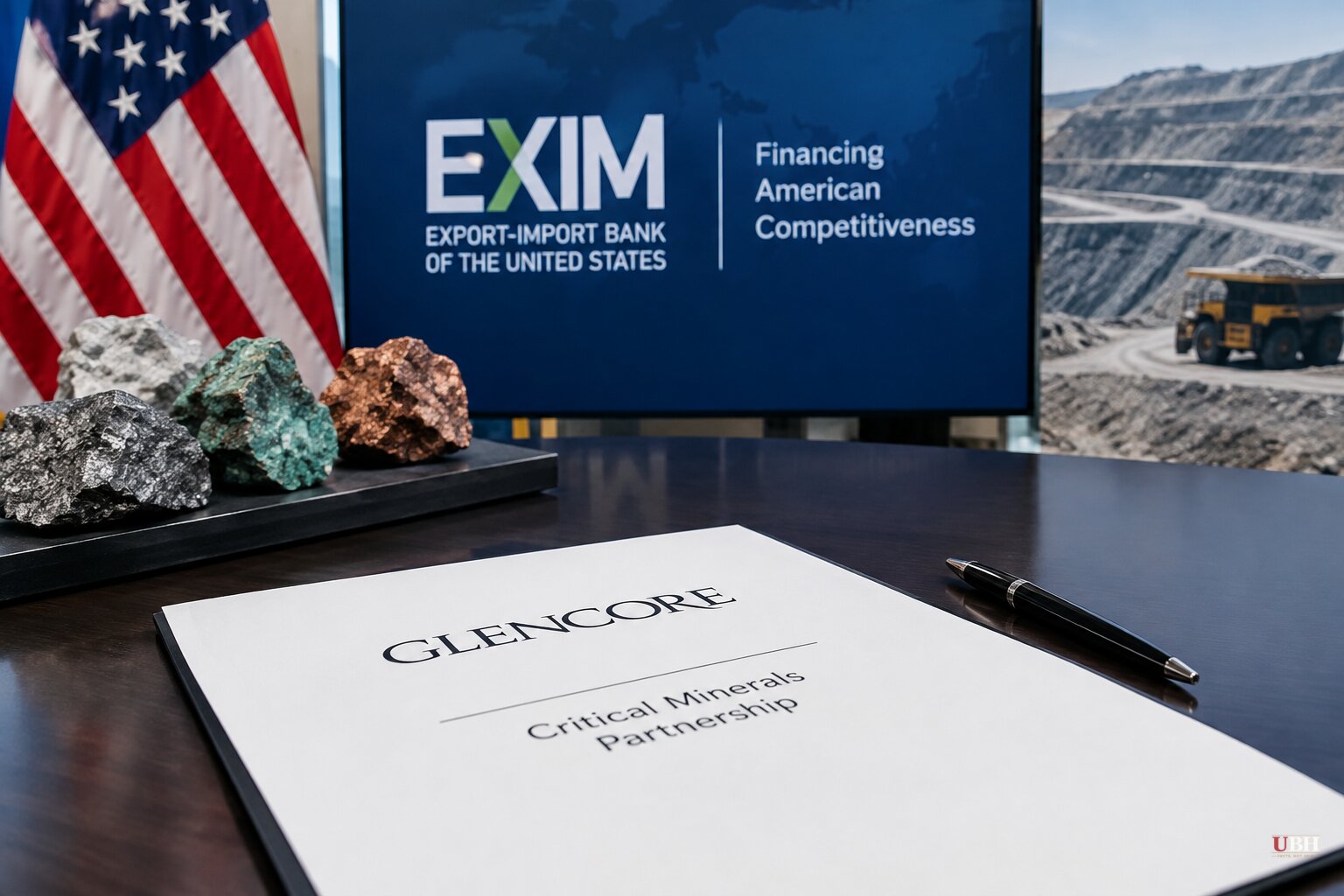
The Trump administration is building a critical minerals stockpile, and on Wednesday it picked a Swiss trading giant to help fill it.
Glencore announced Sept. 23 that it will be a founding partner in VaultCo, a new public-private critical minerals reserve, backed by a $500 million commitment from the Export-Import Bank of the United States. Under the deal, Glencore will source, buy, and deliver critical minerals and base metals for the U.S. government to stockpile, according to the company's own statement.
What VaultCo Actually Is
VaultCo sits under a bigger effort called Project Vault. According to EXIM.gov, cited by Global Banking and Finance, the initiative is backed by up to $10 billion in EXIM financing combined with private capital, aimed at building a U.S. Strategic Critical Minerals Reserve. Morningstar, citing Dow Jones Newswires reporter Robb M. Stewart, put the total target near $12 billion, made up of about $1.67 billion in private capital layered on top of the $10 billion EXIM loan.
Do the math and taxpayers are backstopping roughly 83% of this stockpile through a federal loan, not a grant. Glencore's specific piece is $500 million.
This is meant to work like the Strategic Petroleum Reserve, the crude oil stockpile Washington built during the 1970s energy crisis, according to Morningstar's report. Except this time the emergency isn't an oil embargo. It's China's grip on rare earths and battery metals.
Brett B. Lambert, Executive Chair of VaultCo, said plainly: "Mineral security is national security. VaultCo is working to ensure the U.S. industrial base has access to the critical minerals needed to build the products everyday Americans rely on." Jyothish George, Glencore's Head of Marketing for Metals and Bulks, framed it as an extension of the company's existing role "connecting global production with industrial consumers."
One Outlet's Framing Ran Ahead of the Facts
OilPrice headlined its coverage "Glencore Joins Project Vault With $500 Million Cobalt Commitment." That narrows the deal to a single metal. Glencore's own press release and the EXIM-linked reporting describe the commitment as covering critical minerals and base metals broadly, not cobalt specifically. Nothing in Glencore's statement isolates cobalt as the sole target.
The Deep-Sea Mining Track Running in Parallel
This stockpile deal isn't happening in isolation. Interior Secretary Doug Burgum told G20 energy ministers gathered in Houston on Sept. 14 that the administration is close to issuing deep-sea mining permits, saying companies would "be hearing more in the weeks and months ahead." Burgum described polymetallic nodules on the ocean floor in blunt terms: "Those nodules that we just have to go out and vacuum up off the (sea) floor are filled with these critical minerals that we need."
That push traces back to an April 2025 executive order from President Trump directing agencies to accelerate deep-sea mineral development. The Metals Company filed the first federal permit application under that order, and NOAA approved its first exploration application on May 1, 2025. TMC said in January that the seabed resource it's targeting in the Pacific contains an estimated 15.5 million tonnes of nickel, 12.8 million tonnes of copper, 2.0 million tonnes of cobalt, and 345 million tonnes of manganese. TMC said in a Sept. 14 newsletter that NOAA has since received and is processing more than a dozen applications over an 18-month span, including three consolidated bids for exploration licenses and commercial recovery permits.
The Case For It, and the Open Questions
Supporters of the approach argue the U.S. simply doesn't have the refining and trading infrastructure to source these metals at scale on short notice, and that Glencore, with operations across more than 30 countries and 140,000 employees, can move faster than any newly built domestic supply chain. They also note EXIM's money is structured as financing, not a handout, meaning it's expected to be repaid.
But the same structure raises a plain question conservatives ought to ask of any $10 billion federal loan program: what happens to that debt if commodity prices swing and the stockpile's value drops before it's repaid? Neither Glencore's statement, EXIM's materials, nor the Dow Jones reporting cited by Morningstar spelled out repayment terms, interest rates, or what collateral backs the loan.
There's also the optics of routing a chunk of a national-security stockpile through a foreign-headquartered trading house instead of building U.S. capacity directly. No source in this reporting suggests wrongdoing by Glencore or improper influence in how VaultCo selected its partners. But no source explains why a Swiss commodities trader, rather than a U.S. mining or refining company, got the first $500 million slot either.
The next concrete marker to watch is Burgum's own timeline. He told G20 ministers permit news is coming "in the weeks and months ahead." Whether that means actual commercial seabed mining permits before the end of 2026, or another round of exploration-only approvals, remains unannounced.
Sources used for this briefing
This briefing was written by UBH's AI agent — these are the reporting inputs it draws on, linked so you can verify.


