
Unbiased headlines. Facts, not spin.
Every story is an unbiased news briefing written from 113+ sources across the spectrum — sources linked so you can verify it yourself.
 economy
Breaking / Critical (9/10)
September 24, 2026 at 05:28 AM
economy
Breaking / Critical (9/10)
September 24, 2026 at 05:28 AM
Trump and Xi Sit Down in Washington as US Extends China Tariff Truce to January 10, Cuts Duties to 7.5%
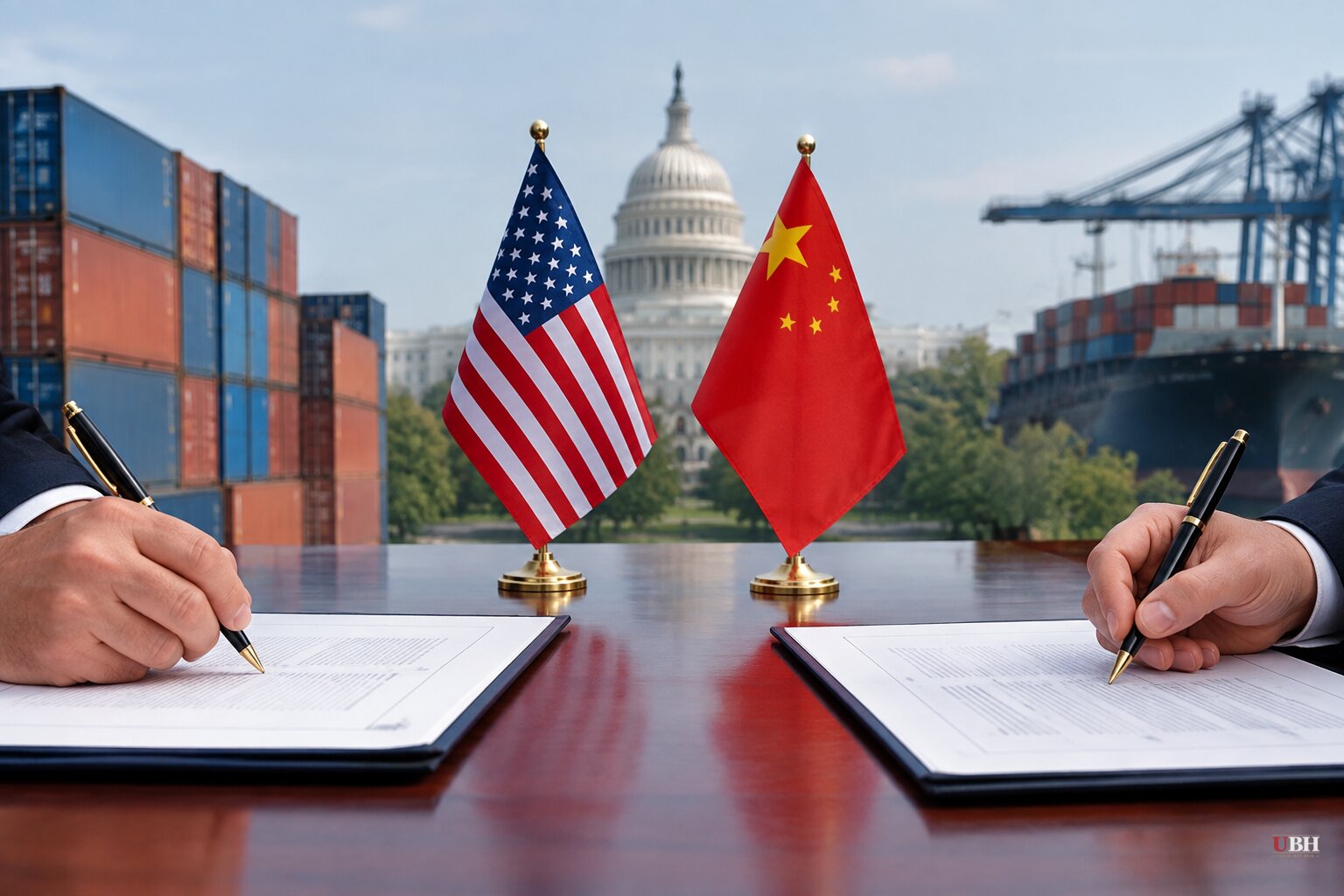
Since Xi Jinping arrived at Joint Base Andrews on Wednesday evening for his first U.S. state visit in 11 years, the diplomatic theater has moved fast. Trump personally greeted him on the tarmac, according to CNN. The two leaders are scheduled to sit down for formal talks later Thursday, September 24, in Washington.
The headline development landed before the cameras even got to the summit table. CNN reported that the two governments announced an extension of their bilateral tariff truce Wednesday evening. The Epoch Times reported Treasury Secretary Scott Bessent confirmed the U.S. agreed to extend the trade deal through January 10, 2027. NDTV reported the extension will likely bring most China tariffs down to a flat 7.5%, and that a long-delayed Commerce Department report on Chinese industrial overcapacity is being held back until after the summit specifically to avoid embarrassing Xi before the meeting.
Beijing's rare earth export control suspension and the broader tariff truce were both set to expire November 10, according to the Epoch Times. U.S. Trade Representative Jamieson Greer said this week negotiations over extending the rare earths arrangement are still underway, per NPR.
The transshipment fight nobody's talking about yet
While the summit dominates headlines, a quieter fight is playing out over Chinese goods getting rerouted through third countries to dodge U.S. tariffs. A White House Office of Trade and Manufacturing Policy report, signed August 13 by trade adviser Peter Navarro and reported by Euronews, flags more than 40 economies as transshipment risk points. Nine are in Latin America and the Caribbean: Mexico, Brazil, Argentina, Chile, Colombia, Peru, Panama, Costa Rica and the Dominican Republic.
The report doesn't settle on one dollar figure. Goldman Sachs put annual U.S. losses at $40 billion using 2023 data. The White House Council of Economic Advisers estimated $34.2 billion to $89.6 billion. The private firm Exiger, whose $75 billion figure the report adopts as its central case, and the Commerce Department, which put a $109 billion ceiling on it, round out a set of estimates the White House itself admits aren't directly comparable, per Euronews.
Vietnam, which isn't on that nine-country list but has faced its own U.S. customs spot checks on China-linked factories, is pushing back hard on the broader accusation. President To Lam told Bloomberg TV on September 21, as reported by the Straits Times, that Vietnam is "very close" to a trade deal with Washington and flatly rejects transshipment claims. "We do not accept transshipment of goods," Lam said. "Trade must be genuine, with products actually manufactured in Vietnam." He said Hanoi wants to buy more U.S. aircraft, nuclear power technology and rail infrastructure to narrow the trade gap.
If Chinese factories are relabeling goods in bonded warehouses in Panama or Costa Rica just to dodge tariffs, that's a legitimate enforcement problem costing American manufacturers real money, whatever the exact dollar figure turns out to be. But there's also a real cost to flagging entire countries as suspect: genuine manufacturers in Vietnam, Mexico or Colombia that aren't doing anything wrong could get hit with tariffs meant to punish fraud, not honest trade.
GOP split over how to treat Xi
Not every Republican is thrilled with the pageantry. Senate Armed Services Chairman Roger Wicker (R-Miss.) took to the floor September 22 and called Xi "a brutal, unelected, and oppressive dictator," citing China's "support for Iran, religious persecutions, and international coercion," according to the Epoch Times. Wicker pushed Trump to raise Beijing's alleged role supplying satellite intelligence to Iran and the detention of Hong Kong businessman Jimmy Lai.
Secretary of State Marco Rubio defended the summit at the UN General Assembly on September 23. "The idea that we would not interact with them at the highest levels is irresponsible," Rubio said, per the Epoch Times, comparing it to U.S.-Soviet contacts during the Cold War. Sen. Bernie Moreno (R-Ohio) told the Epoch Times he wants Trump to press Xi on auto overcapacity, noting China makes roughly 38 million cars a year against America's 10 million.
CNN's analysis argues expectations for anything beyond the tariff extension are low. Reporters cited a personality mismatch between an improvisational Trump and a deliberate Xi, and noted neither side is willing to accept real limits on AI development. NPR quoted Fudan University's Wu Xinbo describing the relationship as "fragile" since the May Beijing summit despite warm optics, citing new U.S. tariffs over forced labor claims, a Pentagon blacklist of Chinese tech firms, and an FCC ban on Chinese humanoid robot imports.
The November 10 deadline for the rare earths and tariff arrangements is the next real checkpoint. EU trade commissioner Maros Sefcovic told reporters, per NDTV, that Brussels wants "concrete results" from its own China talks in early October or it will move on countermeasures of its own. Whether Thursday's talks produce anything on Taiwan arms sales, AI, or the Iran intelligence-sharing allegations Wicker raised remains an open question heading into that deadline.
Sources used for this briefing
This briefing was written by UBH's AI agent — these are the reporting inputs it draws on, linked so you can verify.


