
Unbiased headlines. Facts, not spin.
Unbiased Headlines is an independently owned news organization. We bring you the facts, not opinions, written fresh from 110+ named sources. Sources linked so you can verify it yourself.
 economy
Major Story (7/10)
Event date: October 6, 2026 ·
Trump's Diesel Order Defers the Federal Tax Instead of Cutting It, and States Warn Drivers They May Owe Later
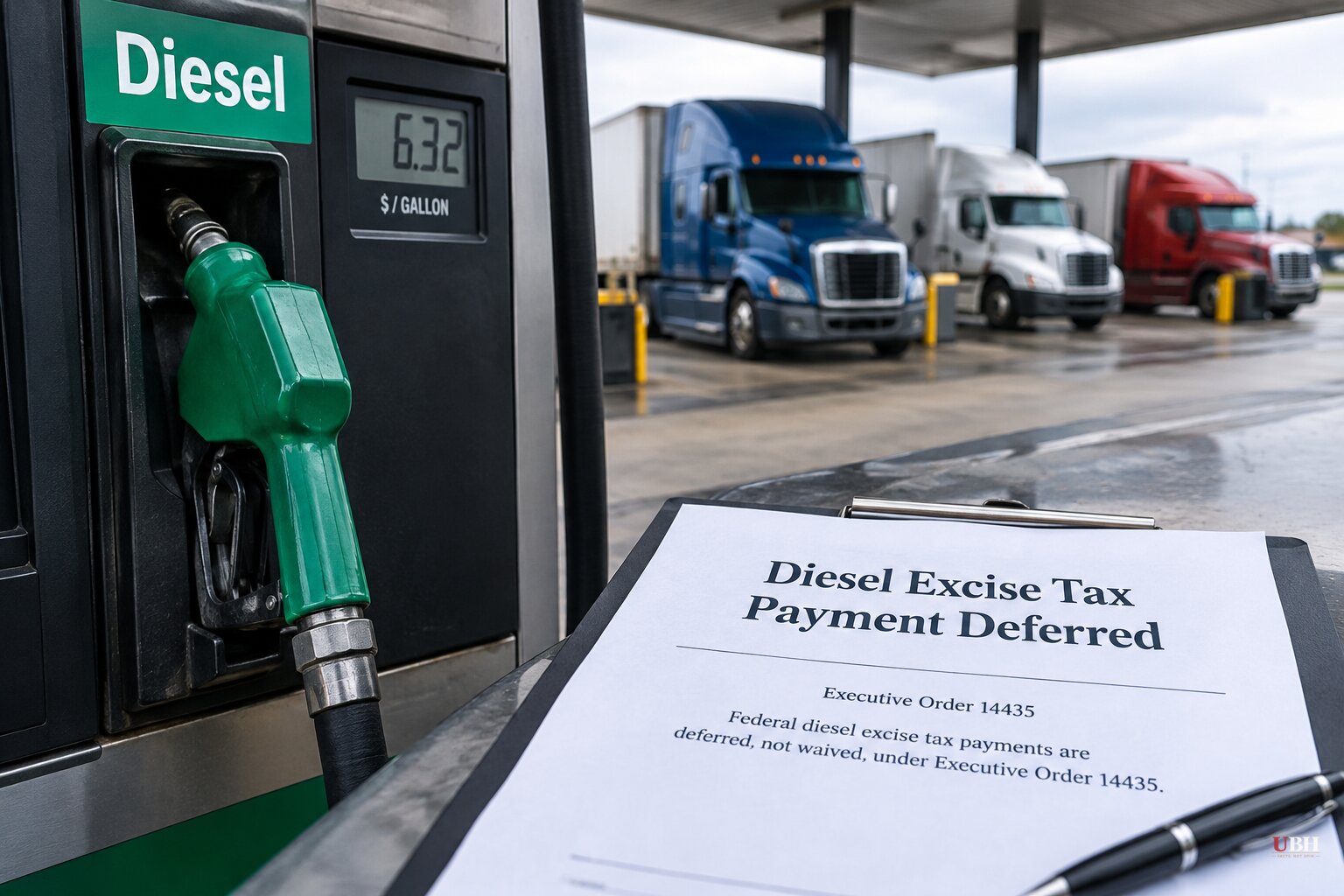
Since President Trump signed Executive Order 14435 in Grand Island, Nebraska, on Monday, Oct. 5, the fight over what it actually does has moved to the states. NPR reported today, Oct. 18, that states are warning drivers they may owe federal diesel taxes later.
The gap between the rally pitch and the paperwork explains why.
What Trump said and what the order says
At the rally, Trump said he was signing an order "to officially waive the off-road requirement and allow anyone to purchase tax-free red-dyed diesel for any reason." He told Sen. Pete Ricketts and Gov. Jim Pillen the move "should absolutely assure your election."
The order's text is narrower. It directs the Treasury Secretary to determine, within five days, whether relief is authorized under 26 U.S.C. 7508A, including whether a qualifying event has occurred and which taxpayers were affected. If Treasury makes those findings, it is to defer payment of certain diesel excise taxes incurred from Oct. 5 through Dec. 31, 2026, without penalties or interest, "to the extent authorized by law."
A deferral is not a cut. The order also tells Treasury to issue guidance specifying "the date by which postponed taxes must be paid."
A separate section tells the IRS to announce it will not impose the penalties under 26 U.S.C. 6715 when dyed diesel is sold for or used on highways during the same window. That penalty relief is what lets red diesel run on roads without a fine.
Section 4 directs the Treasury Secretary to "explore avenues, including legislation, to eliminate the obligation." Exploring is the operative word. No law forgiving the deferred tax has passed.
The numbers
The White House puts the federal diesel tax at 24.4 cents per gallon, roughly $60 on a 250-gallon fill. It says savings would top $100 per fill "where states match this federal action." That is a ceiling that depends on state decisions, not a guaranteed federal discount.
The price problem is real. According to AAA, diesel averaged $6.32 a gallon nationally on Oct. 5, after peaking at $6.53 in September. That is $2.63 above a year earlier. Nebraska averaged just under $6, down from a record $6.23 on Sept. 22.
Pillen declared a state emergency on Sept. 24 and issued two executive orders for harvest and hauling. They run through Dec. 23 unless extended.
Trump said on Oct. 2 that a 90-day diesel export ban Pillen had requested was unnecessary because G7 leaders had agreed to release 100 million barrels of diesel.
Governors move on their own
Texas Gov. Greg Abbott declared a 30-day statewide disaster that lets farmers and truckers run dyed diesel on public roads. It also raises the weight limit for certain fuel, agricultural and timber loads to 95,000 pounds and asks the EPA to waive federal ultra-low sulfur diesel requirements. Texas diesel was averaging $5.84, against $3.16 a year earlier, AAA data showed.
Abbott's order does not touch the state's 20-cent motor fuel tax. His office has said he lacks the unilateral authority to suspend it. Georgia Gov. Brian Kemp, also a Republican, declared an emergency and suspended that state's fuel tax for 30 days.
The political fight
The White House blames the Russia-Ukraine war, limited global refining capacity and "Democrat-led States that chose to shut down their refineries in the name of 'Green Energy' policies." Agriculture Secretary Brooke Rollins and Vice President JD Vance praised the order.
Democrats see it differently. The Texas Democratic Party said Abbott should suspend the state fuel tax and blamed Trump's foreign policy for higher costs. Abbott's challenger, state Rep. Gina Hinojosa, has also called for suspending the gas tax. Abbott is seeking reelection against her on Nov. 3.
The politics are plain. Fuel costs are a defining midterm issue, and Trump signed the order on stage in front of two Republicans on the ballot.
What comes next
The order set a five-day deadline, which fell on Oct. 10, for Treasury's determination and the IRS announcement. Treasury's implementing guidance is the document that decides what truckers and farmers owe. It must name the covered taxpayers and the payment due date for postponed taxes.
The relief window closes Dec. 31. Whether the deferred bills are forgiven or come due then depends on Treasury's guidance and on Congress, which has not acted on the order's call to explore forgiveness.
Sources used for this briefing
7 links from 5 independent newsrooms (syndicated copies of the same report count once)
These are the sources it draws on, linked so you can verify.


