
Unbiased headlines. Facts, not spin.
Unbiased Headlines is an independently owned news organization. We bring you the facts, not opinions, written fresh from 110+ named sources. Sources linked so you can verify it yourself.
 economy
Major Story (8/10)
Event date: October 9, 2026 ·
China's September Exports Rose 36.3% to a Record $447.2 Billion While Domestic Car Sales Fell 26%
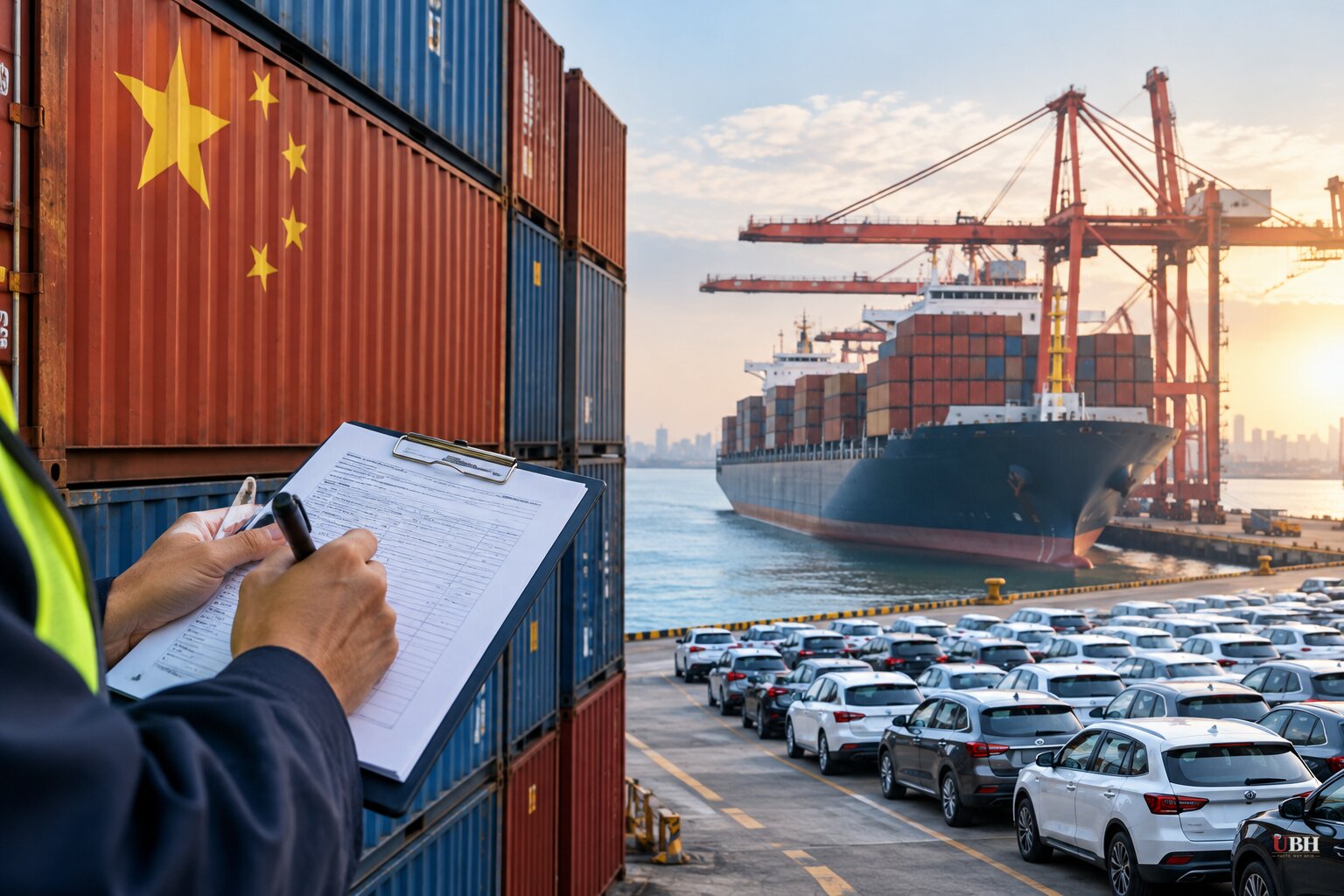
Since China reported third-quarter GDP growth of 4.5% with a 7.2% drop in investment, September's trade and auto figures have filled in the picture. Factories are shipping more abroad because customers at home are buying less.
A record month for exports
China's General Administration of Customs reported that exports rose 36.3% from a year earlier in September, to a record $447.2 billion. That accelerated from 25% growth in August and beat the 25% forecast of economists surveyed by The Wall Street Journal. The monthly trade surplus reached $133.5 billion, up from $119 billion in August.
Technology led the surge. Semiconductor exports climbed more than 108% from a year earlier, and shipments of automatic data processing machines rose nearly 55%. Taylor Wang, an economist at HSBC in Hong Kong, said demand tied to the global and domestic AI investment cycle remained a key driver, helped by competitive pricing and established supply chains.
Excluding distortions from Lunar New Year timing, the gain was the largest year-on-year increase since July 2010, according to the reporting on the customs release.
For scale, China's goods trade surplus exceeded $1.2 trillion in 2025 on $3.77 trillion of merchandise exports. The current-account surplus for the first half of 2026 was $378 billion.
Cars show the imbalance most clearly
The China Association of Automobile Manufacturers (CAAM) said on Oct. 12 that domestic vehicle sales fell 26% in September while exports jumped 61.4%. China shipped 1.05 million vehicles abroad, nearly 36% of total sales, up from about 20% a year earlier.
Overall sales still fell 8.4%. Exports covered only about 60% of the domestic decline, per CAAM's data.
The China Automobile Dealers Association's passenger-car branch said domestic passenger-car retail sales fell 28% in September. It said some automakers now export more than half their vehicles, and the number approaching 70% is growing.
Chery Group delivered 207,814 vehicles overseas in September, about 71% of its 292,308 total. Its overseas deliveries rose 51% from a year earlier.
Idle capacity and thinner profits
The National Bureau of Statistics put automobile manufacturing capacity utilization at 70.8% in the second quarter, below the 73.5% manufacturing average. Roughly 29% of measured capacity sat unused. The bureau's figure covers parts production as well as vehicle assembly.
Profits are shrinking even as revenue grows. Automobile manufacturing profits fell 16% in the first eight months of 2026, while revenue rose 2.9%, according to the same bureau.
The pattern goes beyond cars. Overall industrial capacity utilization was 73% in the second quarter, down a point from a year earlier. Electrical machinery ran at 70.3%, chemicals at 69.4% and non-metallic minerals at 59.6%. Chinese steel exports hit a record 131 million tonnes in 2025, 153% above 2020 levels.
The case that this is strength, not strain
Not everyone reads the surplus as a warning sign. A commentary in pmldaily notes that a large trade surplus is "not inherently unhealthy" and that Chinese companies have built genuine advantages in electric vehicles, batteries, solar equipment and machinery. The same piece argues the worry is what sits behind the numbers: weak household demand, excess capacity and falling prices, with exports possibly postponing an adjustment Beijing will eventually have to make.
China analyst Tony Fiddis makes a similar point in his China Update video. He says the headline export volumes are masking shrinking manufacturer margins and persistent factory-gate deflation. He ties that to the property downturn, which is weighing on household consumption and fixed-asset investment, and says Beijing has leaned more on external demand to keep growth targets within reach.
Trade partners are already pushing back
European Union investigators previously found that China's electric-vehicle industry benefited from government subsidies and had far more production capacity than its domestic market could absorb. That finding fed the EU's 2024 trade action on Chinese battery electric vehicles.
Fiddis says China's main trading partners in North America, Europe and emerging economies are adding retaliatory tariffs, anti-dumping duties and other restrictions to protect domestic producers. Those barriers hit hardest in the sectors where China's exports are growing fastest.
What forecasters expect
The Peterson Institute for International Economics projects China's GDP will grow 4.6% this year and 4.3% in 2027, down from 5% in 2025. Its semi-annual Global Economic Prospects report, released Oct. 6, says overcapacity and the property slump are weighing on domestic demand and that export strength is expected to fade.
It is unclear what happens when that fade arrives. China's domestic car market is shrinking by double digits, and Chinese automakers are already pushing more than a third of their output overseas. If foreign tariffs and anti-dumping duties tighten while demand at home stays weak, there is no sign in the September data of what takes up the slack.
Sources used for this briefing
6 links from 6 independent newsrooms (syndicated copies of the same report count once)
These are the sources it draws on, linked so you can verify.


