
Unbiased headlines. Facts, not spin.
Unbiased Headlines is an independently owned news organization. We bring you the facts, not opinions, written fresh from 110+ named sources. Sources linked so you can verify it yourself.
 economy
Major Story (8/10)
China's Economy Grew 4.5% in Third Quarter, Beating Forecasts, as Exports Offset a 7.2% Investment Drop
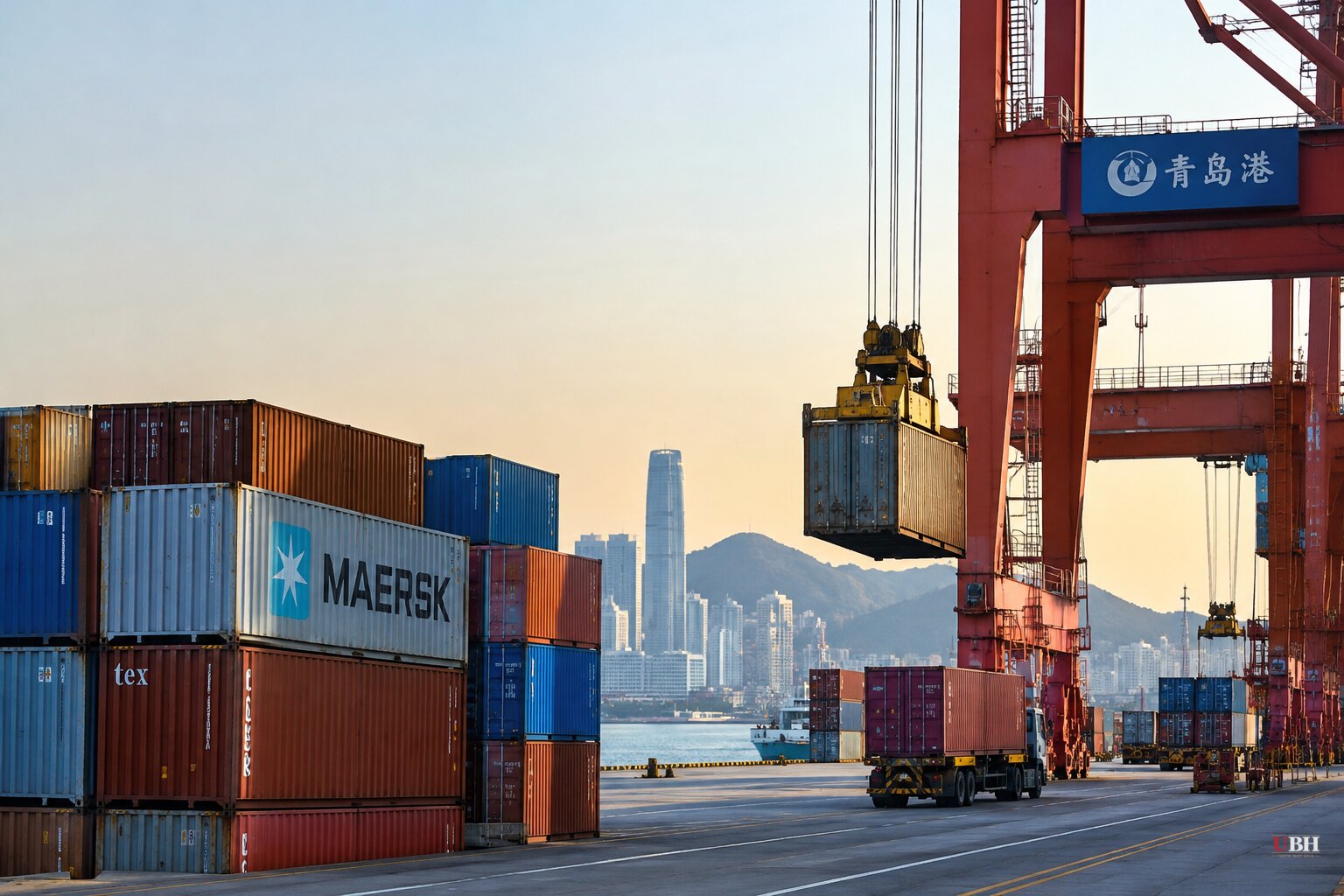
Since China's economy slowed to a more-than-three-year low of 4.3% growth in the April-to-June quarter, Beijing has leaned harder on exports. The National Bureau of Statistics said Monday, Oct. 19 (Beijing time), that third-quarter GDP rose 4.5% from a year earlier. That beat the 4.4% forecast in a Reuters poll and the 4.41% consensus among economists surveyed by Wind.
First-quarter growth was 5%. Growth for January through September averaged 4.6%, inside the government's 4.5% to 5% annual target range but near the bottom of it. On a quarter-on-quarter basis, the economy expanded 1.2%, ahead of the 1.1% expected and up from 0.9% in the second quarter.
What drove the quarter
Exports. Customs data released earlier this month showed September shipments up 36.3% from a year earlier. Imports rose 31%. Both beat the roughly 25% gains forecast in a Bloomberg survey. The monthly trade surplus hit $133.5 billion, the largest since January 2025.
The cumulative surplus through September stands at $938.1 billion. Last year's full-year record was $1.2 trillion, and China is on course to break it.
Demand for AI hardware, including semiconductors and computing equipment, was a major driver. But much of that growth was price, not volume. Integrated-circuit exports rose just 1% in volume in September while climbing 136% in dollar terms.
Vehicles were different. Vehicle export volumes jumped 56.3% from September 2025, pointing to real foreign demand for Chinese electric vehicles.
The domestic side
Inside China, the picture is weaker. Fixed-asset investment fell 7.2% over the first nine months, the same pace of decline as through August. Infrastructure investment shrank 4.2%. Property investment dropped 20.6%.
Retail sales grew 1.1% in September, beating the 0.6% forecast and improving from August's 0.4%. That is the fastest pace since March, but it is still barely growth. Industrial output rose 5.5%, matching forecasts and up from 5.2% in August. Urban unemployment was 5.2%.
Reuters described the result as a two-speed economy, one where Beijing's shift of credit and resources from property toward high-tech industries produces strong factory output and exports while consumption and private investment stay weak.
Beijing's response
Chinese authorities rolled out targeted rate cuts and mortgage subsidies in late September. In early October they allocated 550 billion yuan ($82.28 billion) of unused debt quota to local governments. They also expanded loan interest subsidies for small private firms and consumers and tapped an 800 billion yuan policy-based financing tool for infrastructure.
Policymakers have held back from large-scale stimulus, with strong goods exports expected to help the country reach its target. Economists largely expect the People's Bank of China to leave benchmark lending rates unchanged through the end of the year, which leaves fiscal measures to do most of the work.
The IMF downgraded its China forecast on Tuesday to 4.5% growth this year, slowing to 4% in 2027.
Trade friction
The export boom is colliding with China's biggest customers. Shipments to the European Union rose 25.3% in September while imports from the bloc were flat. EU trade chief Maros Sefcovic held talks in Beijing earlier this month and called the imbalance, around a billion euros a day, unsustainable. The EU accuses China of using subsidies and unfair trade practices to outcompete European firms.
The talks with Chinese Commerce Minister Wang Wentao produced an agreement to limit Chinese hybrid-vehicle exports to Europe. Sefcovic described it as a first step toward rebalancing trade. That deal could weigh on the booming auto trade.
Shipments to the United States rose 39.6% in September, but from a low base after the punitive tariffs of last year.
Nguyen Hoang Nam, China economist at Capital Economics, said China's surplus with the EU and the UK reached a new high, which will likely add to trade tensions. Brussels is considering extending restrictions to more strategic sectors, he wrote, though Capital Economics estimates the effect on China's economy would be small.
What comes next
The headline number clears the bar Beijing set for itself, and SCMP noted it maintains pressure on authorities to deploy more support for weak domestic demand. The data raises a specific question: how much of the export strength reflects higher chip prices rather than higher volumes, and how long it lasts as investment in AI-related sectors cools and the EU weighs wider limits. With the PBOC expected to hold rates, the fiscal measures announced since late September are the main tools left to lift consumption and investment.
Sources used for this briefing
7 links from 6 independent newsrooms (syndicated copies of the same report count once)
These are the sources it draws on, linked so you can verify.


