
Unbiased headlines. Facts, not spin.
Unbiased Headlines is an independently owned news organization. We bring you the facts, not opinions, written fresh from 110+ named sources. Sources linked so you can verify it yourself.
 economy
Major Story (7/10)
Event date: October 13, 2026 ·
Helium Spot Prices Have Tripled Since Iran War Began, Former Air Liquide Executive Says
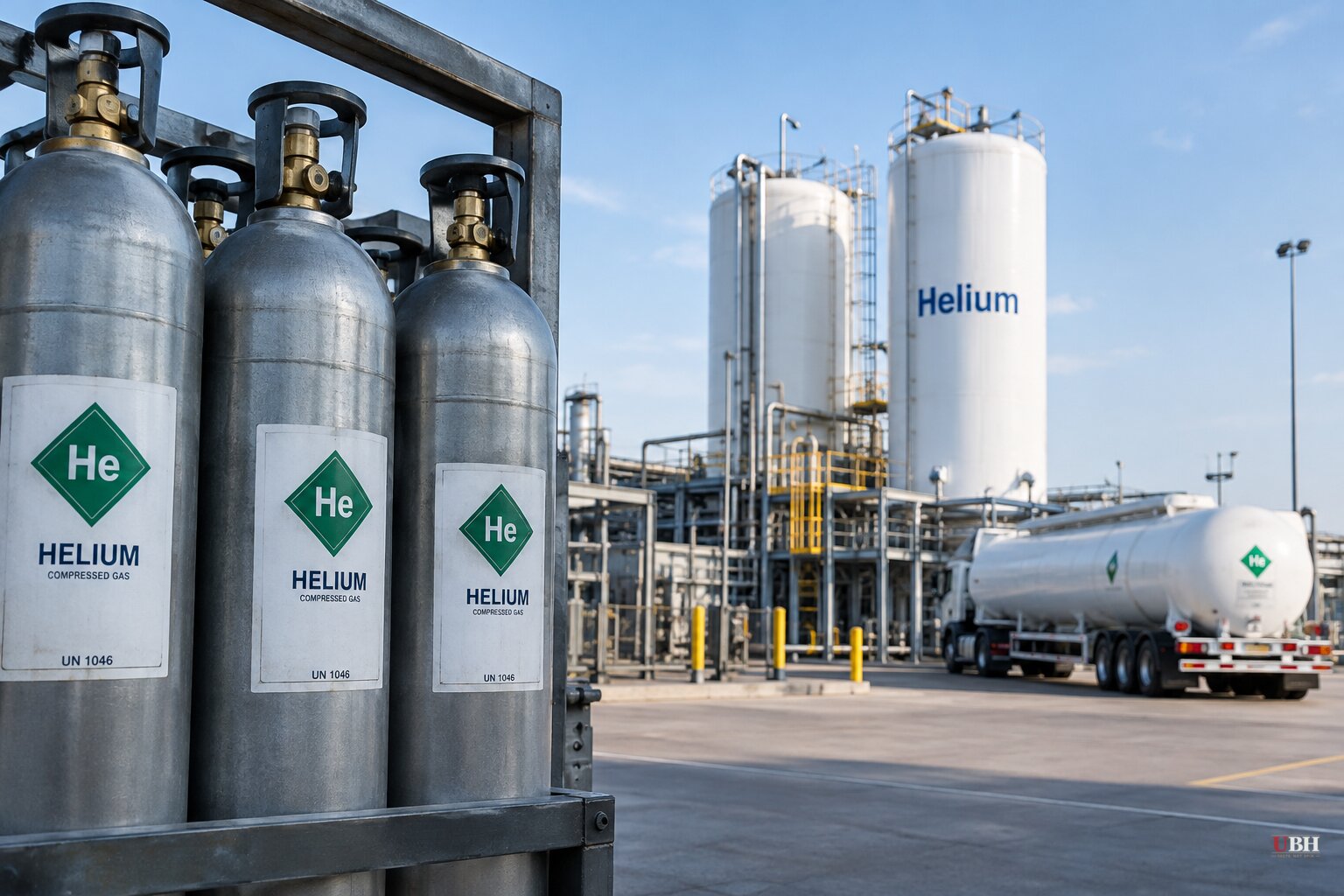
The world's helium supply is under strain, and the U.S. is carrying much of the load.
Iran effectively closed the Strait of Hormuz in February. That trapped roughly one-third of global helium supply in the Persian Gulf. In March, Iranian strikes hit Ras Laffan in Qatar, the world's largest natural gas facility and the source of Qatar's helium as a byproduct.
Qatar said it would take at least three years to bring Ras Laffan back to full operation. Ras Laffan did not respond to requests for comment on the damage to its helium infrastructure specifically.
Prices and exports
Spot prices for helium have tripled since the war began, according to Rich Brooke, a former executive at Air Liquide, one of the six major international helium suppliers.
Qatar is the second-largest commercial helium producer after the United States. Most U.S. helium comes from a single Wyoming facility, according to the Wyoming Energy Authority. U.S. helium exports are up 70% since the war began, according to U.S. Census Bureau export data.
Buyers in South Korea, Taiwan and Singapore are now turning to American supply. Some suppliers are drawing down reserves stored in deep underground salt caverns.
The U.S. cannot cover the gap forever. The longer the war runs, the tighter the market gets.
"If you can tell me what's going to happen in the Strait of Hormuz between now and three months from now, I can tell you exactly what'll be happening in the helium business," Brooke said. "Unfortunately, you can't, and so I can't."
Why a small-volume gas matters
Helium is used in MRI machines, semiconductors, fiber optics, and aerospace systems. In high-demand cryogenic applications, nothing replaces it.
A paper published April 15 by the University of Virginia's National Security Data and Policy Institute flagged the Gulf exposure early. It noted that Qatar and the UAE together export more than one-third of the world's helium and have no viable alternative shipping route with the Strait blocked.
The supply chain is also unusually concentrated. Cliff Cain, president of helium exploration company Pulsar Helium, listed the producing countries as Algeria, Poland, Russia, Qatar and the United States, with the bulk coming from Qatar and the U.S.
"All it takes is a few of those to fall and the whole supply chain comes unraveled," Cain said. He says he has spent decades warning about that vulnerability.
Transport is its own problem. Helium must be kept at 452 degrees below zero Fahrenheit in transit. Once released into the atmosphere, it is gone for good.
Cain runs a company that stands to benefit from tighter supply and higher prices. His warnings are his own, and the price and export figures above come from separate sources.
The federal reserve is gone
The U.S. sold off its federal helium reserve in 2024, according to reporting from Minnesota, where Cain pointed to the Iran war and the Russia-Ukraine war as sources of recent supply disruption.
That sale predates the Hormuz closure by about two years. Nothing in the sources links the sale to the current price spike, and the shortage itself traces to the Gulf.
The reserve question still hangs over the current squeeze. Domestic buyers are now competing with Asian customers for American molecules.
A Minnesota project, still on paper
On Monday, Oct. 12, the Two Harbors City Council approved a developer agreement with Pulsar Helium. It is a first step toward a "Rare Gas Hub" on 62 acres in the city's industrial district, according to a city news release.
The facility would include helium liquefaction and carbon capture. The agreement does not commit Pulsar to building it.
Pulsar has explored Minnesota's helium deposit since 2021. Testing indicates it may be one of the most concentrated deposits of the gas ever recorded, according to the reporting.
Cain said the company wants a plant that could process Minnesota helium and also take in helium from elsewhere. "It's become more critical that we need something larger," he said.
Mayor Lew Conner said in the release: "This agreement gives Two Harbors an opportunity to build on our industrial history and bring a new type of business to our community. We want to create economic opportunities for our residents while being clear about the city's investment and the work that still needs to happen."
Pulsar is exploring financing with the Minnesota Department of Employment and Economic Development, the Department of Iron Range Resources and Rehabilitation, and the U.S. Department of Agriculture Rural Development. That means public money may be involved, which makes the city's promise of further public review worth watching.
What comes next
Financing, property review, utility arrangements, supporting agreements and additional approvals all have to be completed before the Two Harbors project can move forward, according to the city. More opportunities for public review and comment are planned.
The larger variable is outside Minnesota's control. With no end to the Iran war in sight as of Oct. 18, the helium market depends on what happens in the Strait of Hormuz, and Qatar's own estimate is that Ras Laffan will not be fully back for at least three years.
Sources used for this briefing
4 links from 4 independent newsrooms (syndicated copies of the same report count once)
These are the sources it draws on, linked so you can verify.


