
Unbiased headlines. Facts, not spin.
Unbiased Headlines is an independently owned news organization. We bring you the facts, not opinions, written fresh from 110+ named sources. Sources linked so you can verify it yourself.
 economy
Notable (6/10)
Event date: October 16, 2026 ·
Amazon Warns It May Close 15 NYC Delivery Stations if Delivery Protection Act Passes
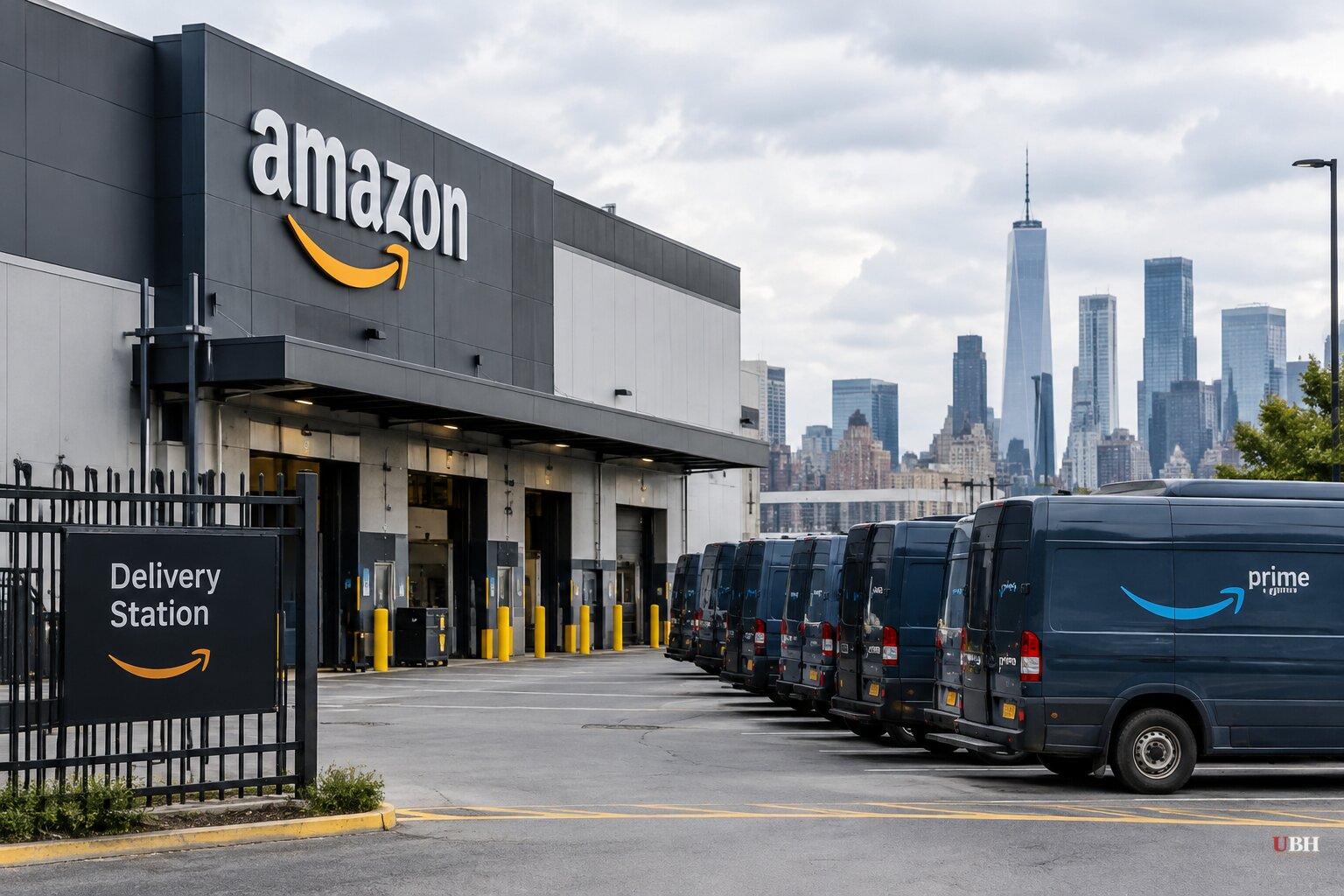
Amazon has warned that it could close its last-mile delivery stations in New York City and move work elsewhere if the City Council passes the Delivery Protection Act, a bill Mayor Zohran Mamdani now backs. The warning surfaced in a New York Post report on Friday, Oct. 16.
The bill would require last-mile facilities to get a municipal license. It would make the company running the facility the employer of the delivery drivers. Today, those drivers work for more than 40 independent Delivery Service Providers, or DSPs, which employ over 5,000 people in the city.
What the bill does and where it stands
Queens Council Member Tiffany Cabán introduced the measure a year ago and reintroduced it in 2026. It has roughly 34 co-sponsors on the City Council, and the Bronx Times describes it as having supermajority council support. No vote has been scheduled.
Mamdani announced his support last month. The Department of Consumer and Worker Protection, speaking through press secretary Stephany Vasquez Sanchez, said subcontracting "has become a way to outsource labor and accountability, putting last-mile delivery drivers in danger, creating income instability, and making our streets less safe."
"New York City must pass the Delivery Protection Act," she said.
Supporters say the bill would raise pay and improve safety at Amazon and at other delivery operations, including FedEx and DoorDash. A Teamsters complaint cited by supporters says 30% of closures in New York's transportation and warehousing industry between 2023 and 2025 were Amazon DSPs. It also says at least 13 DSPs failed to give workers adequate notice when terminating them.
Amazon's warning and the numbers
Amazon does not directly employ delivery drivers anywhere else in the country. Logistics experts told the Post that the bill could send the 5,000 contracted jobs out of the city. They said Amazon could also shut all 15 of its remaining last-mile stations in New York, ending about 2,000 warehouse jobs. That puts roughly 7,000 jobs in play.
Amazon spokesperson Steve Kelly said New York "is one of the largest and most complex delivery regions in the country" and is "best served by a network of local small businesses deeply embedded in their communities and leveraging our operations infrastructure."
Amazon also funded a study by the firm AKRF. It estimates the rules could add $664 a year to household costs, about $5.20 per package. That is an Amazon-commissioned projection, not an independent finding.
The Quebec comparison
The experts' case rests mostly on Quebec. In early 2025, Amazon closed seven warehouses near Montreal after the Confédération des syndicats nationaux organized 300 workers at a facility in Laval. By March 2025, about 1,900 employees and 2,800 delivery contractors tied to those sites had lost their jobs.
Amazon attributed the Quebec closures to cost savings and a return to a third-party delivery model. The CSN called them an anti-union campaign.
Marc Wulfraat, president of MWPVL International, said Amazon is still paying rent on more than 1.6 million square feet of vacant Montreal space, with at least two sites offered for sublease. "Amazon will retaliate, because it has to send a firm message to the rest of the country that 'If you mess with us, this is what will happen,'" he said.
Former Amazon executive Brittain Ladd said the company "wouldn't blink about shutting down the 15 facilities in New York City if it felt that the legislation was a threat to its business model." He added that it is "about a model that could be copied in other cities."
There are differences. Amazon employs more than 12,000 hourly workers in New York, more than twice its Quebec footprint. The bill would also not reach the roughly 5,500 workers at the JFK8 fulfillment center on Staten Island.
The contractors in the middle
The small-business owners the bill would effectively absorb are not cheering. Kris Basmagy, who owns DashWave Delivery and employs 150 people on the Upper East Side, pointed to Canada. "Look at what happened in Quebec. There was pressure on Amazon's model, and it pulled out," he said. He also described a "laser focus on punishing Amazon no matter what the repercussions might be" for owners like him.
Ty Barnes, CEO of NorthStar Logistics, runs drivers out of Amazon's DYN9 station in Hunts Point in the Bronx. He told the Bronx Times that he carries extensive insurance and funds civil service exam fees for his employees, dozens of whom live in the city shelter system. He argues that ending the contractor structure would remove a community-oriented layer and could mean fewer training opportunities for drivers.
A compromise may be taking shape
Speaker Julie Menin and other council members have expressed discomfort over potential job losses, according to a source close to the negotiations. That source said the mayor supports the bill and that "this bill will have to pass in some form," though the final version may leave both sides unhappy.
One option under discussion would let independent contractors keep making deliveries while Amazon accepts stronger safety obligations. That would be a sharp departure from the bill as written, which would effectively end the contractor model.
It is unclear whether the bill reaches the floor as written, is amended toward the contractor-friendly version, or sits. Amazon has not said which version it could live with.
Sources used for this briefing
7 links from 7 independent newsrooms (syndicated copies of the same report count once)
These are the sources it draws on, linked so you can verify.


