
Unbiased headlines. Facts, not spin.
Unbiased Headlines is an independently owned news organization. We bring you the facts, not opinions, written fresh from 110+ named sources. Sources linked so you can verify it yourself.
 economy
Major Story (7/10)
economy
Major Story (7/10)
Economy Is the Top Midterm Issue for 84% of Voters as September Inflation Hits 3.7%
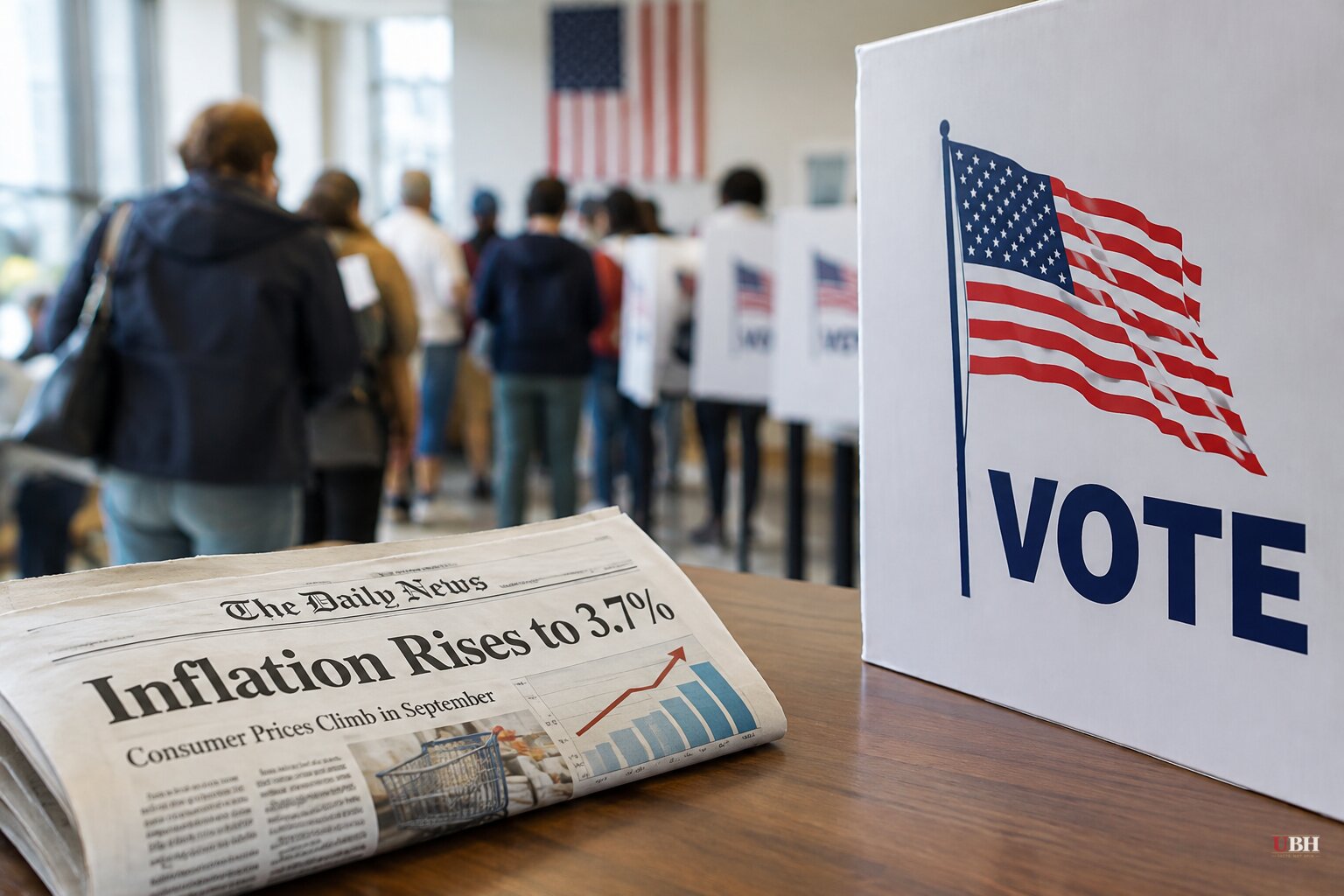
The economy is the issue that will decide the Nov. 3 midterms, and the numbers going in are not good for the party holding the White House.
The Pew Research Center found 84% of registered voters say the economy is very important to their midterm vote. That includes 88% of voters backing Democratic House candidates and 82% of those backing Republicans.
Prices are the problem
Inflation ran at 3.7% in September. According to the Guardian's analysis of the data, that is the highest reading before a midterm, pandemic years excluded, since 1990.
Gas is the most visible pain point. Pump prices are more than $1.20 a gallon above where they were a year ago, and California drivers are paying an average of $6.20, according to AAA.
A Harris poll for the Guardian found two-thirds of respondents named gas and grocery prices as their top issues, followed by living expenses, healthcare costs and foreign affairs.
The mood is darker than the data in one respect. The poll found 61% of Americans believe the country is already in a recession. By the typical definition, it is not. Consumer spending remains strong, even as inflation stays high and the outlook leans heavily on what happens with artificial intelligence.
Perception is what moves votes, though.
Trump's numbers
Trump's job approval fell to 36% in a recent Fox News poll, a new low for that survey. In Connecticut, a Wesleyan SurveyLab poll conducted Sept. 22 to Oct. 7 by YouGov found 27% approve and 70% disapprove.
That poll found 70% of Connecticut respondents say the national economy has gotten worse over the past year. Logan Dancey, a Wesleyan government professor, said "voter pessimism about the economy seems to be driving down Trump's approval rating in the state, which matches a nationwide trend."
The Harris poll shows the slide reaching Trump's own side. In February 2025, 39% of Republicans said the economy was getting better. By February 2026, just before the U.S. launched attacks on Iran, that was 49%. Now it is 28%.
Among independents, 65% say the economy is getting worse, up from 48% in September 2024.
Trump's own account is different. Outside the White House on Thursday he said, "Our economy is, literally, we've never had anything like it, it's so good." That is a hard sell to voters facing 3.7% inflation and $6 gas in the nation's biggest state.
Where the national polls leave Democrats
Democrats lead the national House preference question 44% to 36%, according to national surveys cited by Armstrong Williams in an Epoch Times commentary. Williams, writing from the right, argues that figure describes the national mood, not the outcome in every district.
He also argues that frustration with one party does not automatically become trust in the other. Democrats, in his words, still have to show how their proposals lower household costs, and they face questions about whether they can deliver a unified message on immigration and public safety.
Pew's data supports the idea that the parties are fighting on different ground. Immigration is very important to 72% of Republican voters, versus 53% of Democratic voters in the commentary's figures. Pew found violent crime is far more important to Republicans than to Democrats. Republicans also put more weight on the size of the federal government.
Republicans have a case to make on those issues. Whether voters will weigh them against a grocery bill is another matter.
The economy has also lost some pull with the GOP base. Eighty-two percent of Republican voters call it very important now, down from 92% before the 2022 midterms. Among Democrats it has climbed from 65% to 88%.
Democrats lean on affordability
Democratic campaigns are running straight at the cost of living. James Talarico, the Democrat in the Texas Senate race, has an ad showing him holding a bag of groceries. "Too many Texans feel like they're drowning, the cost of groceries, gas, healthcare," he says.
In Connecticut, Gov. Ned Lamont's campaign released a 30-second ad linking Republican challenger Ryan Fazio to Trump. It plays a clip of Fazio saying "I think he's doing a good job" after each of three claims: that "Trump's war in Iran is making gas prices skyrocket," that the federal deficit is now $2 trillion, and that "Trump's reckless tariffs are jacking up the price of everything." Those are the Lamont campaign's claims, not established findings.
The Wesleyan poll has Lamont ahead of Fazio 57% to 34% among likely voters, with a margin of error of 4.84 points. Forty percent of Connecticut respondents named inflation and the cost of living as the top issue, well ahead of taxes at 17%.
Lamont is running for a third term in a high-cost state and still holds a 56% to 37% approval rating, so voters there are not punishing the incumbent the way the pocketbook numbers might suggest.
Other issues
Artificial intelligence ranks fairly low as a voting issue. Forty-four percent call it very important, including 54% of Democrats and 34% of Republicans.
But data centers are a sore spot. Pew found 61% of voters dislike political leaders who support building data centers near them, while 8% like it. Democrats are at 75% to 5%. Republicans split 44% dislike, 14% like and 42% indifferent.
Early voting in Connecticut opens Monday, starting a two-week countdown to Election Day on Nov. 3. Last week's flood of government data provided a final snapshot of the economy before voters head to the polls.
Sources used for this briefing
6 links from 6 independent newsrooms (syndicated copies of the same report count once)
These are the sources it draws on, linked so you can verify.


