
Unbiased headlines. Facts, not spin.
Unbiased Headlines is an independently owned news organization. We bring you the facts, not opinions, written fresh from 110+ named sources. Sources linked so you can verify it yourself.
 economy
Notable (6/10)
Event date: October 15, 2026 ·
economy
Notable (6/10)
Event date: October 15, 2026 ·
DOT Pushes Airline Delay-Classification Rule to Feb. 1, 2027, After Airlines Ask for More Time
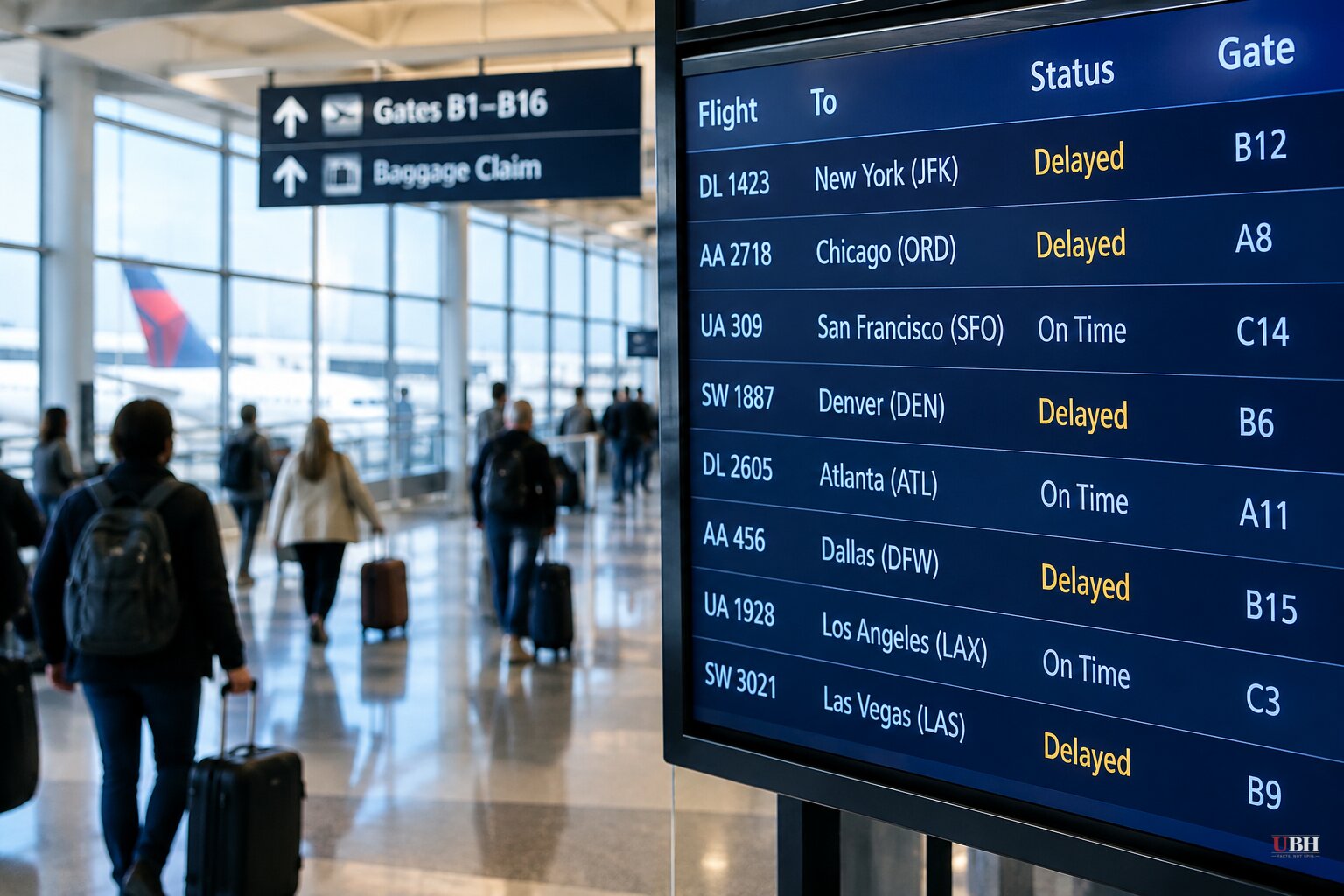
The Transportation Department has pushed back the effective date of a rule that changes which flight disruptions count as the airline's fault. The new date is Feb. 1, 2027. The rule was originally set to take effect Monday, Oct. 19, 2026.
Airlines for America, the trade group for the major carriers, requested the delay. The extra time is meant to let the Bureau of Transportation Statistics and the industry update technical systems and reporting protocols for the new categories.
What the rule does
The rule implements Section 511(b) of the FAA Reauthorization Act of 2024, which became law in May 2024. Congress directed the department to stop reporting 10 specific events under the "air carrier" delay category. Transportation Secretary Sean Duffy signed the final rule, which was published in the Federal Register on Sept. 3.
The excluded events include:
- Unscheduled maintenance that cannot be deferred, such as repairs ordered under an airworthiness directive.
- Aircraft damage from extreme weather or foreign object debris.
- Cyberattacks on airlines that follow federal cybersecurity rules.
- Medical emergencies that are not the carrier's fault.
- Removal of unruly passengers.
- Certain airport closures.
Delays tied to these events will go into a separate Section 511(b) category. Weather delays were never covered by airline meal and hotel commitments in the first place.
Where the passenger money comes in
No federal law requires airlines to buy you a hotel room. Those perks come from customer service commitments the largest carriers have made, which the department displays on its Airline Customer Service Dashboard and can enforce.
Those commitments apply to disruptions within the carrier's control. The airlines on the dashboard promise meal vouchers for controllable delays of three hours or more. All but Frontier promise hotel accommodations when a controllable disruption forces an overnight stay.
The rule changes federal reporting categories. It does not rewrite those commitments. But because the pledges are tied to controllable disruptions, a passenger stranded by one of the 10 reclassified events may no longer qualify for them.
The department's own economic analysis says as much. "It is expected that the total value of amenities and compensation currently provided by air carriers to consumers will be reduced under this final rule," the department wrote. It describes the lost vouchers and rooms as a transfer "from consumers back to air carriers," and says it cannot estimate the size of that transfer because it has no visibility into how often the affected disruptions occur.
The department also says the change reduces "the negative reputational impacts and harm that air carriers currently experience" from delays attributed to them that were not within their control.
The argument over fairness
Airline-side lawyers say the change corrects the record. Aviation law firm Crowell & Moring called it "a significant step forward for the airline industry." It noted that carriers had long argued the old structure "misattributes certain disruptions to carriers that are not within their operational control." Mark Dombroff, an aviation attorney at Fox Rothschild, which represents several airlines, said the rule "recognizes and acknowledges that airlines should not be penalized when they occur."
Consumer advocates see a different result at the gate. Clint Henderson, managing editor of The Points Guy, called it "quite a big blow potentially for customers." He said a mechanical problem "is no longer considered a reason the airline would give you compensation," and that a stranded traveler might not get food or hotel vouchers.
The rule is narrower than that. Only maintenance that cannot be deferred is carved out, not every mechanical problem. Erika Josefsson, an air passenger rights expert at AirHelp, warned that "travelers shouldn't assume that a delay that seems like the airline's fault will be treated that way under the new rule."
What stays the same
Refund rights are separate from this rule. Under department policy, a passenger is entitled to a refund if an airline cancels or significantly changes a flight and the passenger declines the alternative. That applies regardless of cause. Federal guidance generally treats a change of three hours or more on domestic itineraries, or six hours or more on international ones, as significant.
The rule also comes from a statute. Congress ordered the reclassification in 2024, and the department is carrying it out.
The broader backdrop is more contested. The New York Times reported that the department under Duffy is moving to drop several Biden-era passenger rules, including one requiring cash compensation for disrupted flights, and has not fined any domestic airline since January 2025. Paul Hudson, president of FlyersRights.org, called it "a wholesale reversal of consumer protection for airline passengers." A department spokesperson told the Times, "No passenger rights have been diminished."
What happens next
The delay moves the start past the Thanksgiving travel rush. It does not make the change optional. According to Inside Flyer's account of the department's timing, carriers file monthly reports within 15 days after each month ends. That means disruptions beginning Jan. 1 would already fall under the new reporting system.
It is not yet clear what the airlines will do with their pledges. The department has not said it will require carriers to change their customer service commitments. Passengers will find out whether the lost perks materialize only when carriers either revise those commitments or decline to honor them for reclassified delays. Josefsson's advice is to ask for the stated reason for any delay and get it in writing.
Sources used for this briefing
7 links from 7 independent newsrooms (syndicated copies of the same report count once)
These are the sources it draws on, linked so you can verify.


