
Unbiased headlines. Facts, not spin.
Unbiased Headlines is an independently owned news organization. We bring you the facts, not opinions, written fresh from 110+ named sources. Sources linked so you can verify it yourself.
 economy
Major Story (8/10)
Event date: October 6, 2026 ·
economy
Major Story (8/10)
Event date: October 6, 2026 ·
September Inflation Hits 3.7% as Republicans Enter Final Midterm Weeks With Trump at 37% Approval
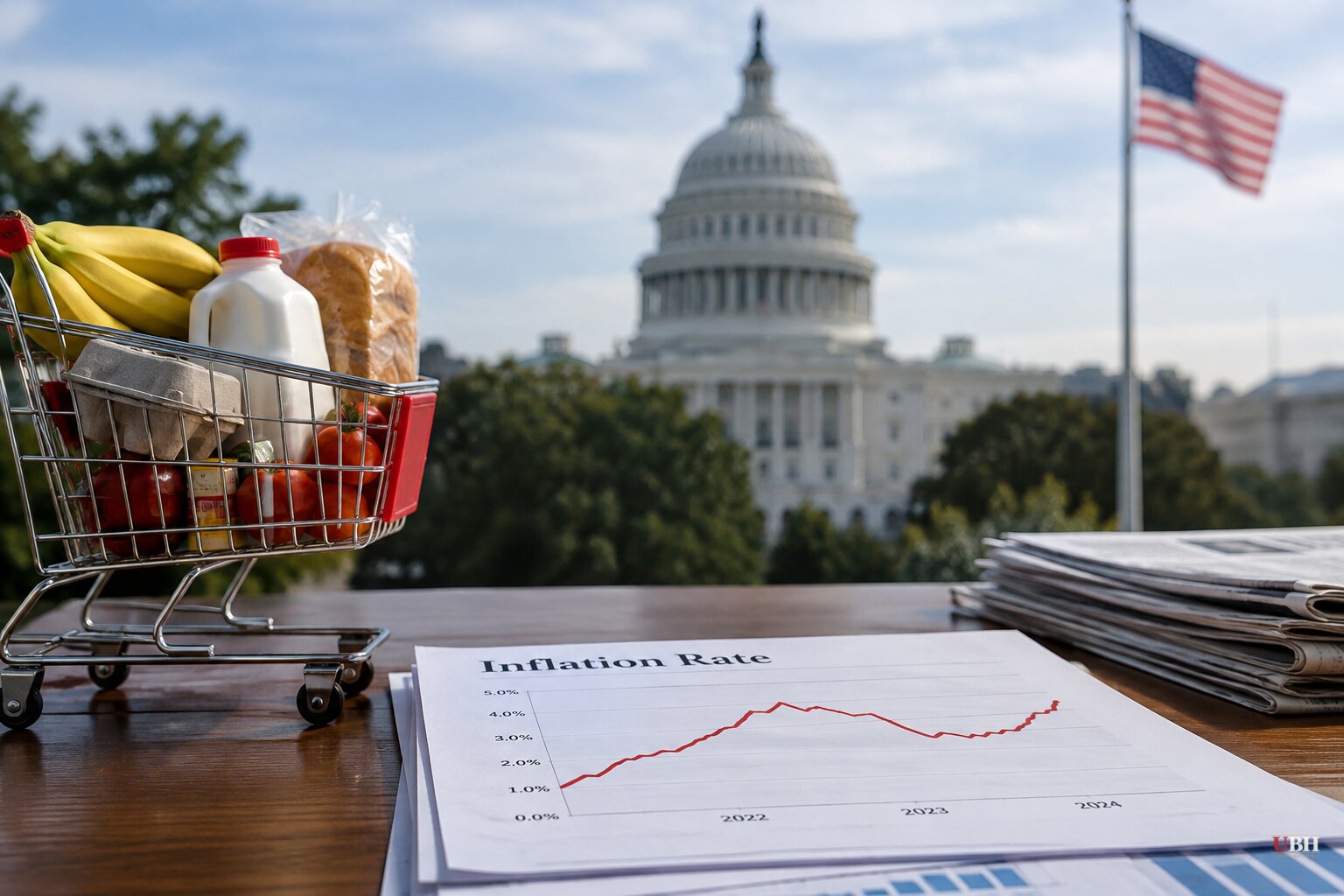
Inflation is moving the wrong way as the midterm elections close in.
The consumer price index rose 3.7% in September from a year earlier, the Labor Department said. That is up from 3.4% in August and the highest reading since May. Prices climbed 0.6% from August to September, the biggest monthly gain in five months.
The following day, the Bureau of Labor Statistics reported that wholesale prices in September posted their highest monthly jump in more than four years.
What is driving prices
Gas, clothing and airfares all got more expensive. Excluding food and energy, core prices rose 2.6% from a year ago, up from 2.4% in August. Core prices climbed 0.3% for the month, a pace that would run well above the Fed's 2% target if it held for a year.
The Iran war, which began in late February, is a major factor. Gas prices jumped more than 9% from August to September, and wholesale energy prices rose 10.8% over the same period. Surging investment in data centers and AI has also pushed up prices for computer chips and the electronics that use them.
Inflation peaked at 9.1% in 2022 under former President Joe Biden. It was back at 3% in January 2025, when Trump returned to office. Since then it has risen 0.7 percentage points.
Trump and congressional Republicans campaigned in 2024 on lowering the cost of essentials. That has not happened.
The Fed is already hiking
Fed Chairman Kevin Warsh said last month that inflation is not moving quickly enough back to target. The central bank raised rates for the first time in three years, to about 3.9%.
The Fed meets Oct. 27-28. Most Wall Street investors expect it to hold, with a possible hike in December. Fed officials have penciled in just one more increase this year.
Much of the current inflation comes from supply shocks, such as the war's disruption to oil and gas supplies. Higher interest rates cannot fix those bottlenecks.
Voters are assigning blame
An AP-NORC poll found only 17% of U.S. adults approve of Trump's handling of the cost of living. Just 26% approve of his handling of the economy overall, a new low in that survey. Roughly six in 10 respondents to a recent AP-NORC survey said the economy was worse off since he returned to office.
Trump's approval averages 37%, tied for the lowest pre-midterm number in the last half century. The only other president that low in that span was George W. Bush in 2006, when Republicans lost both chambers. In the latest NPR/PBS News/Marist poll, 53% strongly disapprove of Trump, the highest ever recorded in that survey.
In a NewsNation and Decision Desk HQ poll conducted earlier this month, nearly 51% said they are casting their ballot to oppose Trump and his policies.
Republican strategist Doug Heye, a former RNC communications director, said the data is "a continuation of bad news, confirming what voters are telling us every day of what they're experiencing." He said there were pre-existing problems, but they "have been exacerbated proactively by the president."
Rep. Jeff Van Drew, a New Jersey Republican, put it plainly: "Between their mortgage and their electric bill and the cost of everything else, they're having a hard time making it. That's real."
The Democratic pitch
Democrats on the Joint Economic Committee released a report this week saying gas price spikes during the Iran war have cost the average American family $856. Sen. Maggie Hassan of New Hampshire, the committee's ranking member, said Trump's "war, tariffs, and other reckless policies continue to make it harder for families to afford the basics."
Democratic strategist Antjuan Seawright said his party is "unified" on affordability for the first time in his lifetime.
The Cook Political Report forecasts a net Democratic gain of five to 15 House seats. That would put them at 220 to 230, with 218 needed for control. Republicans now hold the chamber 218 to 214.
NPR's analysis lists limits on Democratic gains: mid-decade redistricting that helped insulate Republicans, fewer competitive seats, a Republican spending edge and the unpopularity of the Democratic Party. In the Senate, six races have moved toward Democrats since June, and Republicans' 53-seat majority is now within reach for them.
The Republican counterargument
Republicans do not accept that the economy is a loser. Breitbart Business Digest cites an Atlanta Fed third-quarter GDP estimate of 5% growth, unemployment at 4.1%, jobless claims at their lowest since the late 1960s, and an S&P 500 up nearly 12% this year.
The same analysis acknowledges that the University of Michigan's consumer sentiment index fell 7% in September and is down 12.7% from a year ago. It also notes that the Conference Board's confidence reading hit a 12-year low, its third straight decline. Michigan's survey shows Republican sentiment down 21% since the start of the year.
Austin Hein, a Republican strategist working on a Texas Railroad Commission race, told The Epoch Times that polls "always underestimate Republican voters" and that "a lot of the doom and gloom narrative is overstated."
Some House Republican operatives told CNN their internal polling has improved from what many saw as a doomsday scenario a few weeks ago. They say some voters are coming "home," especially in races with strong candidates. Republicans are still mostly downbeat about holding the House, and one GOP consultant called corruption an "underappreciated fact" of this midterm, even in reliably red seats.
What comes next
The Fed decides Oct. 27-28 whether to raise rates again. Voters decide on Nov. 3 whether Republicans keep the House.
Sources used for this briefing
7 links from 7 independent newsrooms (syndicated copies of the same report count once)
These are the sources it draws on, linked so you can verify.


