
Unbiased headlines. Facts, not spin.
Unbiased Headlines is an independently owned news organization. We bring you the facts, not opinions, written fresh from 110+ named sources. Sources linked so you can verify it yourself.
 economy
Notable (5/10)
economy
Notable (5/10)
Nor'easter Forms Off East Coast as El Niño Keeps Atlantic Hurricane Season at One Hurricane
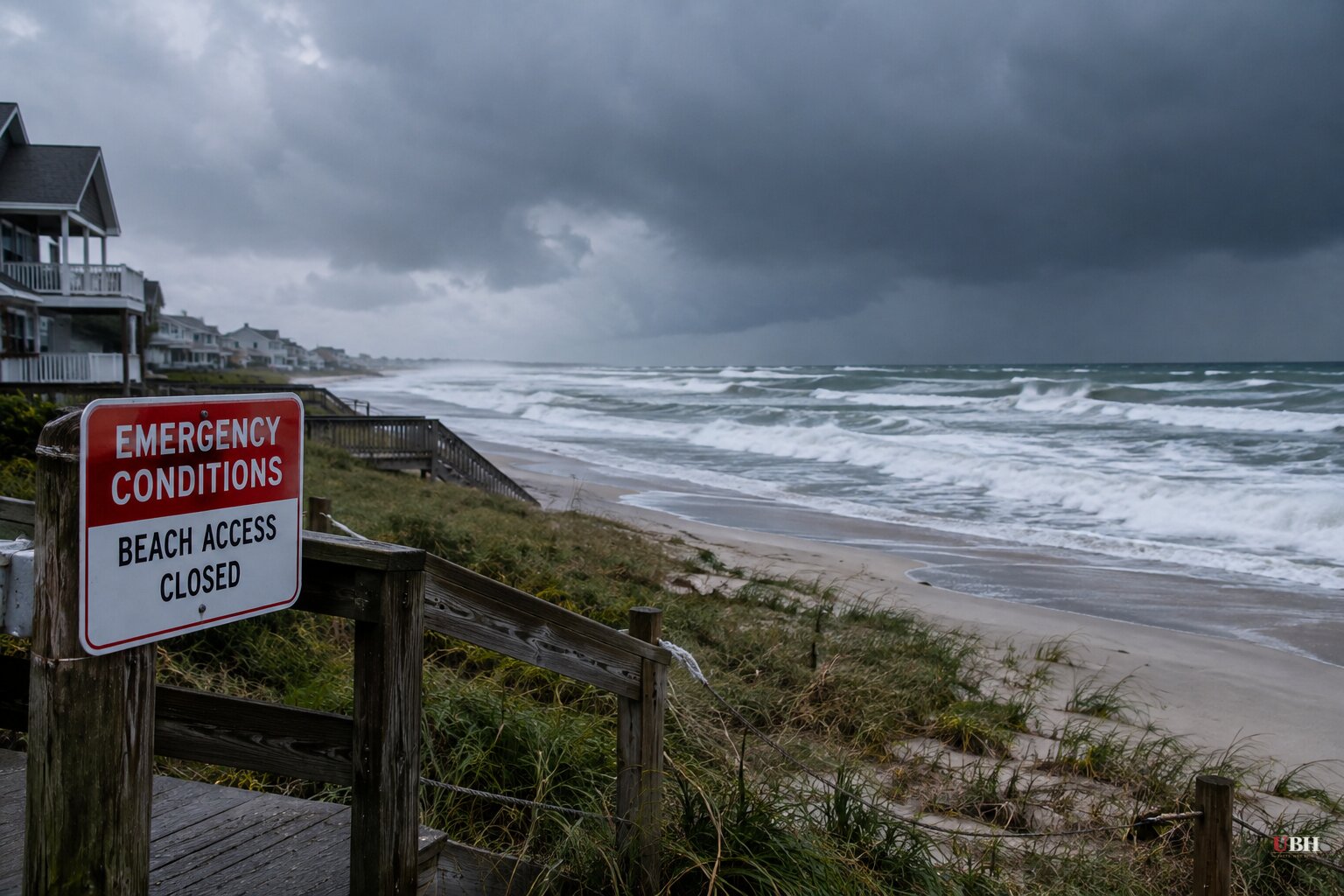
A new nor'easter is developing in the Atlantic, just weeks after a similar storm battered the East Coast in late September. On Friday, Oct. 16, a state of emergency was issued for Hatteras Island, North Carolina, and visitors were ordered to evacuate ahead of the storm.
The concern is Highway 12. The road is expected to become impassable and could cut off access to the island for days. The National Weather Service has issued storm and gale warnings.
A slow storm, not a strong one
AccuWeather senior meteorologist Carl Erickson says duration is the problem. "With this upcoming storm, our greatest concern is the prolonged duration of coastal impacts," he told Newsweek on Saturday.
He expects gusts up to 60 mph along parts of the mid-Atlantic coast. The worst of it should land from southeastern Virginia into the Outer Banks, where persistent onshore winds could bring coastal flooding, beach erosion and road closures.
The storm is expected to sit offshore for several days. That means flooding across multiple high tide cycles in places still recovering from the September storm. "Nor'easters can produce significant coastal impacts even when their centers remain offshore," Erickson said.
A hurricane season gone quiet
The Atlantic has produced nine named storms this year. Only one became a hurricane: Isaias, which reached hurricane strength late on Oct. 7 and made landfall near Destin, Florida, on Oct. 9. An average season has 14 named storms, seven hurricanes and three major hurricanes, according to the National Hurricane Center.
Isaias was the latest first hurricane of the satellite era, which runs from 1966 to the present. The Weather Company notes that across four past super El Niño seasons combined, only one hurricane formed after Oct. 7. This year could finish with a single hurricane, a modern-era record low.
The cause is the Pacific. A strong El Niño boosts wind shear and sinking air over the tropical Atlantic, which tears young storms apart before they organize. Forecasters and scientists across the sources agree on that mechanism.
The Pacific is the opposite story
El Niño has the reverse effect in the eastern and central Pacific. Climate scientist Daniel Swain says Hawaii has had two major hurricane events this summer, "in a place where ordinarily we go a decade with none." In August, Hurricane Lala became the first hurricane to make a direct hit on the Big Island since 1871. Weeks later, Category 2 Hurricane Lowell caused significant damage on Kauai.
How big is this El Niño
Federal forecasters say this could be the strongest El Niño on record. NOAA classifies it as "very strong," meaning the monitored Pacific region is more than 2°C warmer than average. It is already the strongest ever measured for this time of year, and NOAA expects it to last through early 2027.
Prior strong events came in 2015-16, 1997-98 and 1982-83. El Niño typically peaks in November and December.
UN Secretary-General António Guterres has said the world is entering a "danger zone of extreme weather." Indonesia is seeing wildfires and Peru heavy rain, according to the BBC Science Focus account of global impacts.
What forecasters will not promise
The link between this El Niño and the coming nor'easter is unproven. A National Weather Service Weather Prediction Center meteorologist told Newsweek that El Niño can feed more winter nor'easters by strengthening the southern jet stream. Those effects are usually felt when El Niño peaks, so it is unclear whether it played any role in the current storm.
Erickson put the odds of more nor'easters than tropical landfalls before the season ends Nov. 30 this way: "It's certainly possible... but it's too early to say."
The broader forecasts carry the same warning. Michael McPhaden, a veteran El Niño researcher, told CNN that "no two are exactly the same." The 2015-16 super El Niño failed to deliver the heavy California rain that earlier events had led forecasters to expect.
NOAA meteorologist Erica Grow Cei told Weather.com that daily and weekly changes in sea-surface temperature are not tied to El Niño impacts over the United States.
Still, Swain says it is "entirely possible" that parts of California get close to or more than double their average seasonal precipitation. He also warns of coastal flooding and erosion from big waves and king tides in the San Francisco Bay, San Diego Bay and Sacramento-San Joaquin Delta areas.
Some of the news is good. CNN's account notes that parts of the U.S. often see warmer-than-average winters in El Niño years, which lowers heating costs. A wet southern U.S. in winter is the typical pattern for strong events, according to The Weather Company.
What comes next
The nor'easter is expected to linger offshore for several days, with Hatteras Island's evacuation order and Highway 12 closure the first test. Beyond that, the harder question is how many coastal storms the East Coast gets as El Niño approaches its November-December peak. Forecasters say they cannot yet answer it.
Sources used for this briefing
7 links from 6 independent newsrooms (syndicated copies of the same report count once)
These are the sources it draws on, linked so you can verify.


