
Unbiased headlines. Facts, not spin.
Unbiased Headlines is an independently owned news organization. We bring you the facts, not opinions, written fresh from 110+ named sources. Sources linked so you can verify it yourself.
 economy
Breaking / Critical (9/10)
Event date: October 14, 2026 ·
Iran War Energy Costs Push September Inflation to 3.7%, the Last Report Before the Midterms
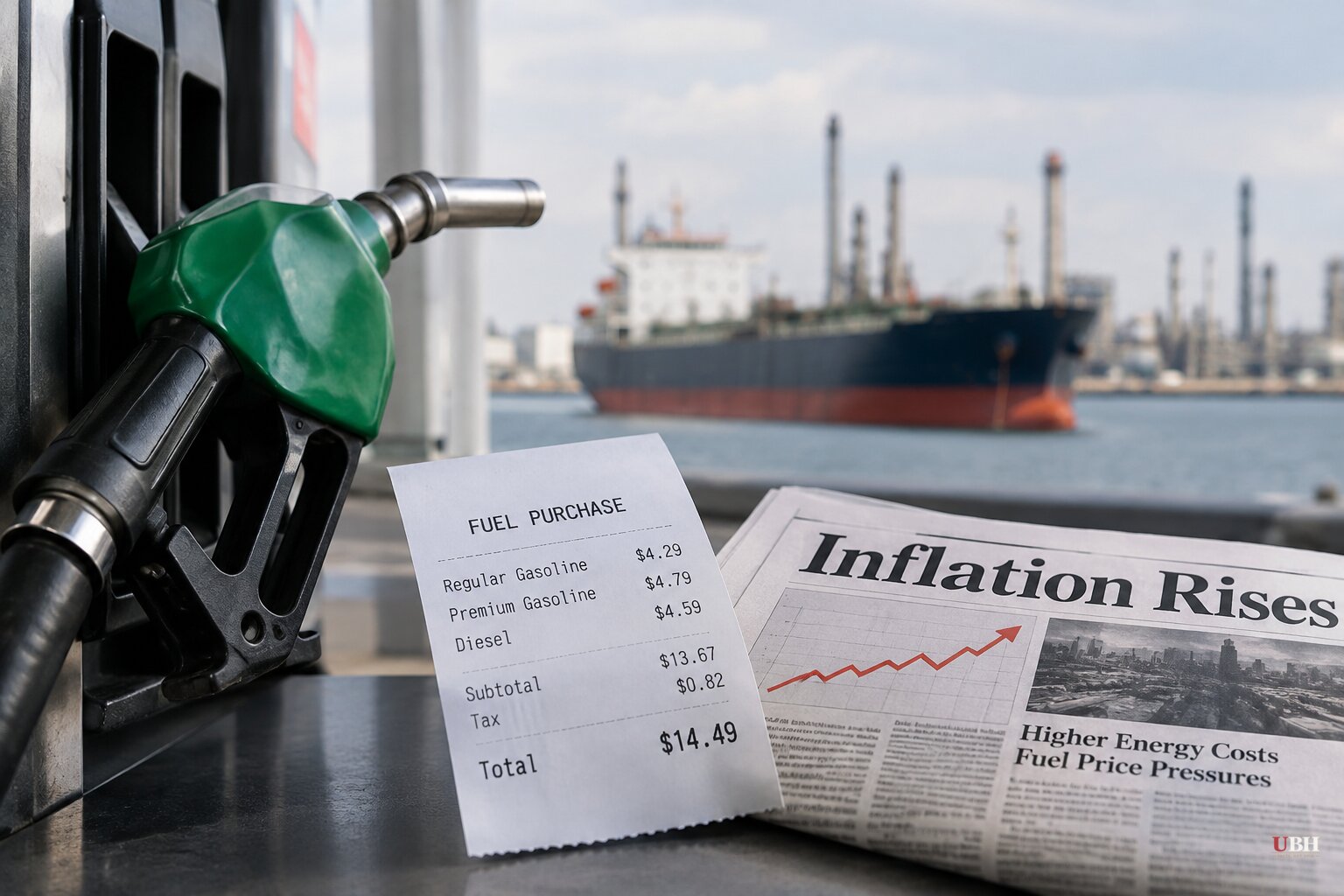
Since the U.S. and Israel attacked Iran in late February and Tehran blocked the Strait of Hormuz, energy has been the main force pushing consumer prices up. The September numbers, released Wednesday, Oct. 14, show it.
The Bureau of Labor Statistics said the Consumer Price Index rose 3.7% from a year earlier, up from 3.4% in August. Analysts had forecast 3.6%. On a monthly basis, prices rose 0.6%, after 0.4% in August.
Excluding April and May, it is the highest annual reading since September 2023, according to Newsweek.
Gasoline and diesel did most of the damage
Gasoline prices jumped 9.1% in September alone and accounted for more than half of the monthly increase. The energy index rose 5.2% over the month, compared with 2.1% in August. Fuel oil rose 15.3% in the month and is up more than 74% over the past year.
AAA data puts the average pump price at $4.33 a gallon, up more than 45% since the war began. Diesel is up 67.7% over the same period, which feeds directly into what it costs to move freight.
Moody's Analytics estimates the war is costing the average American household about $2,000 in additional expenses.
Core inflation is lower, but not quiet
Core CPI, which strips out food and energy, rose 0.3% on the month and 2.6% from a year ago. That compares with 2.4% in August and forecasts of 2.5%.
Core is well below the headline number, which supports the argument that energy is the main driver. But shelter costs rose 0.4% in September, and services overall rose 0.4%. CNN's analysis noted that services prices tend to be "sticky," meaning they rarely come back down once they go up. Food prices were flat.
The administration's response
President Trump, speaking to reporters after an Arizona rally Wednesday, said "We're doing great." He said the Iran war would "end very shortly" and that energy prices would then "fall very rapidly, very fast."
National Economic Council Director Kevin Hassett told Fox News that voters should direct their frustration at "the runaway inflation that Joe Biden gave us." Trump also said the administration inherited high inflation.
Treasury Secretary Scott Bessent said in the Oval Office last week that once the conflict is over, "energy markets are going to be well supplied, and we will move down toward the Fed's target, and mortgage rates and the 10-year will come back down."
The critics' case is laid out in CNN's analysis, which says Trump's tariffs and, primarily, the Iran war have made a long-running cost-of-living problem worse. It also says two administration efforts to ease prices are being undercut by Iran and its Houthi allies. One is the Navy's push, begun more than a month ago, to help tankers move Gulf oil out of Hormuz. The other is Trump's decision, announced last week, to drop some sanctions on Russia so the U.S. can import a relatively small amount of Russian diesel.
According to CNN, a rise in attacks on tankers and oil infrastructure over the past week pushed oil and diesel prices higher. Transits through Hormuz and the Bab al-Mandeb strait fell sharply after mostly recovering to prewar levels.
The Fed and the bond market
In September the Federal Reserve raised rates for the first time in more than three years, moving the target range from 3.5%-3.75% to 3.75%-4.0%. Fed Chairman Kevin Warsh has called inflation "a tax on the American people and businesses."
The hotter report complicates the next decision at the Oct. 27-28 meeting. Analysts are divided over the odds of a second straight hike. Breitbart, citing CME Group's FedWatch tool, reports traders see a 51.5% chance of another 25-basis-point hike, up from about 22% the day before. Newsweek, citing the same tool, puts the odds of a hike at the Oct. 28 meeting at 44%.
ING economist James Knightley points out that Fed officials John Williams, Philip Jefferson and Christopher Waller have signaled that back-to-back increases are not needed. He expects a cautious approach.
The 10-year Treasury yield rose to 5.3% from 5.2% after the report. That yield influences mortgage and auto loan rates, and housing is already under pressure from higher borrowing costs, according to Breitbart's account of the data.
Voters are already feeling it
In an Economist/YouGov survey of 1,381 registered voters conducted Oct. 2-5, 37% named inflation as their top issue in this year's elections. That is the highest share since the question was first tracked in 2022. Jobs and the economy were second at 12%.
The University of Michigan's gauge of current economic conditions fell to a record low of 44.7 in October from 50.9 in September. A Pew Research Center survey taken Sept. 28 to Oct. 4 found just 21% rating the economy excellent or good, while 42% called it poor.
The broader economy is still running hot, and consumers are still spending, according to CNN. Business Insider reports that gas prices have sat above $4 a gallon for more days this year than in any other year, and Newsweek, citing AAA, says the streak has now run 158 days and surpassed the previous record set in 2022.
The U.S. has carried out no airstrikes on Iran directly in several months, but it keeps more than a dozen warships and thousands of sailors and Marines in the region. It also maintains a naval blockade of Iran. Since July, U.S. forces have disabled four commercial ships the Pentagon said were violating the blockade, and the Pentagon says it has destroyed 10 tankers tied to the Islamic Revolutionary Guard Corps.
What comes next
The Fed meets Oct. 27-28, and its rate decision is the next hard data point. The October CPI report is scheduled for Nov. 10, a week after the Nov. 3 midterms, so voters will cast ballots without another official inflation reading.
Sources used for this briefing
7 links from 6 independent newsrooms (syndicated copies of the same report count once)
These are the sources it draws on, linked so you can verify.


