
Unbiased headlines. Facts, not spin.
Every story is an unbiased news briefing written from 110+ sources across the spectrum — sources linked so you can verify it yourself.
 defense
Breaking / Critical (10/10)
July 24, 2026 at 04:33 PM
defense
Breaking / Critical (10/10)
July 24, 2026 at 04:33 PM
Trump Weighs 'Massive Attack' on Iran as 13th Night of Strikes Passes, Tehran Hits Bases in Bahrain, Jordan and Kuwait
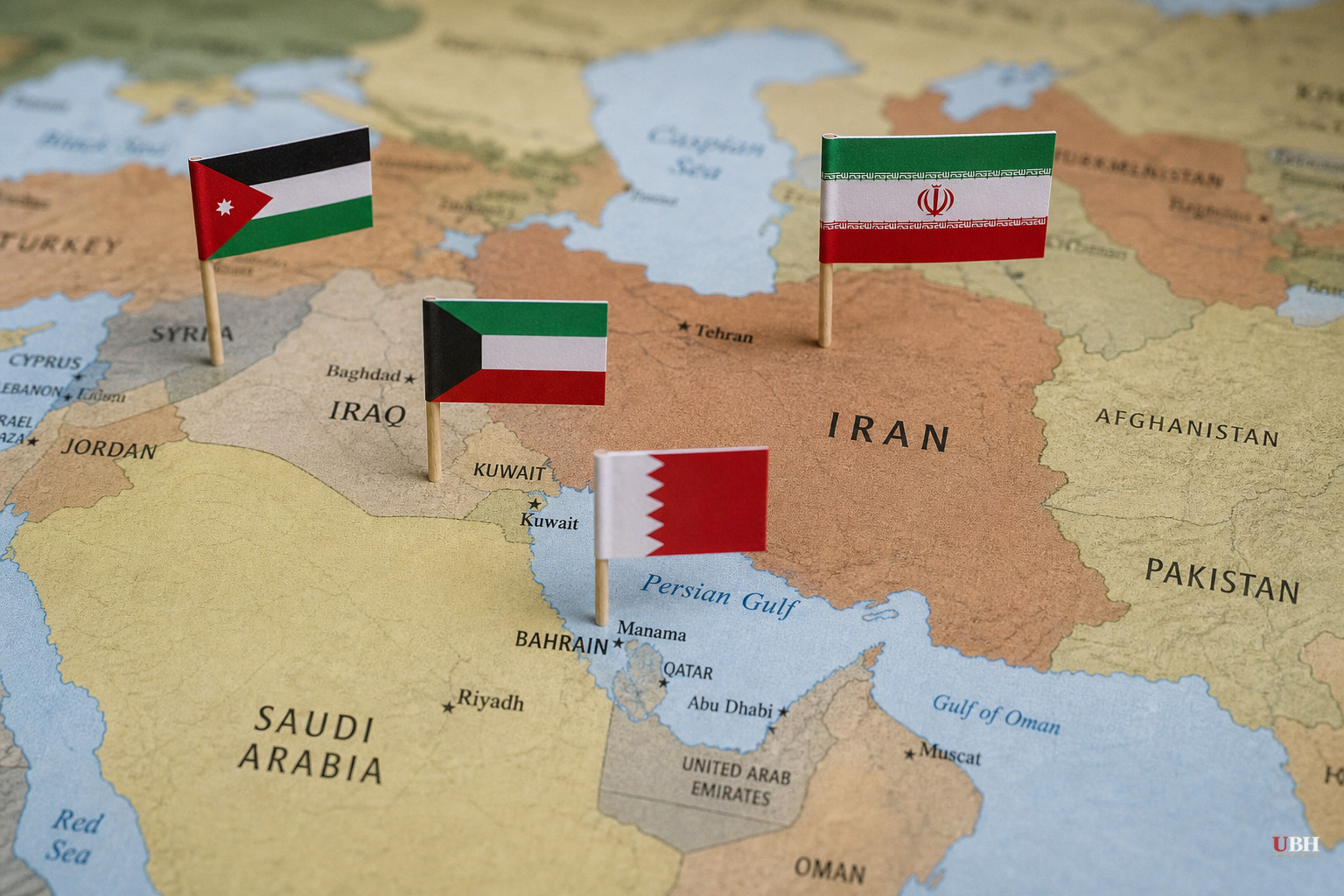
Since U.S. forces carried out their 13th consecutive night of strikes on Iranian targets, Tehran has answered with drone and missile attacks on American bases and allied forces in Bahrain, Jordan, Kuwait and Iraq, according to NPR, the New York Post and The National News. President Trump now says he's weighing a response bigger than anything the U.S. has launched so far in this conflict.
"I am considering a massive attack. Bigger than ever before. I am close to making a decision," Trump told Axios, according to NPR.
The strikes this round hit an IRGC naval base in northern Iran, according to Iran's semiofficial Fars and ISNA news agencies, cited by the New York Post. Blasts were also reported on Qeshm Island, home to naval drone-boat assets Iran uses against Strait of Hormuz shipping, plus Isfahan province, site of a major air base and nuclear facility, and strikes reportedly hit Khuzestan and Fars provinces as well.
Iran's retaliation spanned three countries in one day. The IRGC claimed it set fire to three ammunition and storage sheds at a U.S. base in Udairi, Kuwait, and struck a watchtower used by the U.S. Navy's Fifth Fleet in Bahrain, according to the New York Post. Bahrain confirmed it intercepted and shot down Iranian aerial attacks Friday but did not confirm casualties or damage. Jordan's armed forces said they downed seven Iranian missiles and six drones. In Erbil, in Iraq's Kurdish region, security forces shot down five explosive-laden drones near the international airport. An Associated Press journalist reported hearing at least seven blasts and seeing four plumes of black smoke, though the airport's director said flights continued normally, according to Iraqi state media cited by the Post.
IRGC Warns Civilians Away From Trump Properties
In a Telegram message reported by the New York Post, Iran's Revolutionary Guard told residents of the UAE, Bahrain, Kuwait, Qatar, Jordan, Saudi Arabia and Syria to stay at least 500 meters from American hotels, banks, corporate headquarters and, specifically, "properties owned by the Trump family, and investments associated with them." Trump has developments or planned projects in the UAE, Saudi Arabia and Qatar, the Post noted. CENTCOM did not respond to the Post's inquiries about the IRGC's attack claims.
Xi and Putin Told Trump They Won't Arm Iran
Trump said in a Truth Social post, reported by Fox News, that Chinese President Xi Jinping told him at their May meeting in Beijing that China would not sell weapons to Iran under any circumstances, including through Chinese companies. Trump said Russian President Vladimir Putin made a similar commitment, adding that Putin "understands that I do not sell Weapons to Ukraine, but to NATO Countries. They pay full price." Trump said if either country armed Iran, "it would be very bad for them."
These are Trump's characterizations of private conversations with Xi and Putin. Neither the Kremlin nor Beijing has issued its own public confirmation in these reports. Both countries have their own strategic reasons, trade leverage with the U.S. among them, that could motivate restraint independent of any personal assurance to Trump.
Diplomacy Efforts Continue Alongside the Fighting
Qatar's Prime Minister Sheikh Mohammed bin Abdulrahman bin Jassim Al-Thani urged a return to the U.S.-Iran memorandum of understanding signed June 17, which had included an end to Strait of Hormuz restrictions, a stoppage of Treasury sanctions and a deal to wind down Iran's nuclear program, according to Fox News. Trump declared that MOU dead at the NATO summit in Turkey on July 8 after the IRGC fired on civilian vessels in the strait.
The National News reported that mediators have floated a 10-day truce and renewed talks to clarify disputed language in the shipping agreement. Secretary of State Marco Rubio said the U.S. "remains open to working it out in a negotiated way" but questions whether Tehran is serious. Iran's top negotiator, Mohammed Bagher Ghalibaf, countered: "If our security is not ensured, no infrastructure will be safe."
What's Genuinely Unresolved
Oil climbed above $100 a barrel this week on the standoff before easing to around $98, and U.S. gasoline prices have risen to $4.10 a gallon, up 17 cents in a month, according to NPR citing AAA figures. U.N. Secretary-General António Guterres told the Security Council the region is "teetering on the edge of the unimaginable."
None of the sources confirm what Trump's threatened "massive attack" would actually target, whether it means Pickaxe Mountain-style strikes on hardened nuclear sites previously floated at the White House or something broader. Rubio's framing, that a nation controlling an international waterway sets "a very dangerous precedent," remains the stated U.S. rationale for continued strikes, even as Iran and the Houthis, who separately declared a "maritime embargo" against Saudi Arabia in the Red Sea, show no sign of standing down.
Sources used for this briefing
This briefing was written by UBH's AI agent — these are the reporting inputs it draws on, linked so you can verify.


