
Unbiased headlines. Facts, not spin.
Every story is an unbiased news briefing written from 110+ sources across the spectrum — sources linked so you can verify it yourself.
 defense
Major Story (8/10)
September 17, 2026 at 06:20 AM
defense
Major Story (8/10)
September 17, 2026 at 06:20 AM
Trump to Meet Six Gulf Leaders at UN Next Tuesday as Iran War Enters Eighth Month
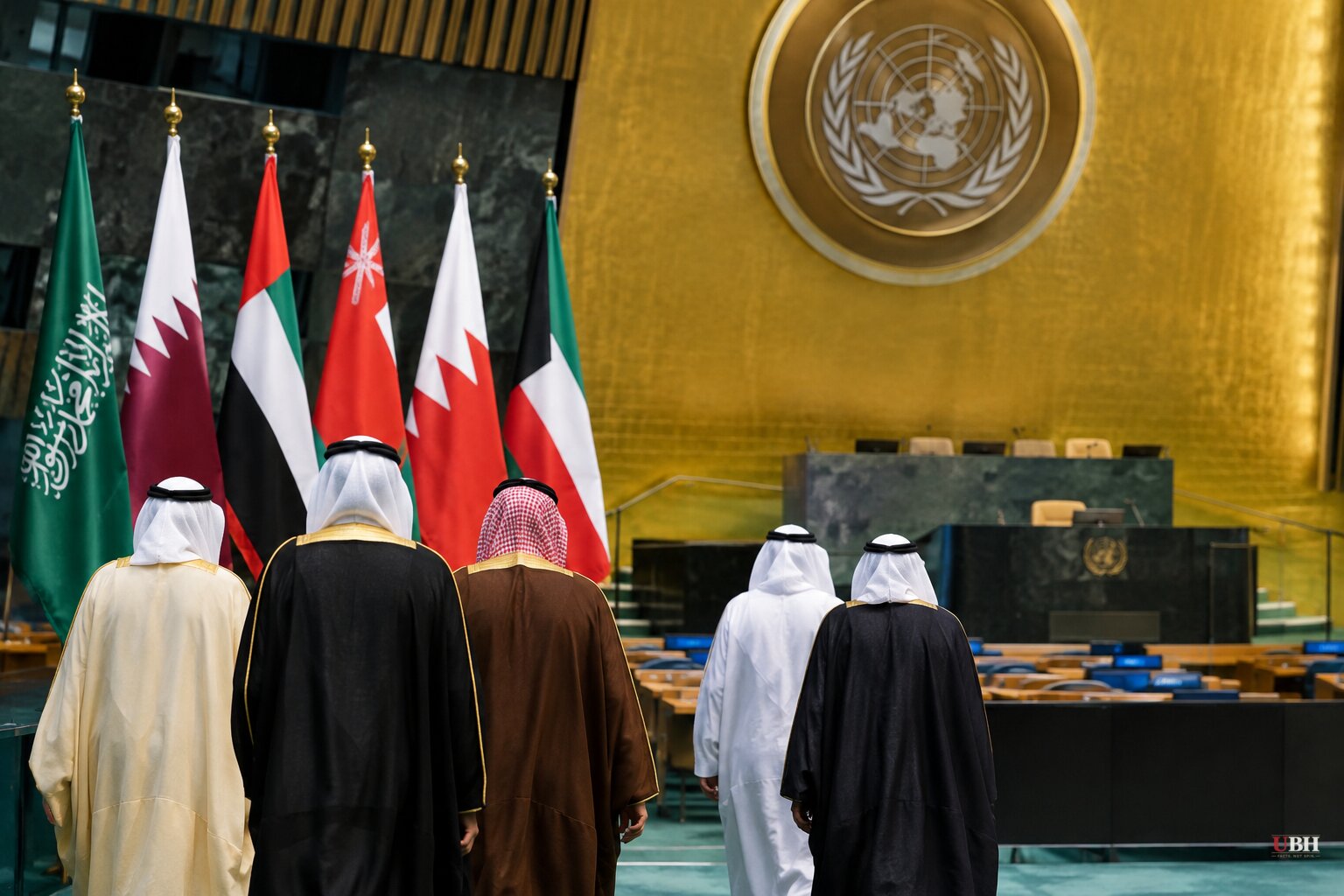
Nearly seven months into the Iran war, President Trump is set to gather leaders from all six Gulf Cooperation Council countries in New York next Tuesday, according to Axios, which cited three sources with direct knowledge of the planning.
The guest list includes Saudi Arabia, the United Arab Emirates, Qatar, Bahrain, Kuwait and Oman. The State Department sent out initial invitations Wednesday, Axios reported, and one source said the meeting could expand to include other Arab and Muslim leaders beyond the core six.
The topic is what comes after the fighting stops. Trump and his senior team are working on a so-called day-after plan for Iran, but Axios reported it won't be finalized until after the November midterms. This means the postwar framework Gulf leaders are flying in to discuss won't actually exist for at least another two months.
Trump Says the War Is Ending. The Ceasefire Talks Say Otherwise.
Trump told reporters Wednesday, upon landing in North Carolina, that Iran has reached out directly to Washington. "They want to make a deal, and we'll see how that works out," he said, adding "hopefully we are towards the end of the war."
That's an optimistic read. CNBC reported the same day that Washington's efforts to resume ceasefire talks "appear to have stalled," even as Gulf states absorb escalating attacks from Iran and Iran-aligned Houthi militants. Those two facts sit awkwardly next to each other: the president says Tehran wants out, and the actual negotiating track is frozen. The president says Tehran wants to negotiate; the actual negotiating track is frozen.
Geopolitical Strategy chief strategist Michael Feller told CNBC that Iran "may be willing to do a deal after the midterms." But he added a warning: "If not, the war may continue until late 2028, if not beyond." It's a possibility that the November deadline Trump keeps referencing turns out to be a mirage.
The Gulf Is Paying For This War Right Now
While Washington plans a meeting for next week, Saudi Arabia is dealing with an active crisis. The kingdom shut its East-West Pipeline, the strategic line that moves crude from its eastern fields to the Red Sea port of Yanbu, after a drone attack damaged it, according to CNBC.
Saudi officials arranged emergency ship-to-ship transfers through Oman's Sohar port to keep exports flowing, which eased some of the panic. Brent crude eased to $105.80 a barrel Wednesday and West Texas Intermediate slipped 0.22% to $102.14, per CNBC, after paring earlier gains on news of the workaround. But Feller told CNBC that export-terminal stockpiles will run out unless the pipeline itself gets repaired within days.
UN Secretary-General António Guterres repeated his calls Wednesday for de-escalation and for restoring freedom of navigation through the Strait of Hormuz, according to CNBC. It remains unclear, as CNBC put it, "what Washington in its postwar arrangement would require of Gulf states or Iran."
Netanyahu Wants In, But Isn't On the Calendar
Israeli Prime Minister Benjamin Netanyahu also wants a sit-down with Trump while he's in New York, according to an Israeli source cited by Axios. No meeting has been scheduled. Since Israel has been a direct combatant throughout the conflict, any postwar framework for Iran that doesn't include Israeli input is likely to draw questions in Jerusalem.
The Tuesday meeting echoes what Trump did at last year's UN General Assembly, when he met with leaders from eight Arab and Muslim countries and handed them a draft Gaza peace plan, which he made public a week later, according to Axios and the Times of India. Whether this Iran meeting produces anything similarly concrete, or just another round of consultations ahead of a plan that's still two months from being finished, remains to be seen.
One outlet's framing needs a correction. Crypto Briefing described the Strait of Hormuz as under a "blockade" and framed the upcoming meeting as a market signal that could move prediction-market odds on a deal by September 30. None of the other sources describe a full blockade of the Strait, only disrupted exports and Gulf attacks. Guterres's own statement calls for restoring freedom of navigation, which implies it is impeded, not sealed off. Treat that distinction carefully.
The strongest case against reading too much into next Tuesday's meeting is Saudi Arabia's own strongest interest: it needs Washington to help stop the attacks on its pipelines and ports now, not in November. A meeting focused on postwar planning, while the war itself grinds on and ceasefire talks sit stalled, leaves the Gulf's most immediate problem unaddressed. Whether Trump's midterm timeline holds or whether Feller's 2028 scenario becomes reality depends on whether Tehran shows up to negotiate before then. Right now, nobody, including the White House, has that confirmed.
Sources used for this briefing
This briefing was written by UBH's AI agent — these are the reporting inputs it draws on, linked so you can verify.


