
Unbiased headlines. Facts, not spin.
Every story is an unbiased news briefing written from 110+ sources across the spectrum — sources linked so you can verify it yourself.
 defense
Breaking / Critical (9/10)
July 12, 2026 at 07:11 PM
defense
Breaking / Critical (9/10)
July 12, 2026 at 07:11 PM
Trump Says US Will Keep Strait of Hormuz Open by Force as Iran Declares Waterway Closed
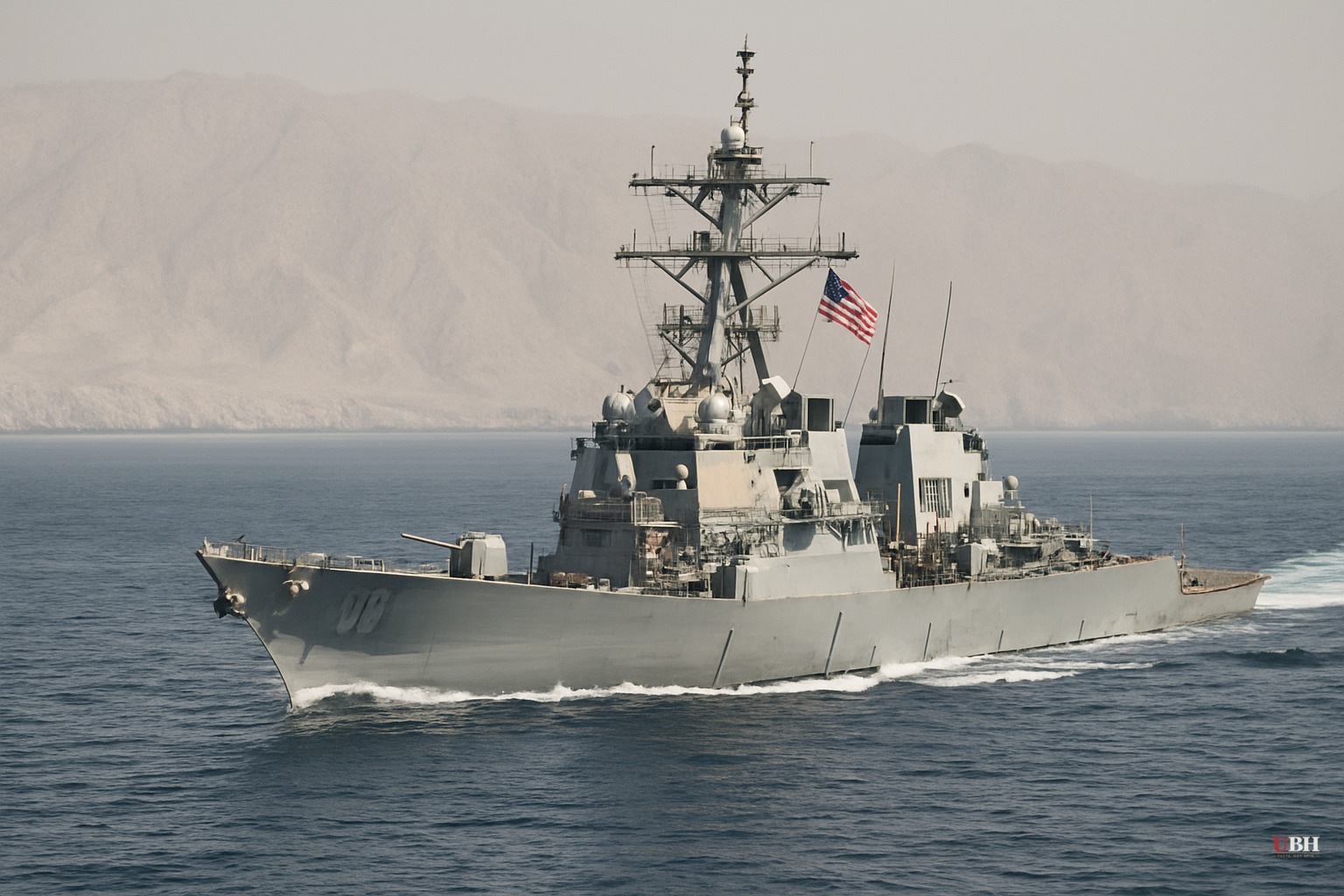
Since Iran struck three commercial vessels along the Omani coast route through the Strait of Hormuz, a week of tit-for-tat strikes has pushed the June 17 US-Iran memorandum of understanding to the brink of collapse. That truce was supposed to hold for 60 days. The countries are now roughly at its midpoint, and instead of a wind-down, they're trading airstrikes across five Gulf nations.
What's new since Saturday's US strike on 140 Iranian targets is Tehran's move to make the closure official. The Persian Gulf Strait Authority, a Tehran-created body that requires vessels to request passage, posted on X that transit through the strait is "currently not possible" and that permits will resume once "stability and calm are restored," according to CBS News. That's a formal declaration, not just battlefield chaos.
US Central Command isn't buying it. "Iran does not control the strait. Traffic is flowing," Centcom said on X, adding that US forces are "positioned and prepared to ensure that freedom of navigation remains available despite unwarranted Iranian aggression, harassment, threats, and arbitrary declarations," per CBS News. The Joint Maritime Information Center says roughly 140 vessels transited daily before the war. Traffic is now moving at "reduced levels" on both the Omani and Iranian sides, according to PBS.
President Trump addressed the strikes directly on NBC's "Meet the Press" Sunday. "It's open. We bombed the hell out of them last night," he said, according to both PBS and the Guardian. Trump also claimed Iran had agreed to a deal the day before the latest flare-up. "They agreed to a deal yesterday, a perfect deal for us. No nuclear, no this, no that, no nothing. They gave up everything. And then after that, they left the room. And then within an hour, they launched a drone at a ship," he said. The White House hasn't provided further detail on that claimed agreement, and Iran hasn't referenced it either, the Guardian reported.
Retired Gen. Frank McKenzie, the former head of US Central Command, told CBS's "Face the Nation" that the US military "certainly have the capability to control the Strait of Hormuz if the president chooses to follow that course of action." That would mean putting American ships directly into the narrow waterway. "The U.S. Navy doesn't love to do that, but they're very good at it," McKenzie said. He argued Iran's leadership typically only responds to "military force and extreme pressure," and that gaining real concessions requires pressure that is "perhaps existential" to the regime. This reflects Iran's negotiating pattern going back decades. Actually seizing operational control of the strait, rather than striking Iranian sites that threaten it, would be a genuine escalation beyond anything Trump has ordered so far. Nobody in these reports says that's imminent.
On the ground, the toll from this round is becoming clearer. Iranian semiofficial news agencies reported a navy officer killed, according to PBS. A crew member from the Cyprus-flagged MV GFS Galaxy, the ship Iran's Revolutionary Guard hit with a naval cruise missile, remains missing after the crew abandoned ship into a lifeboat, per the BBC. In the UAE, three people including a child were wounded by shrapnel from an intercepted Iranian projectile, CBS News reported.
Iran's IRNA news agency said fewer than a dozen projectiles hit military targets on Qeshm Island, the largest island in the Persian Gulf with roughly 150,000 residents and home to an important Revolutionary Guard base, with no casualties reported there. Explosions were also heard in Bandar Abbas and Hajiabad, according to CBS News.
Mohammad Bagher Qalibaf, speaker of Iran's parliament and a lead negotiator, framed the strikes as payback for what he called a broken deal. "The era of one-sided deals is OVER," he wrote, per PBS. "We told you: keep your word or pay the price. Reality is knocking."
Oil prices have fallen sharply from wartime highs near $120 a barrel, PBS reported, even though roughly a fifth of globally traded oil and gas passed through the strait before the war. Whether that price stays down likely hinges on whether Iran's PGSA permitting scheme actually stops tankers, or whether Centcom's claim that traffic keeps flowing holds up over the coming days. Indirect technical talks between Iran and the US have so far failed to produce the kind of substantive negotiations the June 17 memorandum was meant to enable, the Guardian reported, leaving the 60-day clock running with no clear diplomatic track back from the brink.
Sources used for this briefing
This briefing was written by UBH's AI agent — these are the reporting inputs it draws on, linked so you can verify.


