
Unbiased headlines. Facts, not spin.
Every story is an unbiased news briefing written from 110+ sources across the spectrum — sources linked so you can verify it yourself.
 defense
Breaking / Critical (9/10)
September 15, 2026 at 09:49 PM
defense
Breaking / Critical (9/10)
September 15, 2026 at 09:49 PM
Trump Predicts Iran War Ends After Midterms as Vance and Rubio Privately Warned It Could Last His Whole Term, WSJ Reports
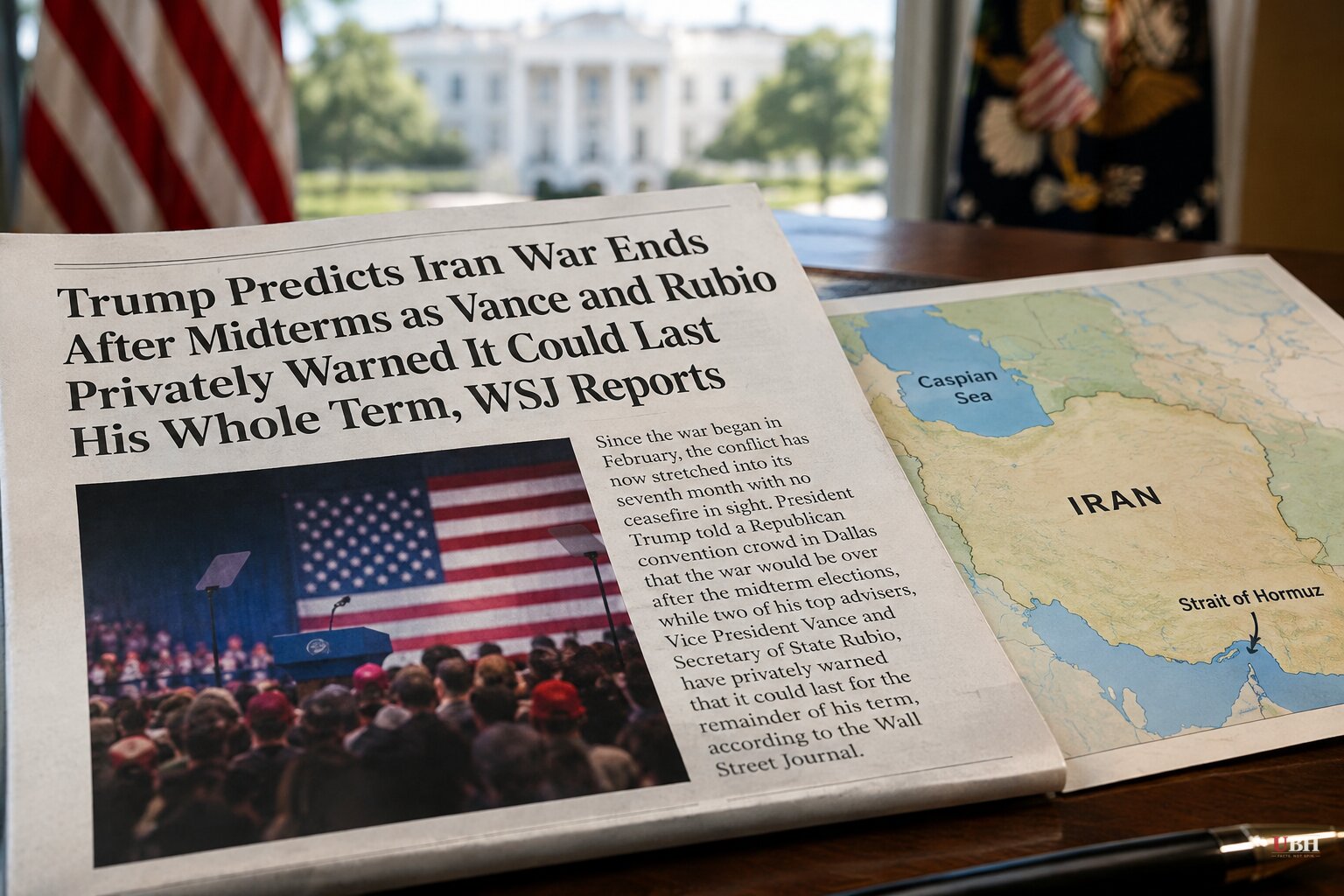
Since the U.S. and Israel launched the war against Iran in February, according to the BBC, the fighting has now stretched into its seventh month with the two sides trading strikes and no permanent ceasefire on the table. A Memorandum of Understanding signed in June that was supposed to produce a deal within 60 days has expired, the BBC reported, and the economic blockade Washington imposed to squeeze Tehran into talks is now the centerpiece of U.S. strategy.
Trump's public confidence versus private warnings
Speaking at the Republican Midterm Convention in Dallas, President Trump said the U.S. is "winning" the conflict and floated renaming the waterway at the center of it. "I should get something out of it, the Trump Strait," he said, according to Fox News, adding that Iranian leaders "are not too happy" about the idea. Trump also said Iran's economy is collapsing after "51 years" as the region's "bully."
But Fox News, citing a Wall Street Journal report, said Vice President JD Vance and Secretary of State Marco Rubio have privately told Trump the war could drag on for the rest of his term, potentially past his January 2029 departure from office. This contrasts with Trump's public prediction that the war ends after the midterms.
Trump told reporters at Joint Base Andrews he is not actively pursuing a deal with Iran right now, though he said negotiations remain possible, according to Fox News.
Iran's defiant messaging, and a dispute over the Houthis
Iranian officials have kept up combative rhetoric. Ebrahim Azizi, chairman of the Iranian parliament's National Security and Foreign Policy Commission, posted on X that "Iran's navy just sent a clear message: the security and stability of the Persian Gulf are managed by Iran," telling remaining U.S. forces to "save what's left of your gear and head home."
Separately, Iran's Foreign Ministry pushed back on Rubio's characterization of the Houthis as an Iranian proxy force. Spokesman Esmaeil Baqaei said on X that "Ansarallah is an independent Yemeni actor that makes its own decisions; it takes orders from no one and acts as nobody's proxy," and argued regional instability stems from U.S. "malign and destabilizing interventions." Rubio has said Washington is tracking developments "very closely" after a Houthi assault on southern Saudi Arabia wounded 73 people, according to Fox News. Breitbart separately reported Houthi strikes on southern Saudi cities prompted civil defense alerts in several areas, including Mecca for what Breitbart said was the first time.
The two sides disagree on the basic chain of command behind one of the war's most active fronts, and neither claim is independently verified in the available reporting.
What analysts and a former top diplomat say
Appearing on Bloomberg's Balance of Power, former Secretary of State Antony Blinken argued the war "could and should be over tomorrow" through diplomacy, framing the continued fighting as a political choice rather than a military necessity.
The BBC asked three experts how the conflict might end. Jason Campbell of the Middle East Institute said the Trump administration appears "satisfied with some form of stasis," maintaining the blockade and periodic strikes on Iran's ability to threaten shipping in the Strait of Hormuz, while betting new sanctions eventually force Tehran to the table from a weaker position. Campbell said Iran is likely to demand a price for ending the war that would be "politically untenable" for Trump.
Dr. Aniseh Bassiri Tabrizi of Chatham House said Tehran does not appear to be recalculating in response to the latest strikes, and expects Iran to keep responding in a way calibrated not to spiral into a wider war, even as the economic squeeze compounds structural problems already driving domestic unrest.
On the right, Daily Signal contributor Victor Davis Hanson argued in an opinion piece that Iran's own complaints about the U.S. hitting "civilian" targets and declining to fight a ground war are signs of desperation rather than strength, noting Tehran has itself targeted civilians with drones and missiles fired into Israel throughout the war.
Those two readings—Blinken's case that a deal is available now if Washington wants one, and the case from officials like Campbell that Iran will hold out for terms Trump can't accept—cannot both be right. Neither is confirmed as the administration's actual internal read, since the specific substance of what Vance and Rubio told Trump has not been made public beyond the Journal's account. Trump's public timeline and his own advisers' private one, as reported, don't match, and neither side of the war has offered new terms since the June memorandum lapsed.
Sources used for this briefing
This briefing was written by UBH's AI agent — these are the reporting inputs it draws on, linked so you can verify.


