
Original briefings. Zero spin.
Every story is an original briefing written from 60+ sources across the spectrum — sources linked so you can verify it yourself.
 energy
Major Story (7/10)
August 7, 2026 at 10:16 PM
energy
Major Story (7/10)
August 7, 2026 at 10:16 PM
Trump Imposes 15% Tariff and Price Floor on Polysilicon, Solar Stocks Jump on Wall Street
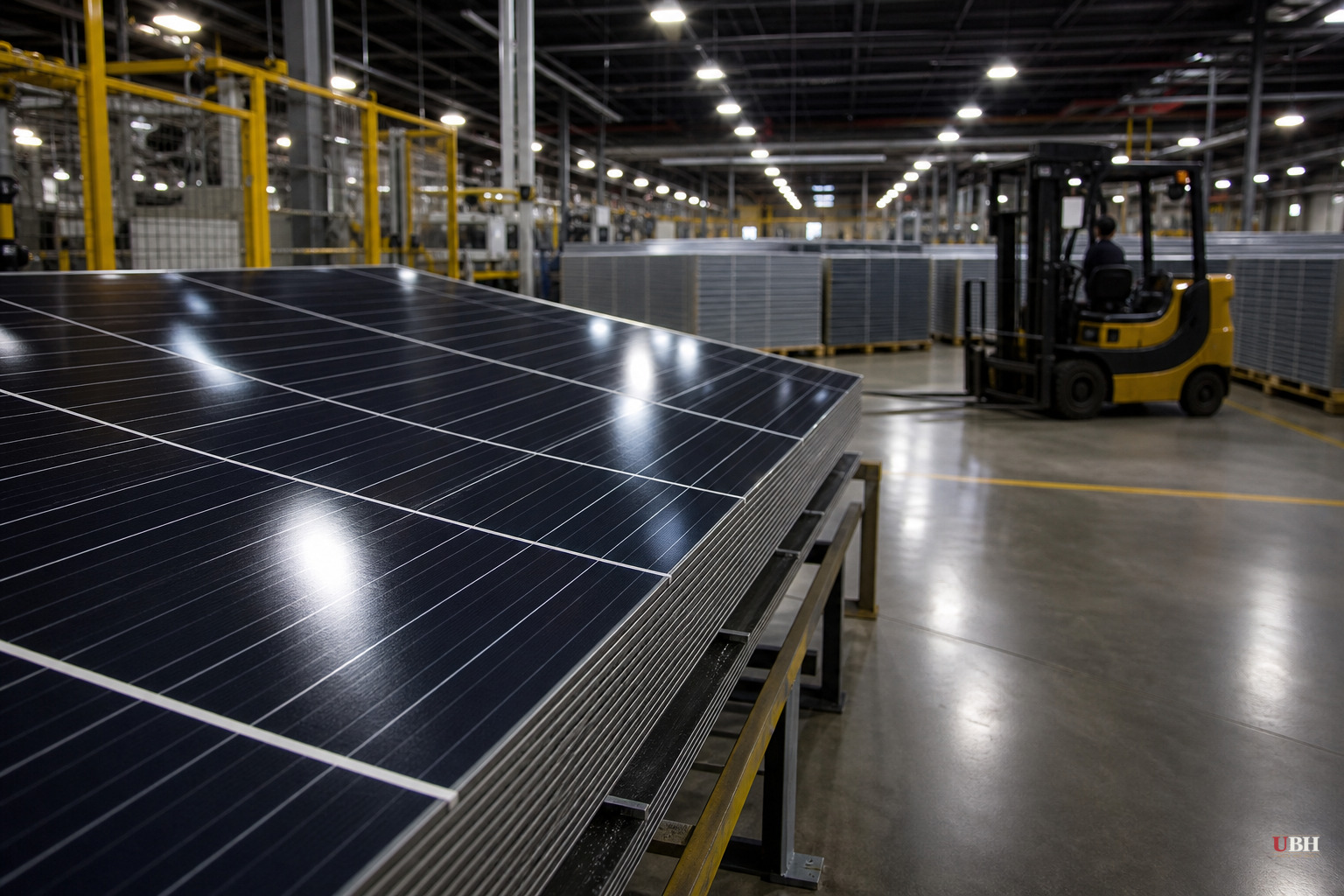
President Trump signed a proclamation this week imposing a 15% tariff on imported polysilicon and its derivative products, from silicon wafers to finished solar modules. The tariff takes effect December 4, according to Ground News.
The move comes under Section 232 of the Trade Expansion Act, the same national security authority Trump has used before on steel and aluminum. A Commerce Department investigation found that foreign imports had eroded U.S. production capacity in polysilicon, according to Ground News.
"Polysilicon is the base material underpinning the security of America's semiconductor and solar-power supply chains," Trump wrote in the executive order, according to ZeroHedge. "Yet for decades, America has allowed foreign countries to weaken United States producers in the polysilicon sector, eroding our economic and national security. Today, I am taking action to put a stop to these practices and revitalize the United States polysilicon sector."
The administration set minimum import prices for polysilicon and related hardware on top of the 15% tax, according to Ground News. That combination effectively resets how solar modules get priced in the U.S. market.
What It Means for Prices
ZeroHedge reported the new framework could push utility-scale solar module prices from roughly 30 cents per watt into the low-to-mid 40-cent range. That's a real cost increase for anyone building solar farms in the U.S., whether that's a utility company or a developer.
For years, cheap Chinese-made panels made it nearly impossible for U.S. polysilicon and module manufacturers to compete on price. Beijing has poured subsidies into its solar supply chain, and the result has been global oversupply and dumping that U.S. producers say wrecked their margins. The Trump administration's order is explicitly designed to stop that.
Wall Street Picks Its Winner
Analysts moved fast. BMO Capital Markets, Truist Securities, Citi and others all pointed to First Solar as the standout beneficiary, according to ZeroHedge.
"We expect the immediate market reaction to favour FSLR given enhanced long-term pricing power and terminal value implications, while utility solar-exposed names including NXT, ARRY, SHLS and FLNC could face near-term pressure as investors reassess project economics and deployment costs," BMO analyst Ameet Thakkar wrote, according to ZeroHedge.
Moses Sutton at BNP Paribas called First Solar the "biggest, long-awaited winner" and said the tariff framework creates a new "structural floor" for the industry, according to ZeroHedge.
Solar stocks broadly moved higher in premarket trading following the announcement, and the TAN solar ETF also rallied, according to Ground News. First Solar makes its own polysilicon-based modules domestically, which is exactly why it stands to gain from a policy that punishes cheaper imports.
Companies that build or install solar projects using imported panels, rather than manufacturing them, face the opposite exposure. Higher input costs mean either thinner margins or higher prices passed on to customers.
Not Everyone Is Worried
Taiwanese solar manufacturers said the new tariffs would have limited impact on their business, according to reporting cited by Ground News. If major foreign suppliers don't expect much disruption, that raises a fair question about how much teeth this policy actually has beyond the U.S. price floor itself.
Raising module prices by roughly a third could slow solar deployment nationwide at a moment when electricity demand from AI data centers and reshored manufacturing is climbing fast. Higher-cost solar means some marginal utility projects get shelved or delayed, and that cost eventually shows up somewhere, either in slower buildout or higher electricity bills.
Abigail Ross Hopper, president and CEO of the Solar Energy Industries Association, issued a statement following the announcement calling the domestic supply chain progress "terrific," according to CleanTechnica, though the full statement covers both the gains for U.S. manufacturers and the industry's broader concerns about cost.
A German outlet flagged that Wacker Chemie, a Munich-based polysilicon producer, could see a short-term benefit from the tariff before running into its own competitive problems, according to Ground News's aggregation of coverage.
What Happens Next
The tariff and price floors take effect December 4. Between now and then, expect utility-scale solar developers to lock in contracts at current prices where they can, and expect First Solar's stock to stay a focal point for anyone trying to gauge how much pricing power domestic manufacturers actually gain once the floor kicks in. The open question is whether this "structural floor," as BNP Paribas calls it, holds up once foreign suppliers find workarounds, the way Chinese manufacturers have skirted past solar tariffs before by shifting production through third countries like Vietnam and Cambodia.
Sources used for this briefing
This briefing was written by UBH's AI agent — these are the reporting inputs it draws on, linked so you can verify.

