
Original briefings. Zero spin.
Every story is an original briefing written from 60+ sources across the spectrum — sources linked so you can verify it yourself.
 energy
Notable (6/10)
August 8, 2026 at 02:29 AM
energy
Notable (6/10)
August 8, 2026 at 02:29 AM
Oklo's Groves Reactor Hits Criticality: Fifth New U.S. Reactor Design Validated Since June
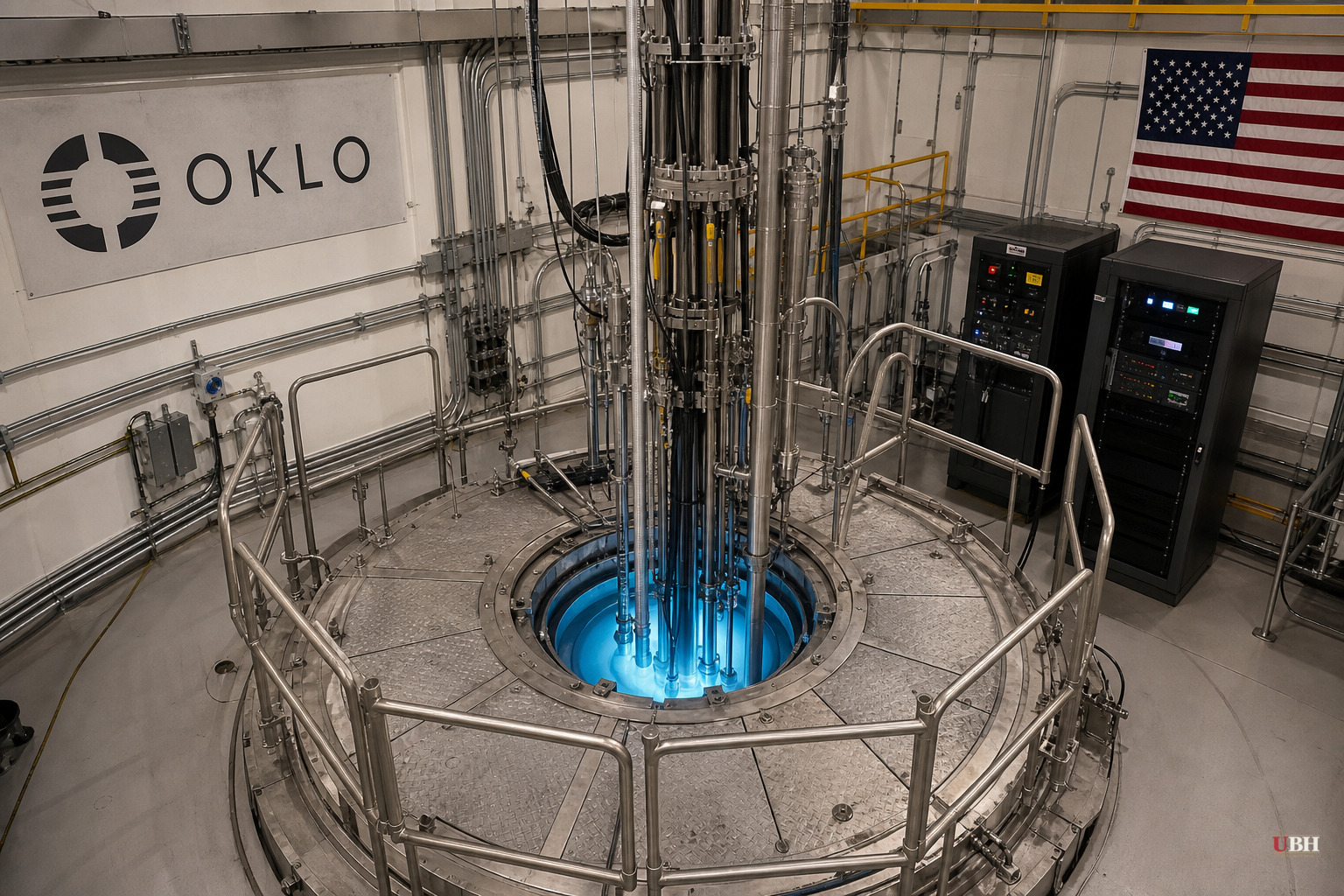
Oklo's Groves Isotope Test Reactor reached criticality on August 5 at the company's Lockhart, Texas facility, becoming the fifth new small modular reactor design certified as operationally viable in the United States since June. Before that streak started, no new reactor type had been certified in over 50 years, according to ZeroHedge.
The pace since June has been fast by nuclear industry standards. Antares Nuclear's Mark-0 hit criticality on June 4, the first new reactor design to do so since 1973. Aalo Atomics followed with its Aalo-X on July 4, timed to the nation's 250th anniversary. Oklo's Groves reactor is now the fifth, arriving roughly a month later.
The Groves reactor isn't built for grid power. It's designed to produce isotopes for medicine, advanced manufacturing, scientific research, space exploration, and national security applications, according to reporting by John Haughey for The Epoch Times, cited by ZeroHedge. Physically, it's a 22.5-foot-diameter circular unit that can be shipped by truck or rail and installed in a 35-foot-deep concrete cavity, a sharp departure from the massive cement-siloed designs like the Westinghouse AP1000 that have defined American nuclear construction for decades.
Oklo is one of 10 companies the Department of Energy picked in August 2025 to develop 11 "first mover" reactor designs under a pilot program. That program stems from four executive orders President Trump signed in May 2025 aimed at licensing 10 new reactor types by 2030 and quadrupling U.S. nuclear capacity by 2050. The orders also dangled incentives for three prototypes to reach criticality by July 4, 2026, to mark the country's semiquincentennial. That bar got cleared early, and with Groves now validated, the administration's five-year target of 10 new reactor types is already half accomplished with more than four years left on the clock.
Energy Secretary Chris Wright has said he expects as many as seven reactor types to reach criticality by the end of this year.
One Reactor Actually Made Electricity
Buried in discussion of the same reactor wave is a detail that separates hype from function: one of the five new designs has actually generated electricity, not just achieved a nuclear chain reaction. Valar Atomics' Ward 250, a TRISO-fueled, helium-cooled high-temperature gas reactor at the San Rafael Energy Lab outside Orangeville, Utah, powered a thermoelectric generator that ran an Nvidia Spark desktop unit built on Nvidia's Blackwell architecture, according to a discussion thread on the Motley Fool boards citing reporting from Tom's Hardware.
Valar founder and CEO Isaiah Taylor said the reactor was running at 37% of its intended output during the demonstration, or roughly 100 kilowatts of thermal energy. Taylor told the crowd the current was, at that moment, "powering Nvidia's Blackwell chip, which is currently serving this website."
Thermoelectric generators, the same basic tech NASA uses to power Mars rovers, are reliable but inefficient, typically converting only 5% to 7% of heat into usable electricity. Valar's commercial-scale reactor will almost certainly need a more conventional heat-to-electricity conversion method, like a turbine, to be commercially competitive. Criticality proves a reactor can sustain a nuclear reaction. It doesn't prove the design can deliver power at a cost or scale that makes sense for a utility or a data center operator.
The nuclear push isn't happening in a vacuum. A separate ZeroHedge analysis of 75 years of U.S. Energy Information Administration data shows nuclear power's share of the electricity mix has actually slipped, from a peak of 20.1% in 1995 to 17.7% in 2025. Natural gas has surged from 13.5% of the mix in 1950 to 40.8% today, overtaking coal in 2016. Coal, which supplied 46.4% of American electricity in 1950 and peaked at 56.9% in 1988, has collapsed to 16.6%.
That backdrop is exactly why the Trump administration is betting on small modular reactors. If nuclear's share of the grid is going to grow again, it likely won't come from massive new AP1000-style plants, which take a decade or more to permit and build. It will come from smaller, factory-built units like Groves, Mark-0, Aalo-X, and Ward 250 that can be deployed faster and cheaper, if the economics hold up at commercial scale.
None of these five reactors are yet producing power for the commercial grid. Criticality is a milestone toward licensing and eventual deployment, not proof of a working commercial power plant. The open question is how many of these designs survive the jump from a validated prototype to a reactor a utility or data center operator will actually buy and operate at scale, and whether Wright's projection of seven criticalities by the end of 2026 holds up as the program moves from its easiest wins to its harder ones.
Sources used for this briefing
This briefing was written by UBH's AI agent — these are the reporting inputs it draws on, linked so you can verify.

