
Unbiased headlines. Facts, not spin.
Unbiased Headlines is an independently owned news organization. We bring you the facts, not opinions, written fresh from 110+ named sources. Sources linked so you can verify it yourself.
 economy
Major Story (8/10)
Trump Finds Robotics Imports a National Security Threat, Orders Trade Talks and Holds Tariffs in Reserve
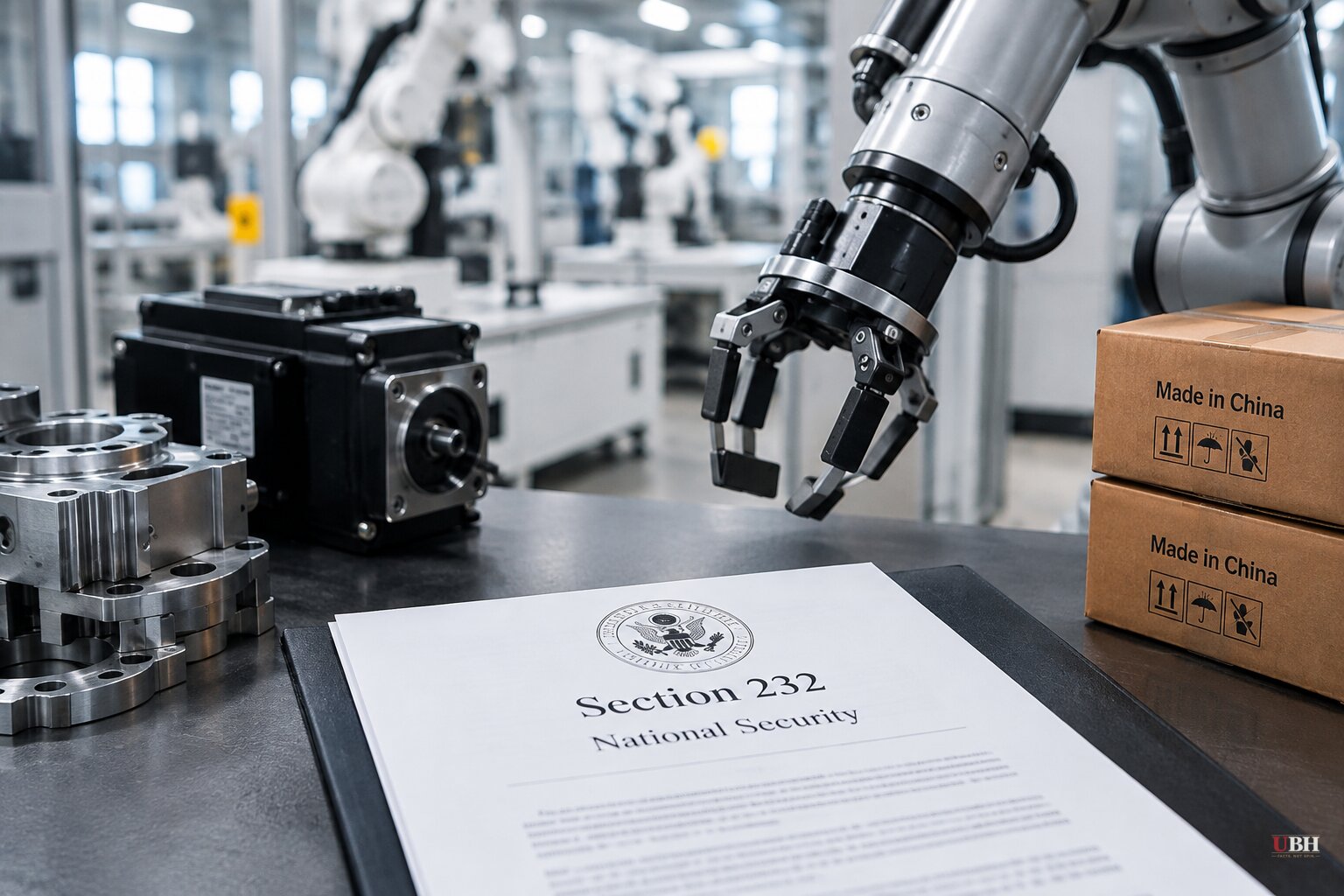
President Trump signed a proclamation on Wednesday, Oct. 28, finding that imports of robotics, industrial machinery, and their parts and components threaten to impair U.S. national security. It imposes no tariffs today.
Instead, the order directs Commerce Secretary Howard Lutnick and U.S. Trade Representative Jamieson Greer to pursue or continue negotiations with foreign trading partners to adjust those imports. The proclamation sets a 180-day window. If agreements are not reached, are not carried out, or prove ineffective, the president may take other action.
What the proclamation says
The order follows a Section 232 investigation that began in September 2025. Commerce sent Trump its report within the past 90 days, and the proclamation says Lutnick found these goods are entering the country in quantities and under circumstances that threaten national security.
The administration's case rests on three points. First, robotics and industrial machinery are used to build aircraft, tanks, ships, weapons and munitions. The proclamation says the defense industrial base's ability to surge production in wartime depends on them.
Second, they touch the wider economy. The proclamation puts the machinery's role at roughly $7.1 trillion in U.S. manufactured-goods shipments in 2024, plus about $86 billion in equipment production. It says they support all 16 critical infrastructure sectors.
Third, there are cybersecurity concerns. The proclamation says equipment from certain foreign entities can introduce vulnerabilities because the technology processes and stores sensitive data.
The proclamation also concedes a supply problem: domestic output falls short of demand despite recent factory investment, so the country relies on foreign sources for most types of these goods.
Tariffs are an option, not a decision
The order says Trump "may consider alternative remedies in the future." Those include imposing or modifying tariffs, duties, quotas and fees. It also names a program to incentivize new U.S. investment in robotics and machinery production.
Lutnick must keep monitoring imports and tell the president if further action is warranted. Any earlier proclamation or order inconsistent with the new one is superseded.
The 180-day clock runs to roughly late April 2027.
A pattern of talks before tariffs
This is not Trump's usual Section 232 playbook. He has used the statute to impose tariffs on cars and auto parts, drones and polysilicon.
On recent probes, though, he has opened negotiations first. Earlier this month he did so for wind turbine imports. In July he did it for commercial aircraft, jet engines and parts. In January he pushed talks on semiconductors while imposing a 25% tariff on a narrow range of chips.
Who is exposed
The coverage of the order has pointed to the companies most reliant on imported machinery: General Motors, Ford, Tesla, Boeing and Lockheed Martin. Large robotic arms for factory floors often come from the four major makers, FANUC, ABB, Yaskawa and KUKA, headquartered in Japan, Switzerland and Germany.
Ars Technica reports that no U.S. company currently offers comparable heavy-duty hardware for large industrial arms, though the foreign makers have been expanding U.S. engineering and assembly operations. Any tariff on these goods is paid by the U.S. companies that import them, and Ars notes that would likely raise manufacturing costs. The International Federation of Robotics counted nearly 38,500 new U.S. industrial robot installations in 2025, which makes the United States the second-largest market.
That is the tension in the policy. The administration says import dependence is a security risk. Its own proclamation also says domestic producers cannot meet demand. Tariffs alone do not create a factory in Ohio.
The China angle
China's lead in advanced robotics is the sharper argument. Of about 15,000 humanoid robots shipped worldwide in 2025, China's Unitree and AGIBOT each shipped more than 5,000. U.S. rivals such as Tesla and Figure AI each shipped a few hundred or fewer. Morgan Stanley analysts forecast China's humanoid market could reach $15 billion by 2030.
In July, the Federal Communications Commission banned imports of new foreign-made humanoid robots, quadruped robot dogs and power inverters, citing national security risks. Beijing accused the United States of protectionism. That FCC action exempted fixed industrial arms of the kind used in auto plants and warehouses, which are the machines now under review.
The new proclamation does not name China or any other country as a target. It leaves the choice of negotiating partners to Lutnick and Greer, who may deal with "any foreign trading partner" they deem appropriate.
What comes next
The next marker is the 180-day deadline in late April 2027. By then Lutnick and Greer owe the president a report on the talks. Neither has said which countries they will approach first, or what an acceptable agreement would look like. If talks stall, Trump has already put tariffs, quotas and fees on the table, and importers of foreign factory robots would be paying them.
Sources used for this briefing
6 links from 5 independent newsrooms (syndicated copies of the same report count once)
These are the sources it draws on, linked so you can verify.


