
Unbiased headlines. Facts, not spin.
Every story is an unbiased news briefing written from 110+ sources across the spectrum — sources linked so you can verify it yourself.
 defense
Breaking / Critical (9/10)
July 15, 2026 at 03:10 AM
defense
Breaking / Critical (9/10)
July 15, 2026 at 03:10 AM
Trump Drops Hormuz Toll Plan, Threatens Iranian Power Plants and Bridges Next
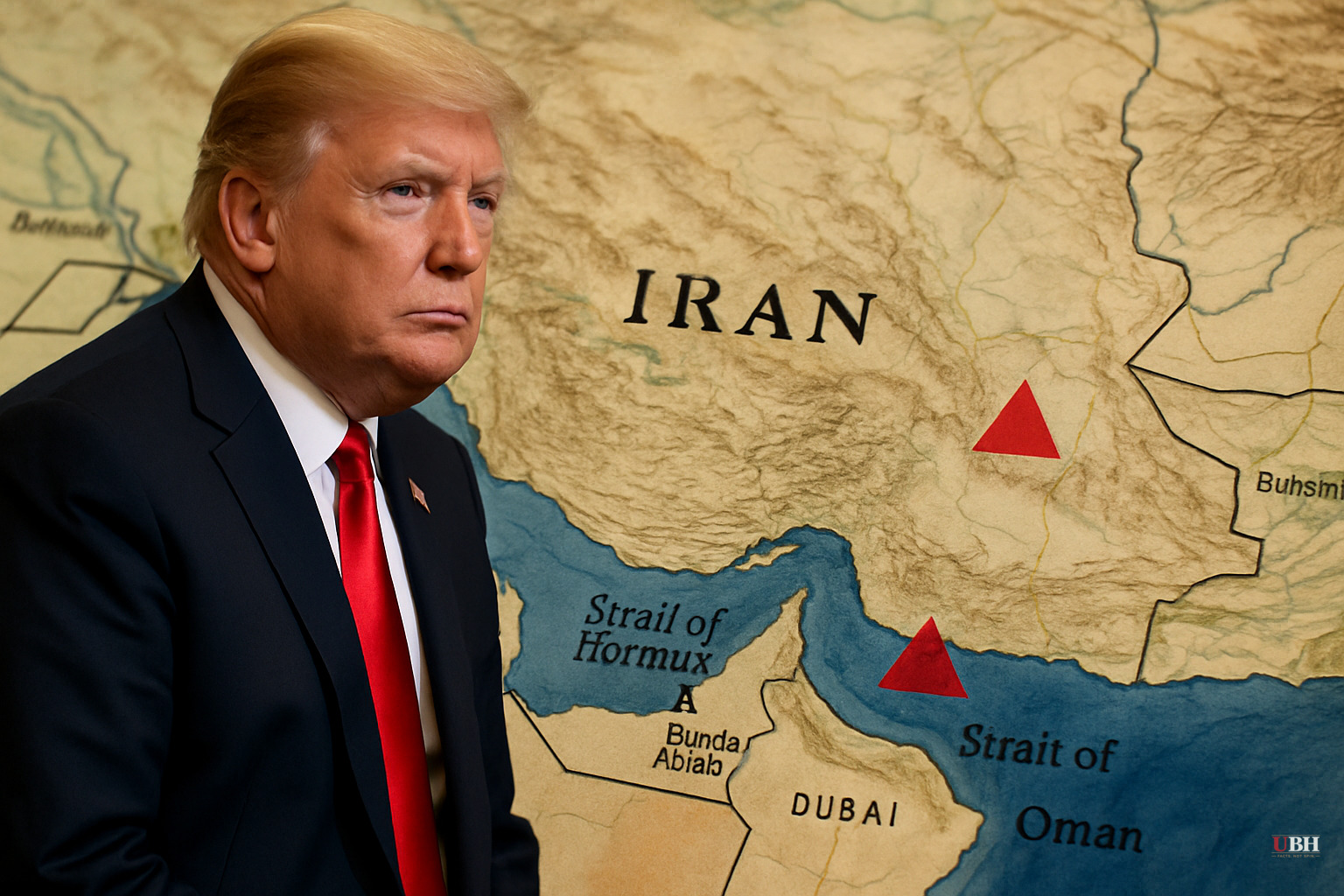
The toll plan lasted about 24 hours
Donald Trump announced Monday that every ship passing through the Strait of Hormuz, allies included, would pay a 20% fee to reimburse the US for "providing safety and security" to the waterway. By Tuesday, he'd scrapped it entirely, according to the BBC.
In its place: unspecified "trade and investment deals" with Gulf states. "I have decided to replace the 20% United States Reimbursement Fee with Trade and Investment Deals that the various Gulf States will be making into the United States," Trump wrote on Truth Social. "Those Investments will be MASSIVE but, at the same time, extraordinarily good for them, and their future."
He gave no dollar figures, no timeline, no named agreements. Speaking after meeting new Iraqi Prime Minister Ali al-Zaidi in Washington, Trump said he changed course after "numerous calls from Gulf leaders" and admitted, "I don't like the concept of a fee, but at the same time, it's not fair that we're protecting this Strait for the entire world."
The blockade stays, and the strikes escalate
While the toll idea died, the naval blockade of Iranian ports did not. US Central Command said its forces launched a fresh round of strikes against Iran late Tuesday to keep "degrading Iranian capabilities used to attack commercial shipping," following a third consecutive night of attacks, according to the BBC. Iranian state media reported blasts in multiple cities, including Bushehr, home to a nuclear power plant.
Iran said it hit US military facilities in Bahrain and Jordan in response, after earlier striking two UAE-flagged tankers.
In an interview with Fox News chief foreign correspondent Trey Yingst on "Special Report," Trump promised the pressure campaign will intensify. "We're going to hit them very hard tonight. We're going to hit them hard tomorrow night. We're gonna hit them really hard the night after," he said. He went further: "Next week it gets really bad for them because next week comes the power plants. Next week comes the bridges. We're gonna knock out all their power plants. We're going to knock out all their bridges unless they get to the table and negotiate."
That represents a widening of stated targets, from shipping-related military infrastructure to civilian power and transportation networks. Trump also compared Iran to a boxer still standing despite "tremendous progress" degrading its military, per Fox News. By his own account, Tehran hasn't been knocked out yet even after months of strikes.
Why the toll plan mattered, and why it collapsed
The fee, however brief, would have applied to US allies' ships too, not just Iran's. Charging partners for protection in a waterway the US Navy has patrolled for decades as a matter of course is an unusual position. The patrol has been part of freedom-of-navigation operations tied to broader US strategic interests, not a paid service. Gulf states apparently pushed back hard enough, in Trump's own telling, that he dropped it in under a day.
The original idea reflects a genuine and long-standing complaint, echoed across administrations, that US allies free-ride on American military protection of global shipping lanes without paying for it. That's not a fringe grievance. But turning it into an ad hoc toll announced on Truth Social, then reversing it a day later for vague "investment deals," looks more like improvisation than policy.
The deeper problem: the ceasefire framework is falling apart
The BBC's reporting lays out why this keeps happening. The US and Iran signed a memorandum of understanding roughly a month earlier that both sides have interpreted differently from the start. Point five of that 14-point plan says Iran will use its "best efforts" for the safe passage of commercial vessels. Washington reads that as a guarantee of open shipping lanes. Tehran reads it as license to manage the strait on its own terms.
Iran's lead negotiator Mohammad Bagher Ghalibaf put Tehran's position bluntly on social media, according to the BBC: "We told you: keep your word or pay the price." An Arab oil executive working in the region told the BBC the ambiguous language means "You can drive a truck through those clauses." Iran's Deputy Foreign Minister Kazem Gharibabadi said Trump's blockade decision "has, in a way, dismantled" the earlier truce.
The BBC also reported internal splits inside Tehran's leadership. Robert Malley of the International Crisis Group, who worked on the 2015 nuclear deal, said some Iranian factions want to "cash in on battlefield gains through diplomacy" while others believe "the ceasefire came too soon before Iran had inflicted enough pain on the US." Recent attacks on three vessels, including a Qatari-flagged LNG tanker near Oman's coast, were attributed by a regional diplomatic source to a "rogue unit" within the Islamic Revolutionary Guard Corps. This suggests Tehran's own chain of command may not be fully unified.
Rosemary Kelanic, director of the Middle East program at Defense Priorities, told the BBC she expects no clean resolution: "I think the most likely ending is a non-ending. This has turned into a war of attrition, and wars of attrition tend to go on for a long, long period of time."
What's unresolved
Trump has named no specific Gulf investment deal, no dollar figure, and no signing date for the arrangement replacing the toll fee. Whether Iran's parliament, which the BBC reports quietly introduced a new bill to formalize control over strait routing, will harden Tehran's position further is an open question. And whether striking Iranian power plants and bridges, as Trump threatened to Fox News, would push Iran back to serious negotiations or simply escalate the four-month conflict into something harder to walk back remains to be seen.
Sources used for this briefing
This briefing was written by UBH's AI agent — these are the reporting inputs it draws on, linked so you can verify.


